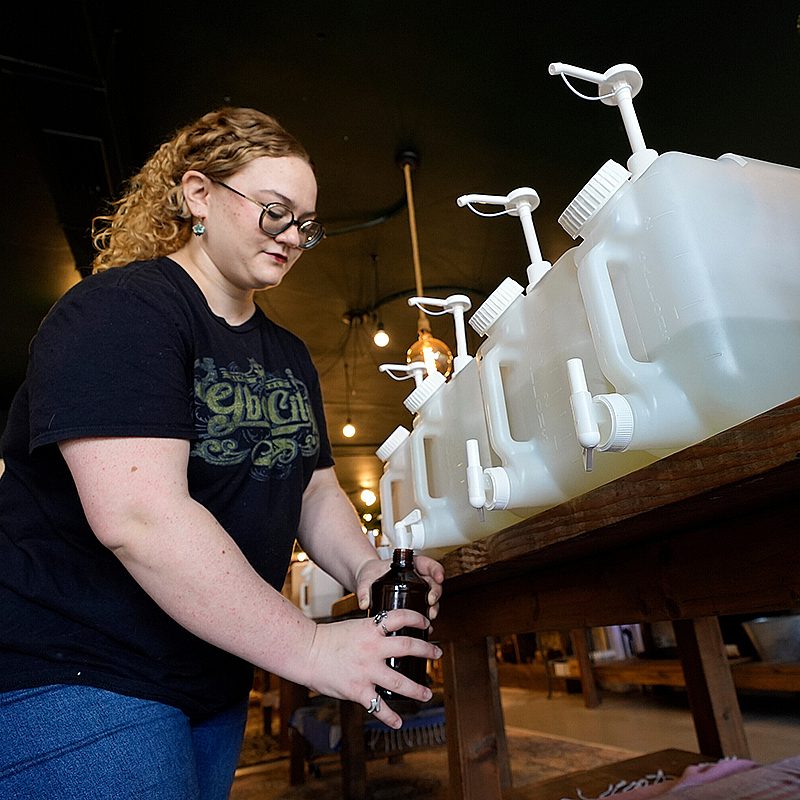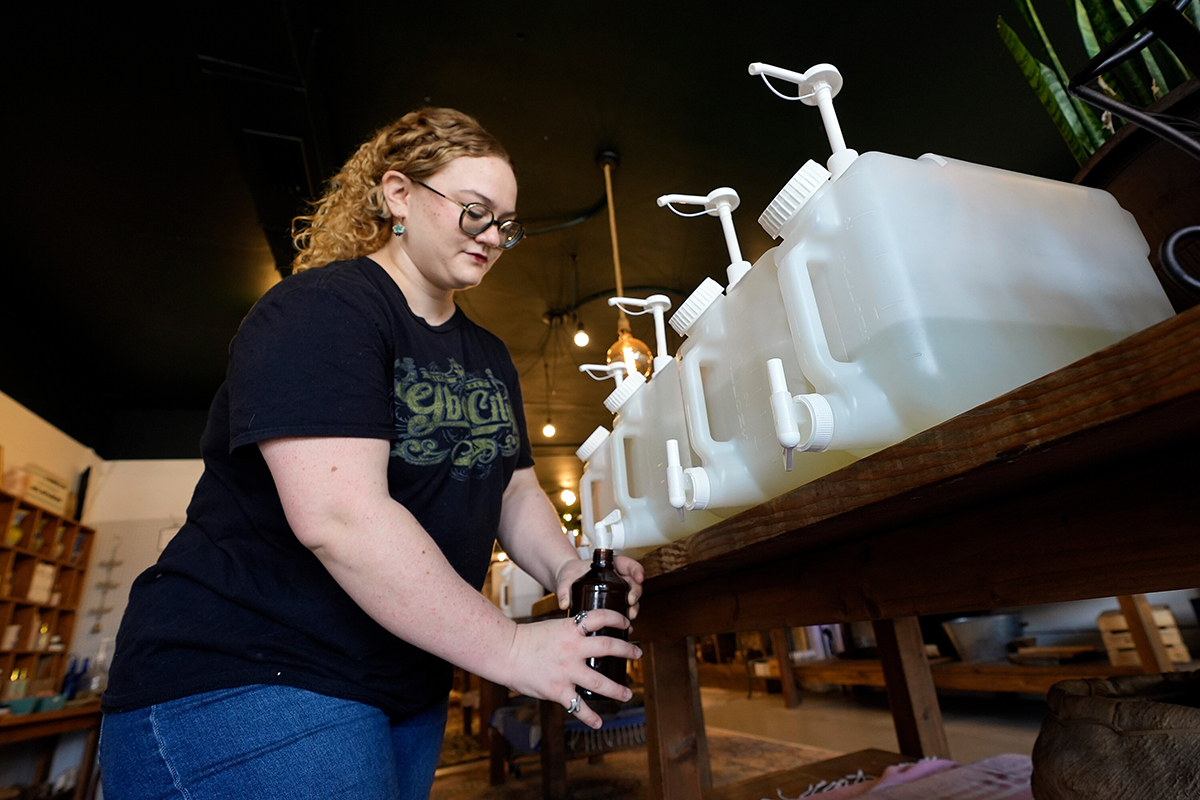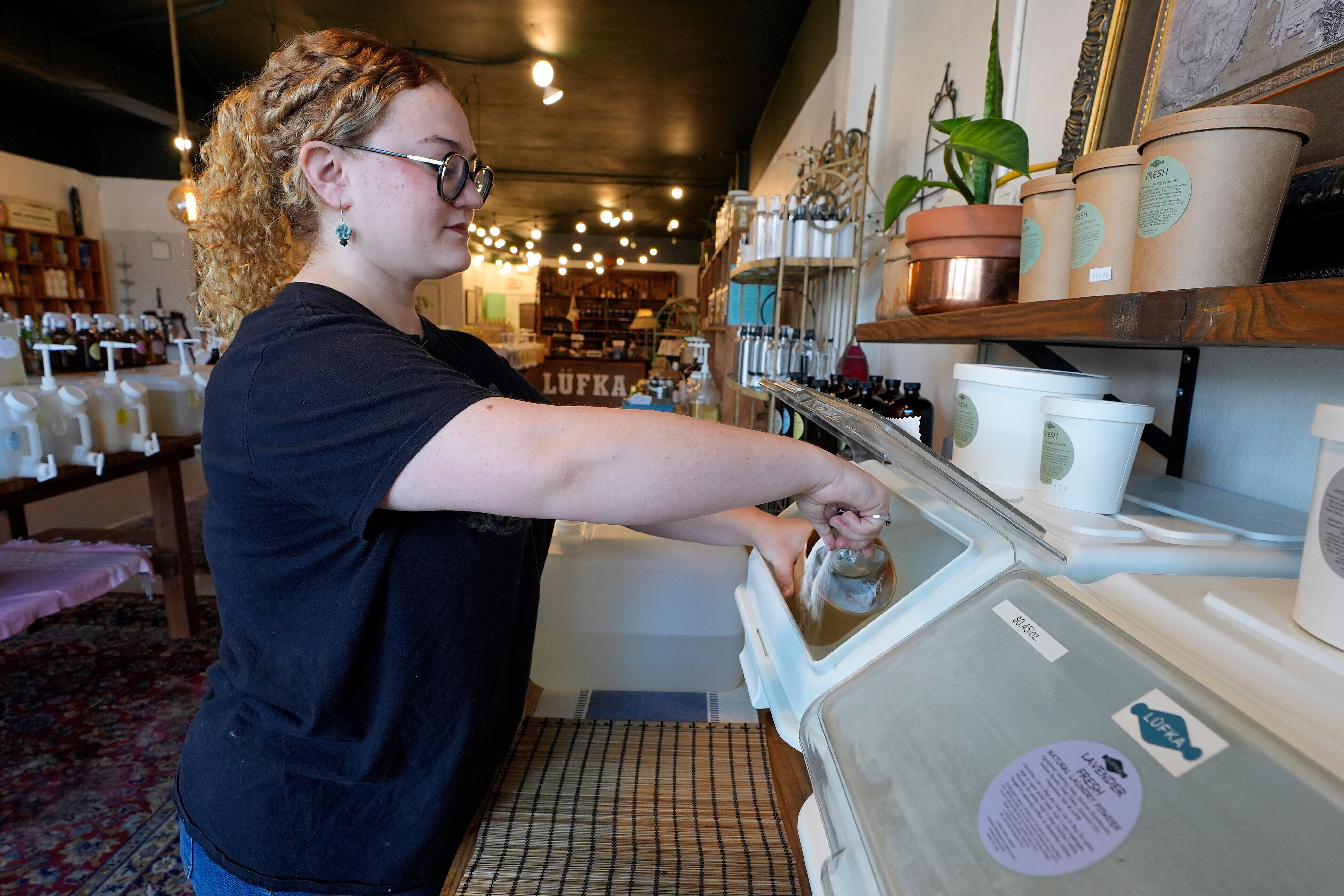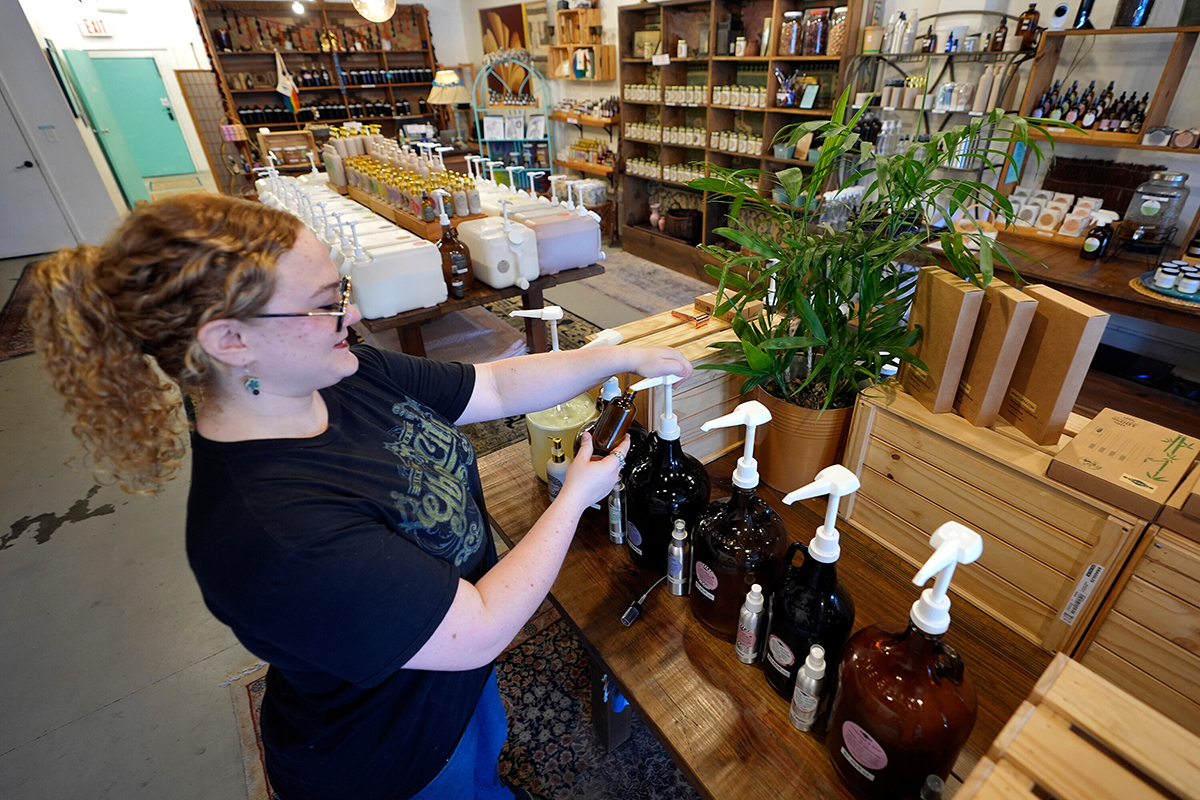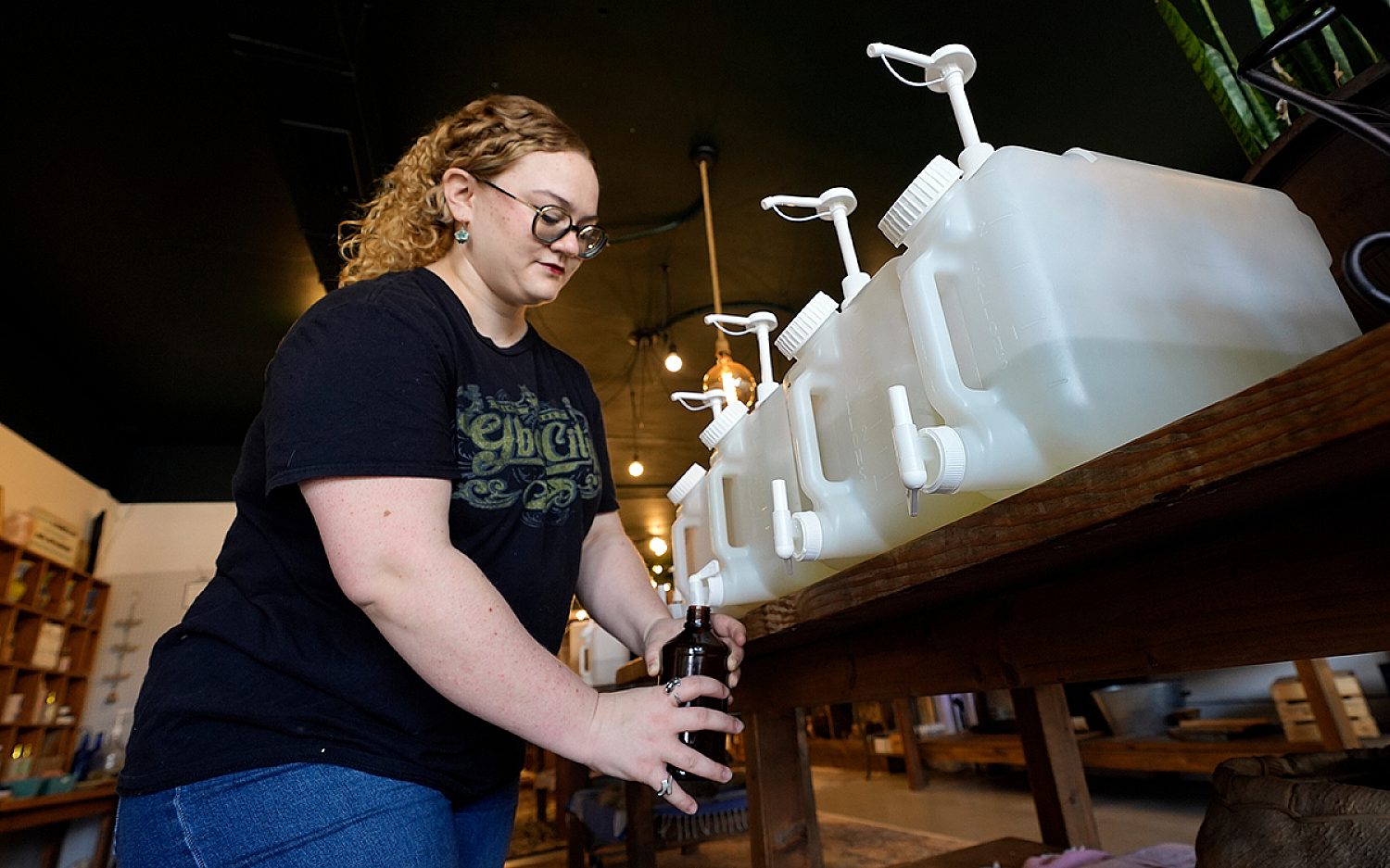
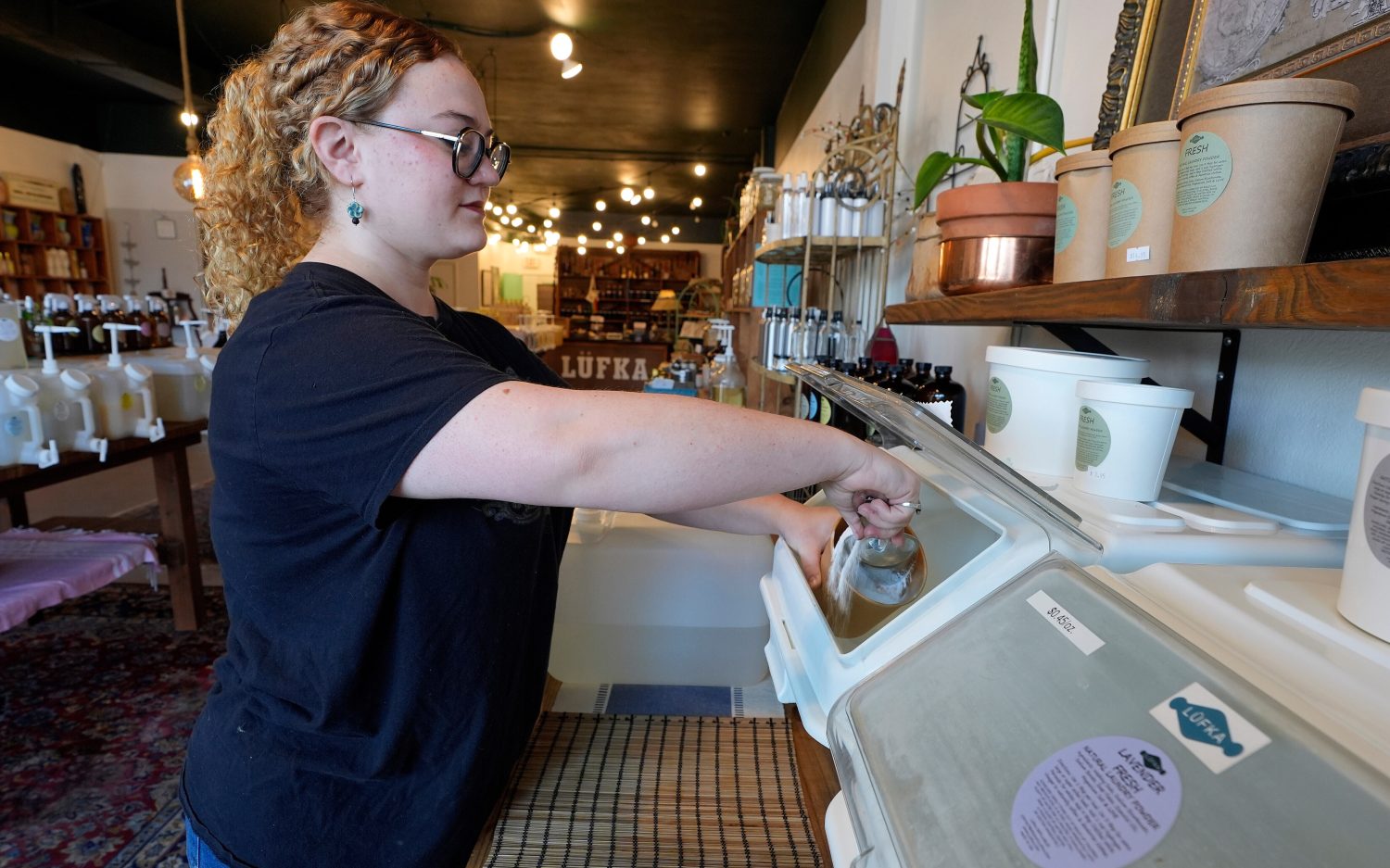
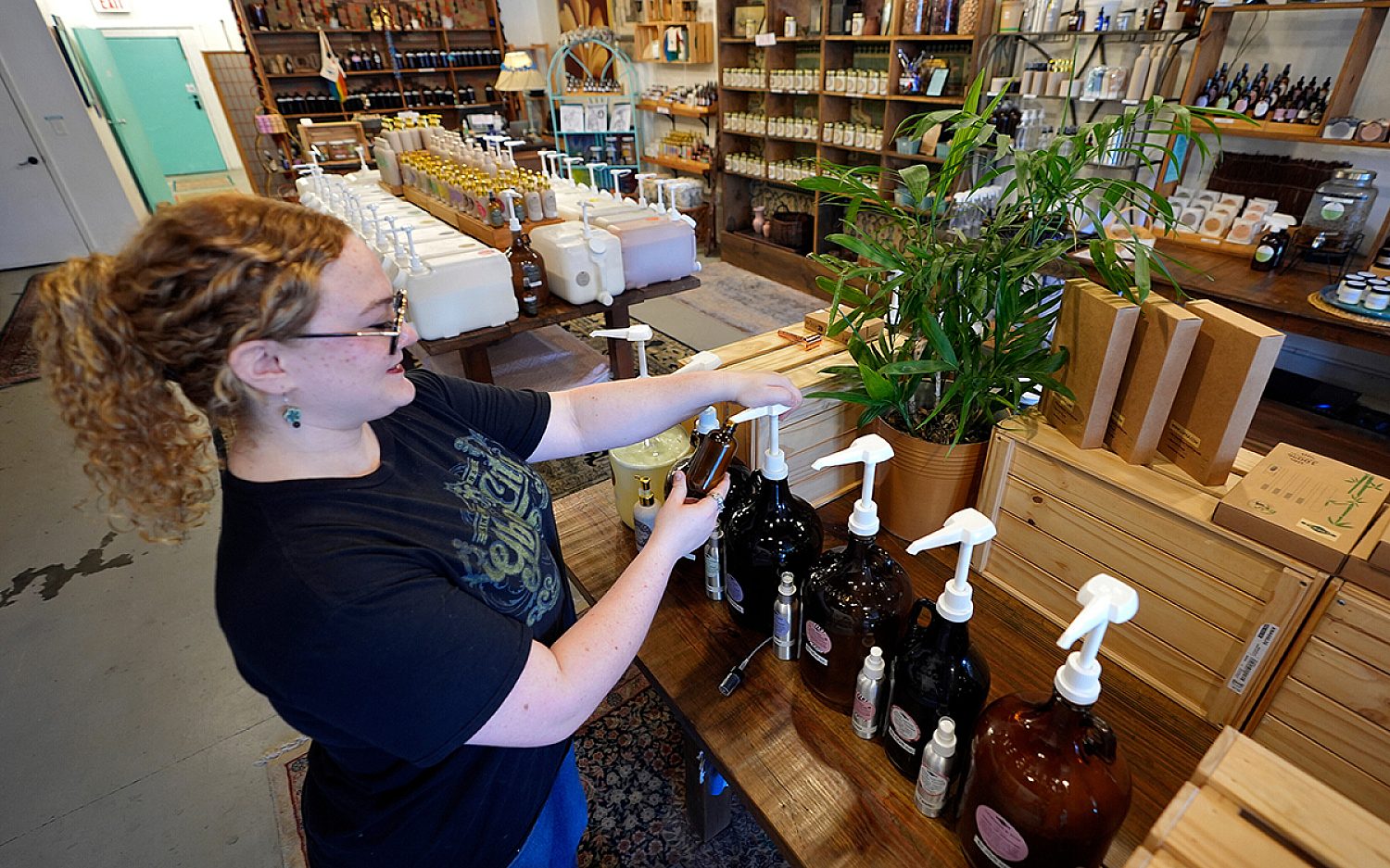

Customers bring their own bottles to LÜFKA Refillables Zero Waste store in Tampa, Florida. They top off soap, shampoo, and cleaning supplies.
Hundreds of refill stores have opened across the United States. The purpose is to cut down on packaging waste. How? By reusing what people already own. Customers weigh their empty containers. They fill them and weigh them again. They’re charged for the amount of product they add.
Some shoppers have been using the same containers for six years, reports LÜFKA founder Kelly Hawaii.
“Just imagine how much waste they’ve personally stopped consuming,” she says.
Refillable packaging is not a new invention. Some industries once relied on refillable or returnable containers. Think of home milk delivery in the mid-1900s. Families drank their milk from glass bottles. Then they returned those bottles. The milk supplier cleaned and refilled them. (Before glass milk bottles, families brought out whatever containers they had available. The milk delivery person filled them from large buckets.)
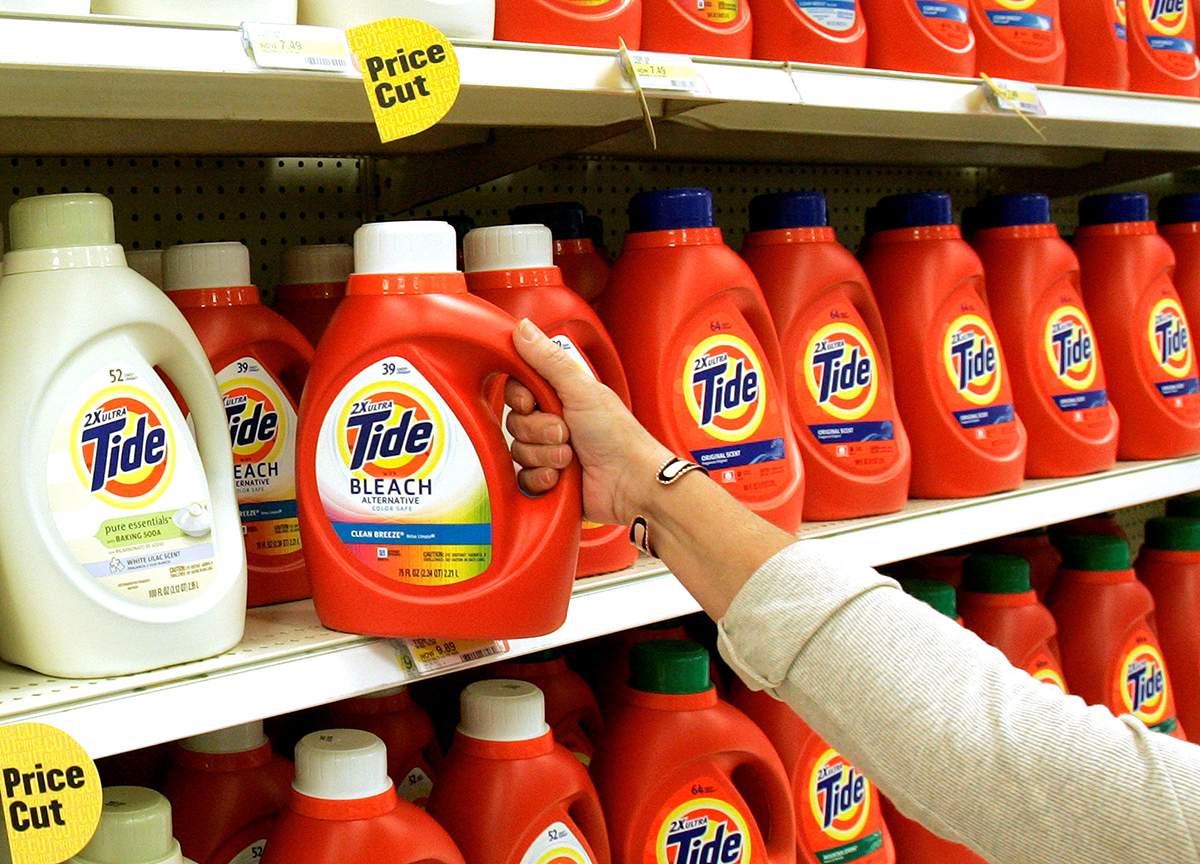
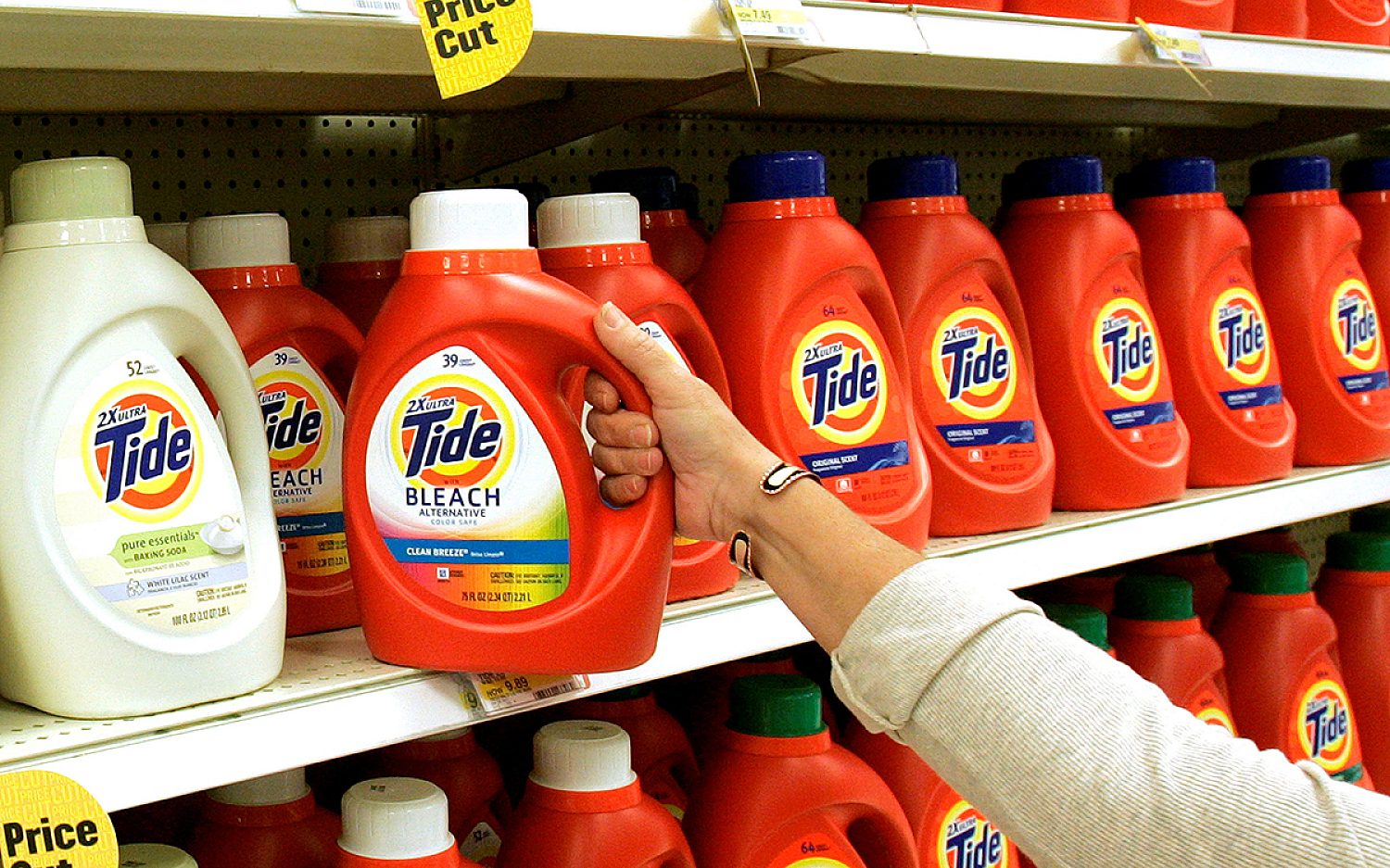
But in the last 50 years, disposable packaging helped companies simplify production. They no longer had to collect, clean, and refill containers. That cut some costs. So people made more and more packaging. That made more and more trash.
Many folks think sending all that waste to landfills is a bad idea. Some turn to refill stores to cut down on the trash they make.
Julie Hughes is a regular customer at LÜFKA. “We can’t solve all of the big problems,” she says. “But we do have control over our choices.”
Why? Modern single-use packaging is convenient, but it can create lots of trash. In recent years, some folks have turned to refill stores to reduce waste.