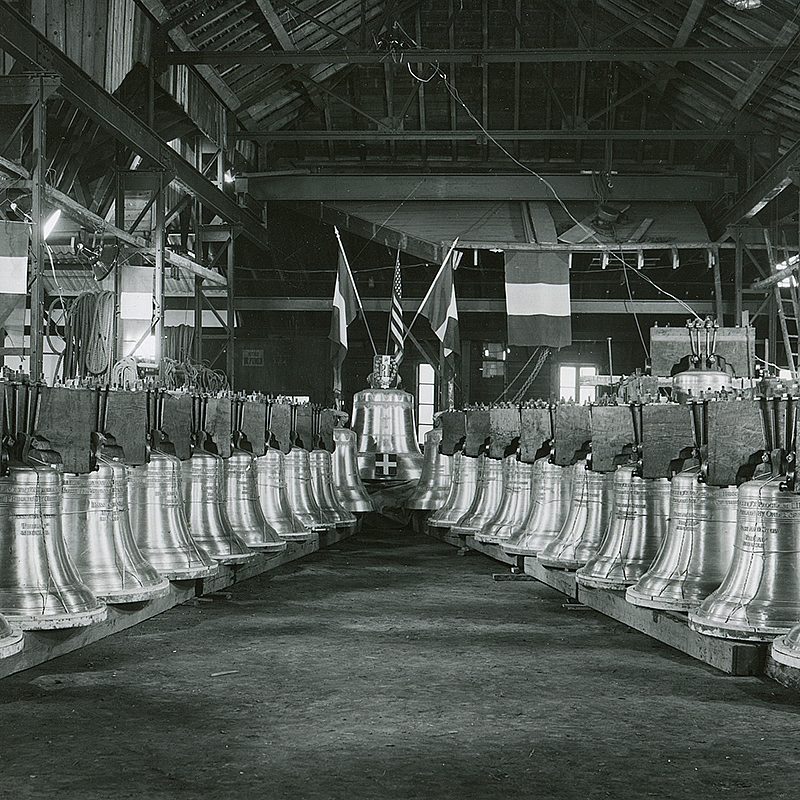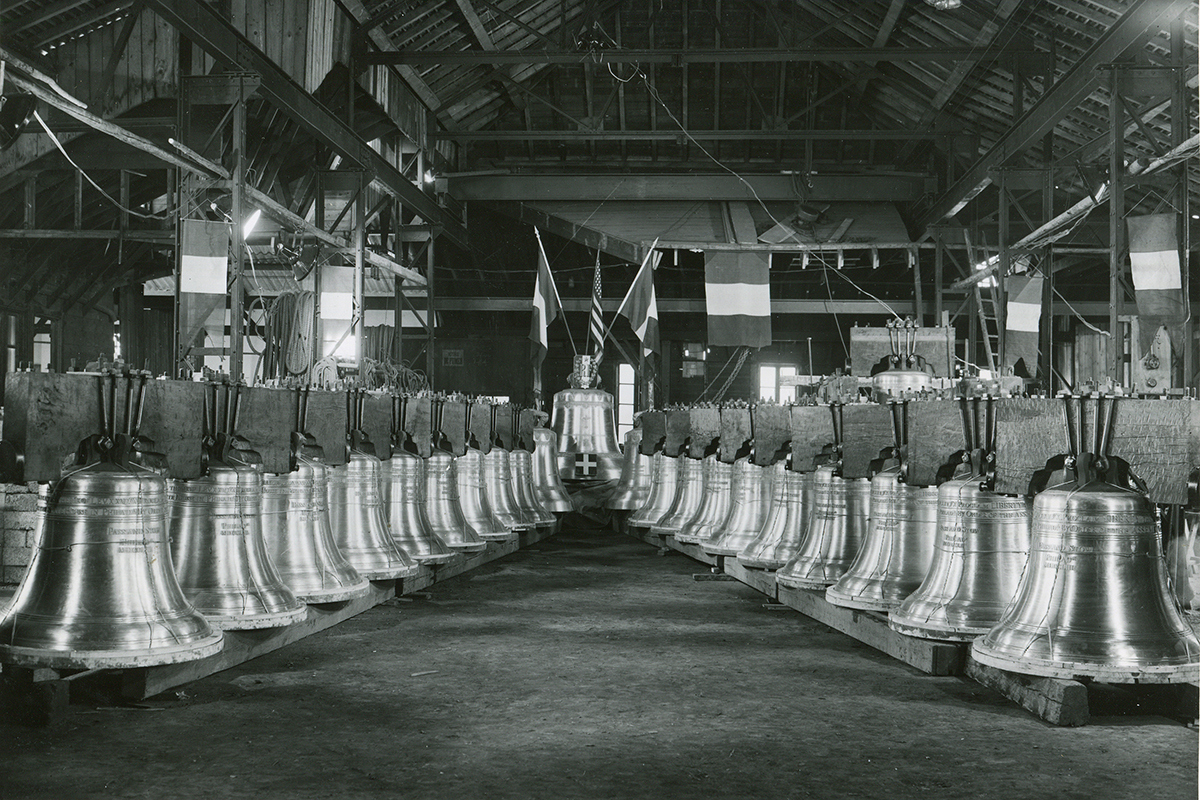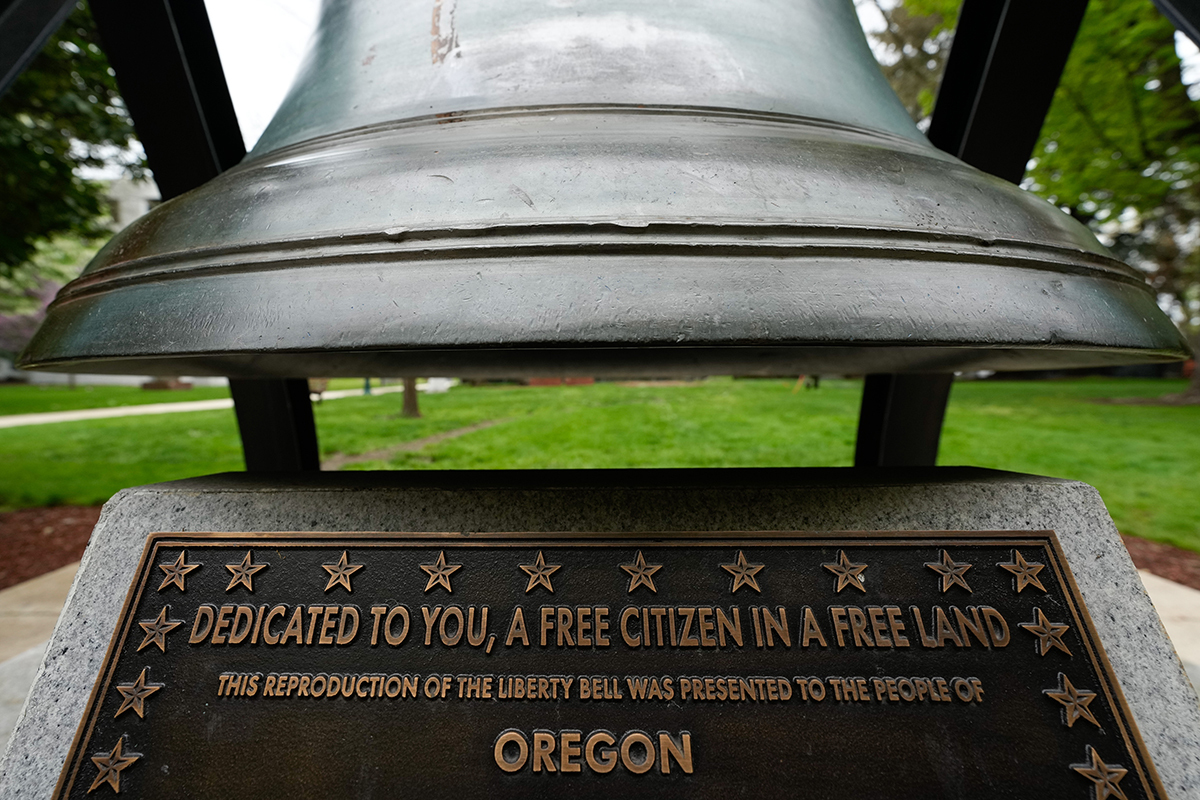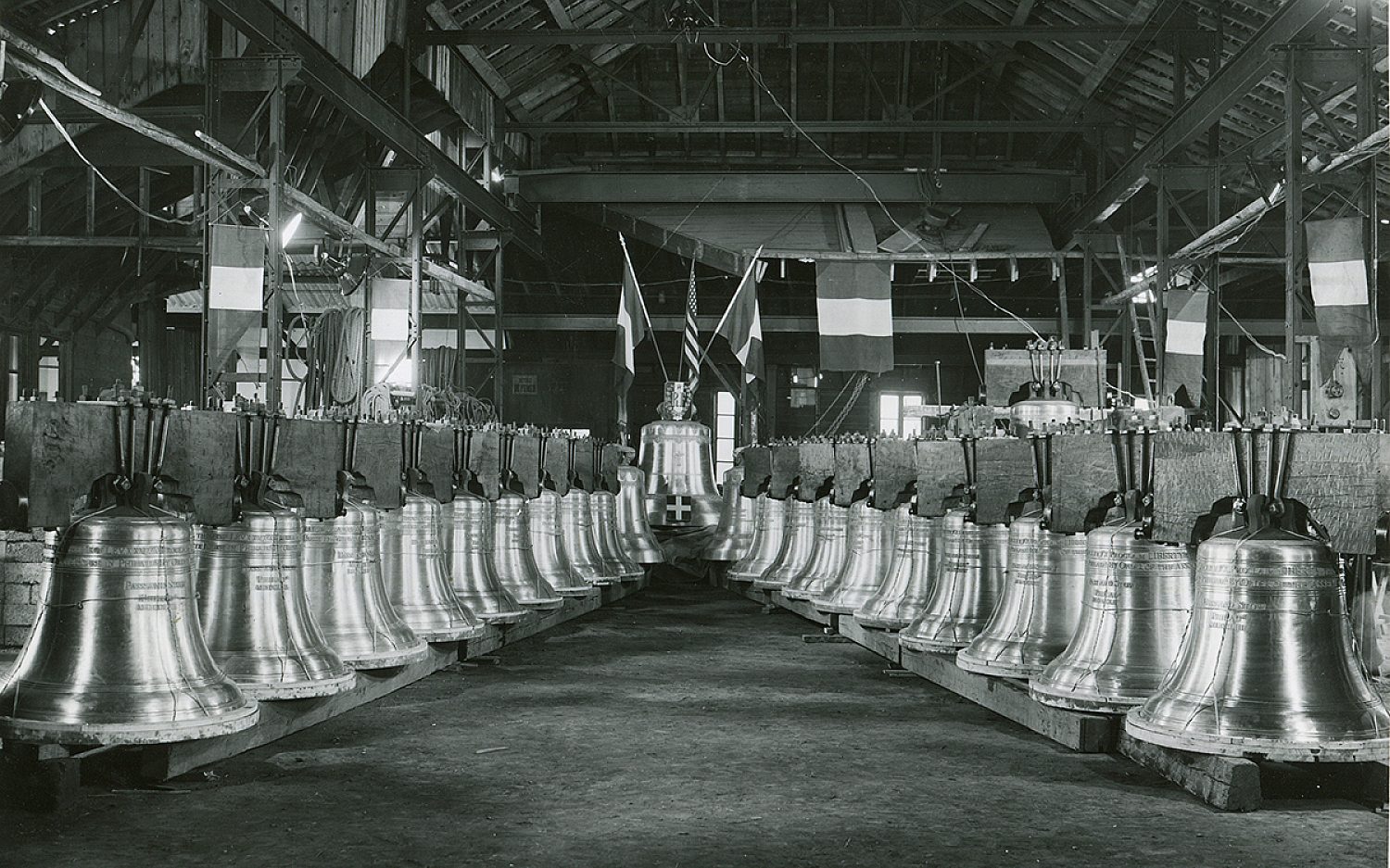
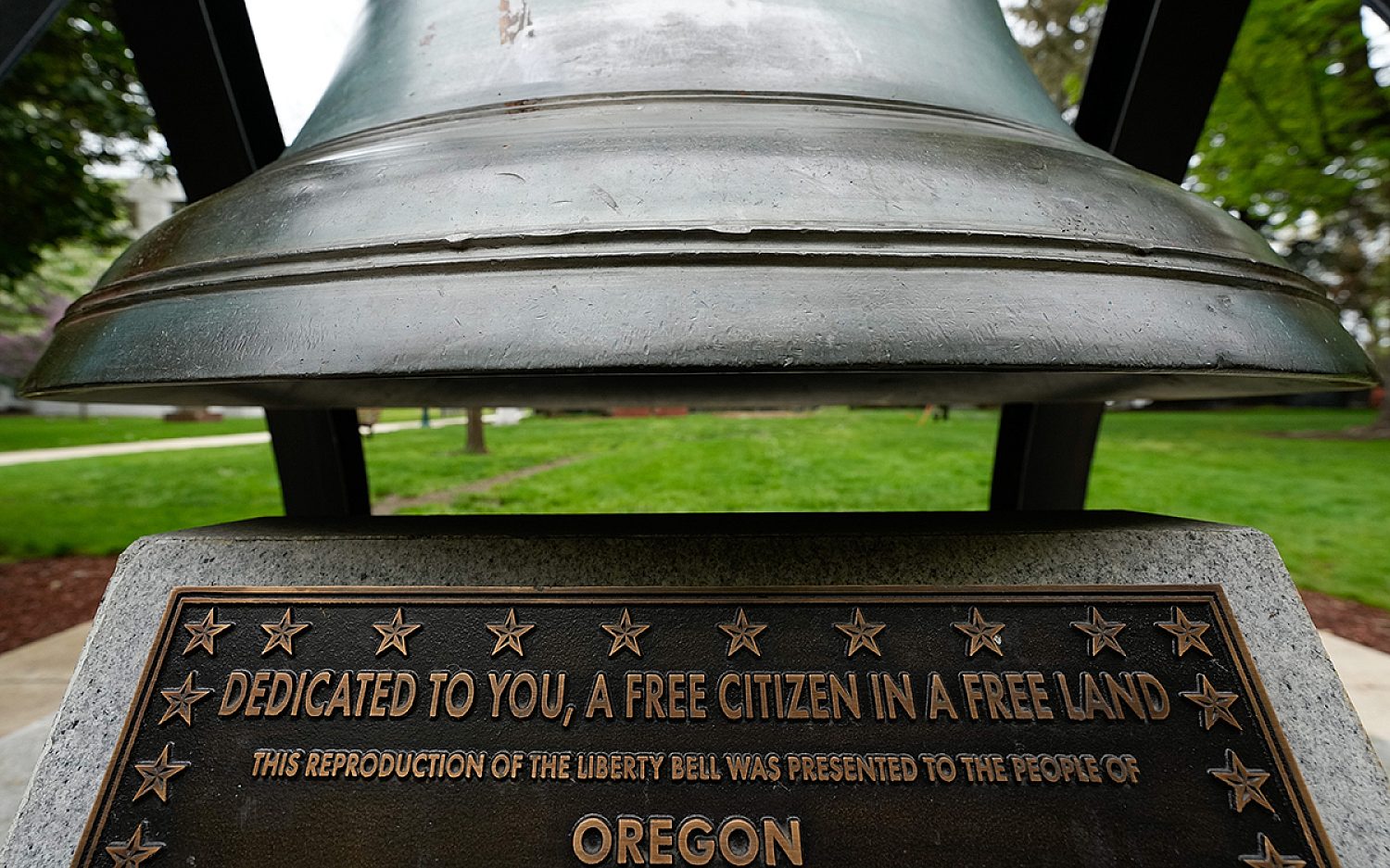

Like another American treasure—the Statue of Liberty—the copycat bells came from France. The family running the Paccard Foundry made them. Members of that family have been making bells since 1796. And they’re still at it!
“I must say that the original Liberty Bell is a very poor quality bell,” says Anne Paccard. She works at the bell company now.
She appears to be correct. The copy bell and the originals are the same. Almost. Old and new weigh 2,080 pounds. Old and new are cracked—although the old crack is real and the new ones are just painted on.
But here’s the big difference. The new bells are made of copper and tin. The old bells are made of copper and tin and lead, gold, arsenic, silver, and zinc.
In a bell, those other metals are impurities.
Bells across America—and the World
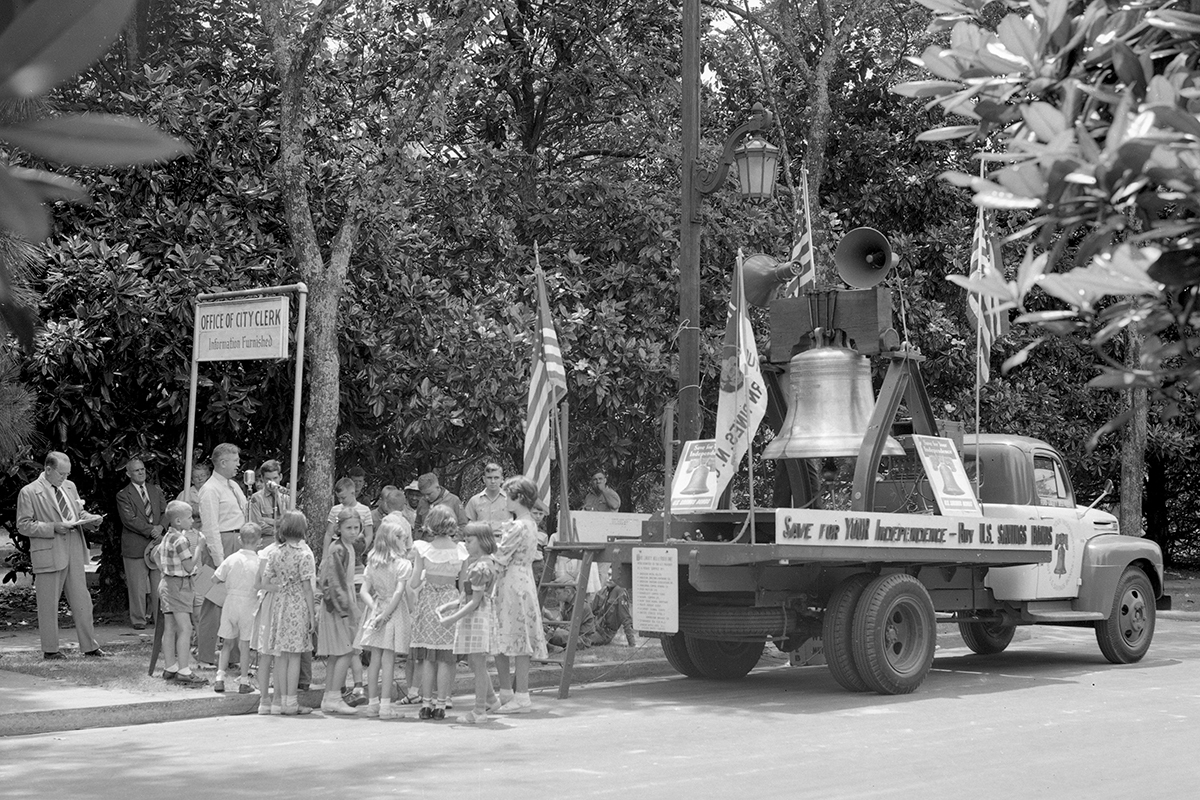
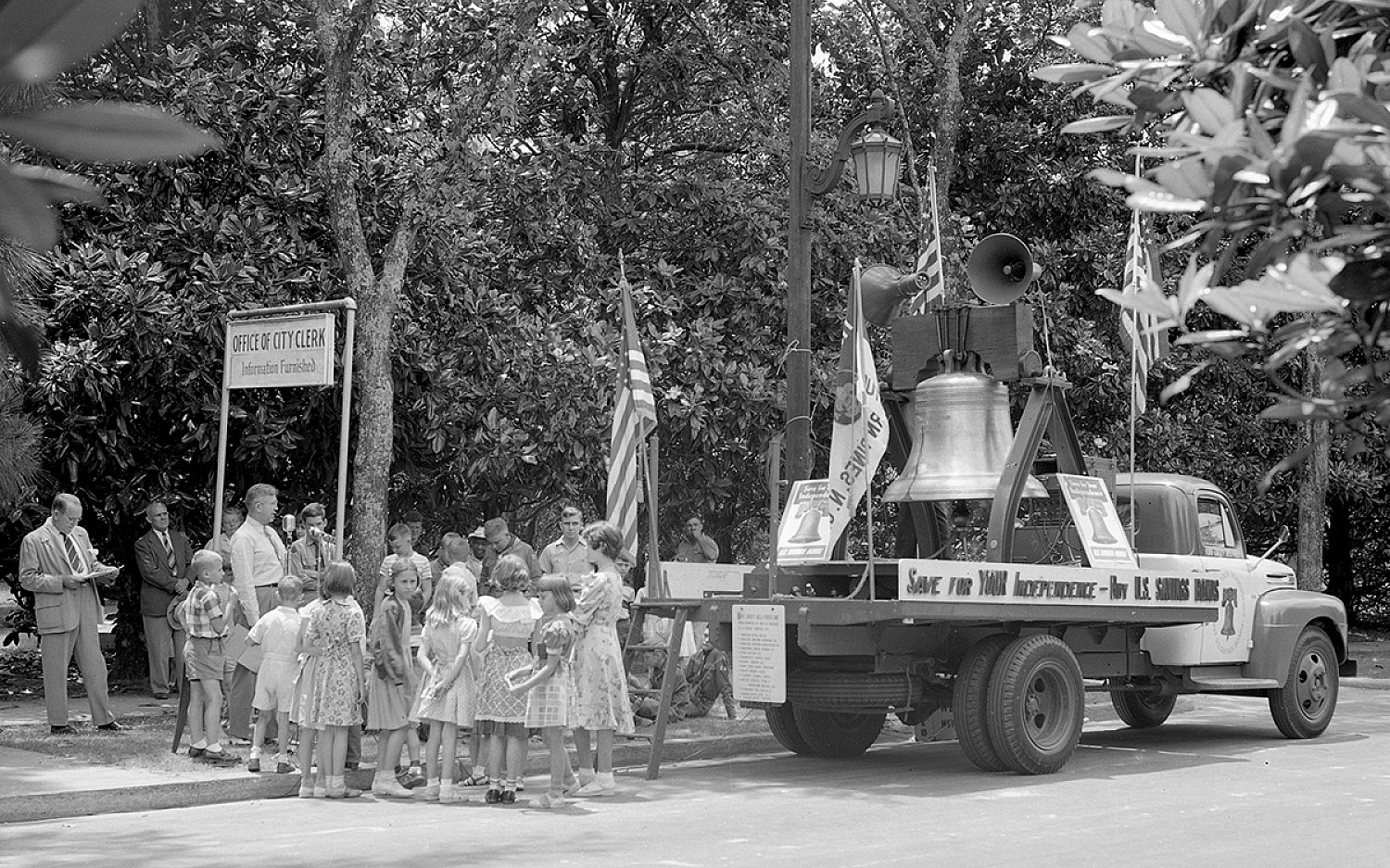
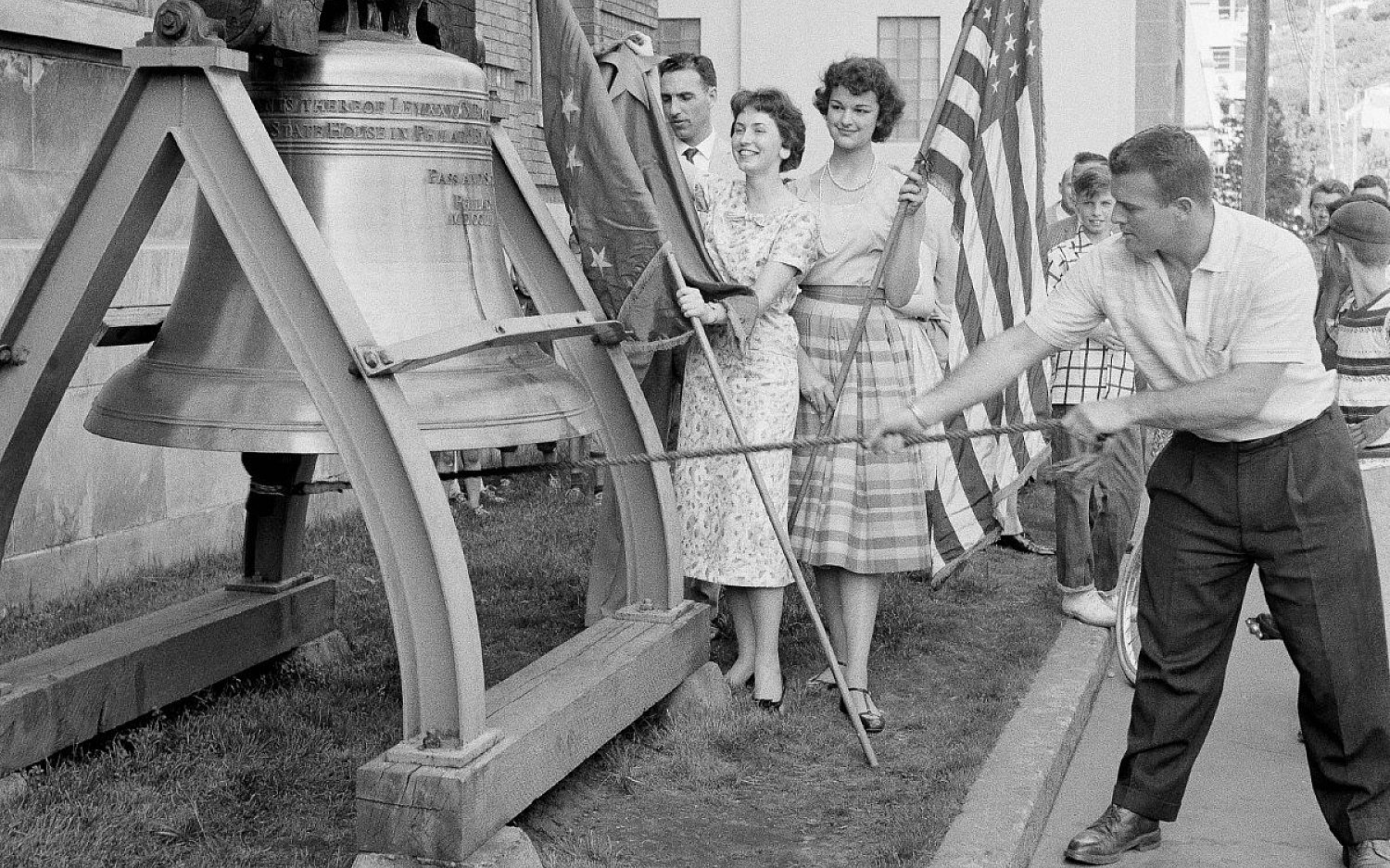
It’s 1950. A flatbed Ford truck rounds the corner. It’s festooned with red-white-and-blue banners. Loudspeakers blare. In the truck bed sits a bell.
The United States is selling savings bonds. If you buy a bond, you get to ring the bell.
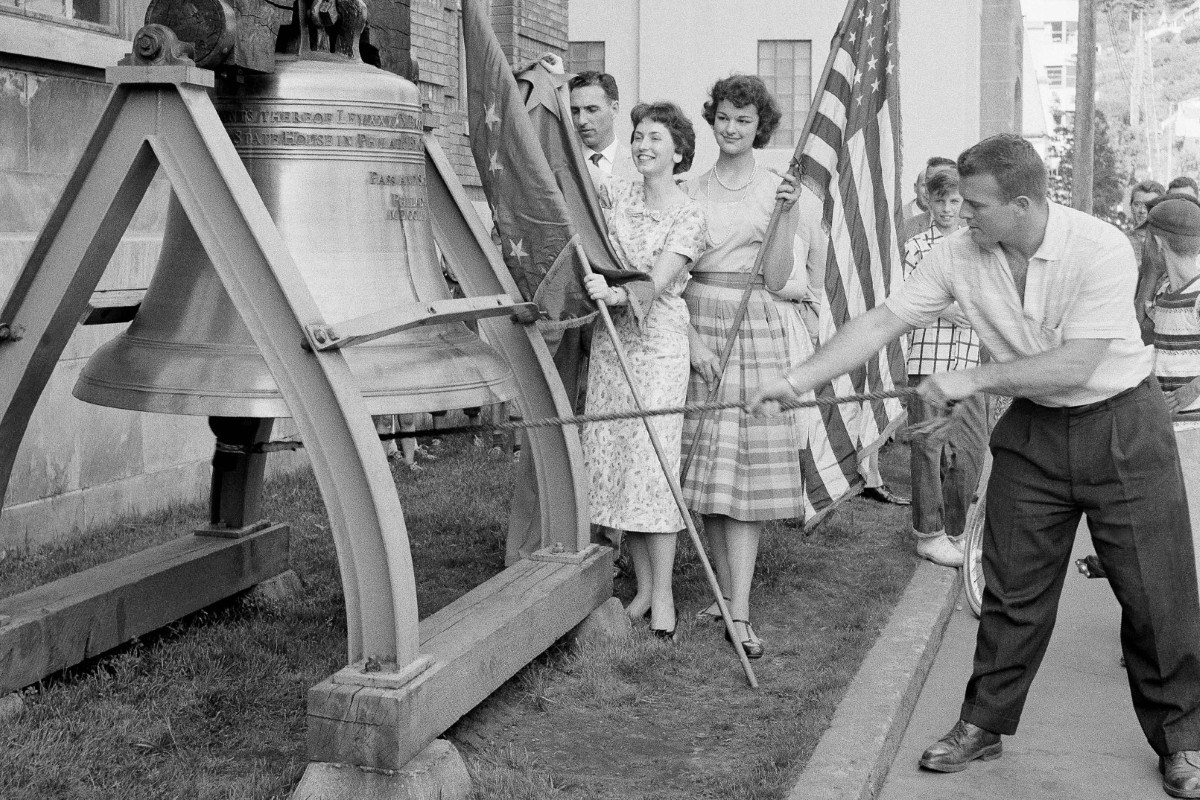
Such bells arrive in 48 states. Alaska and Hawaii, which are still territories, each get a bell too. So do other U.S. territories: the Virgin Islands and Puerto Rico. Washington, D.C., also gets one.
One bell goes to Tokyo, Japan. Another lands at a church in the Paccard family’s hometown in France. The Harry S. Truman Presidential Library and Museum gets a bell as well, in Independence, Missouri. So Missouri has two bells.
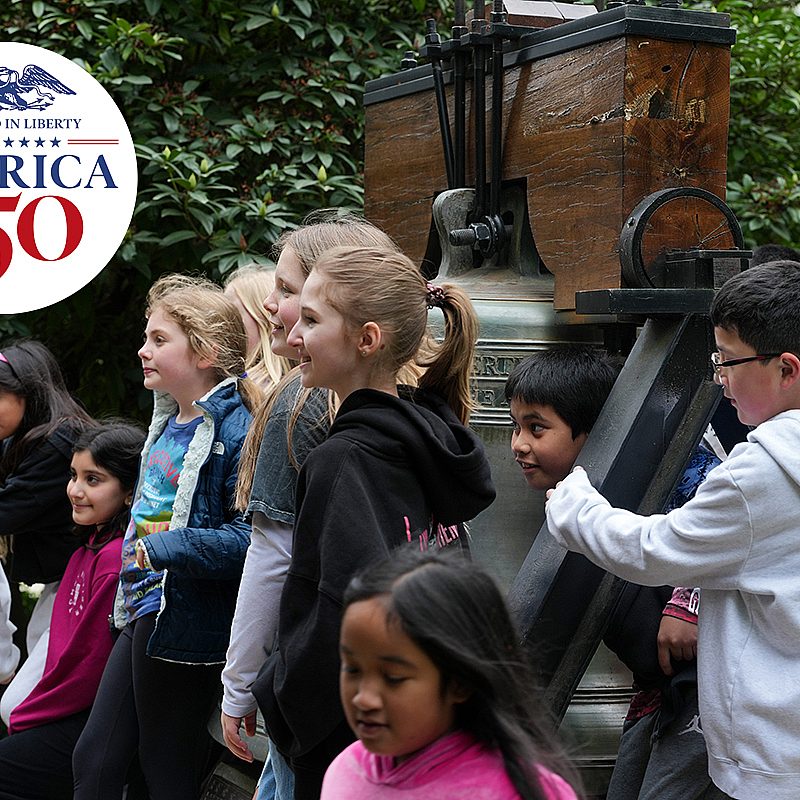
It’s clear that states and citizens hold the Liberty Bell in high regard. That’s partly due to patriotism. It’s partly due to a longing for the past. Even its replicas inspire folks like Mr. Campbell to pile into the family Ford and travel the country for a glimpse of a copy.
Recommended Reading: For more about bells, read The Story of the Liberty Bell by Sarah Michaels.