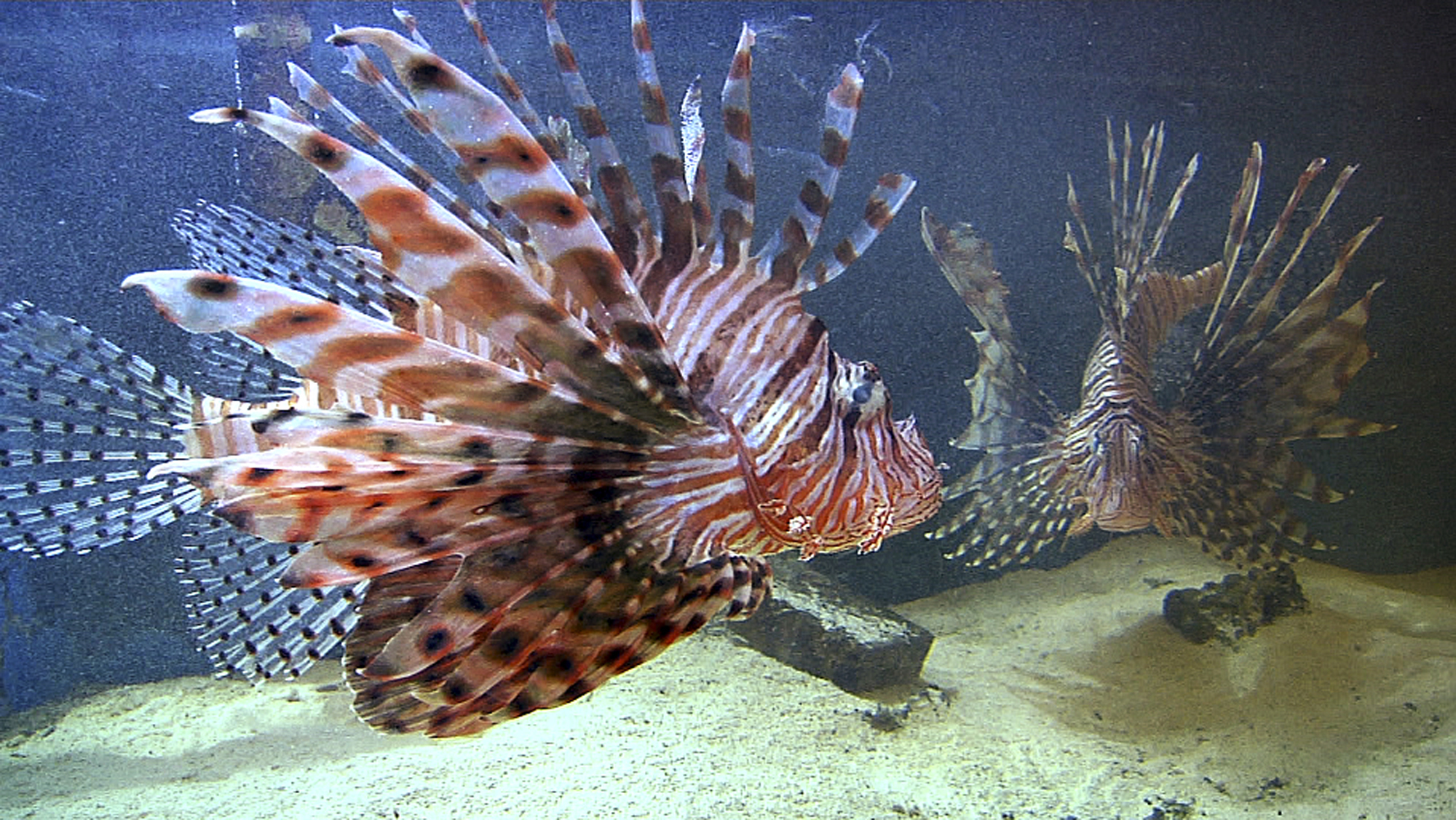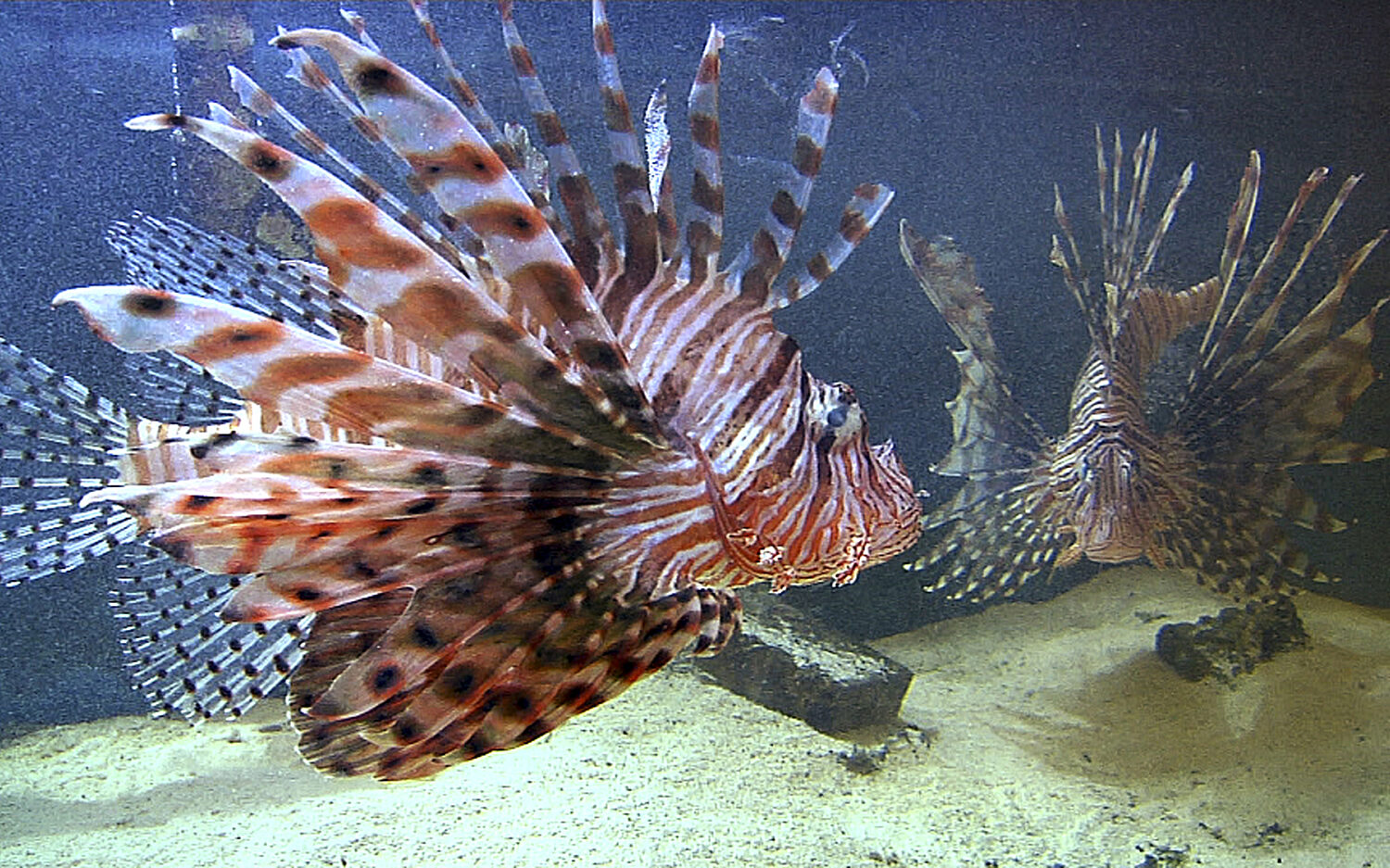


Candy-striped invaders lurk in the Atlantic Ocean and Caribbean Sea. They are a long way from their home in the Pacific and Indian Oceans.
How did these reddish fish with black and white stripes get out of place?
People all over the world bought lionfish as pets. They liked the fish’s beautiful colors and wavy tentacles and spines. But some owners later dumped their aquariums into ocean waters. Lionfish survived. They multiplied: 1 + 1 = 2, 2 x 2 = 4, 4 x 4 = 16 . . . Oh my, that adds up fast!
Lionfish have few predators. (Just look at those spines!) But lionfish are predators. In ocean waters where they don’t belong, they eat tons of tiny fish who do belong.
How big is the lionfish problem?
Scientists have been trying to figure that out. Now a very young scientist has given them some help.
Laura Arrington wanted to win the science fair. Her parents are both scientists. Someday she wants to be a scientist too.
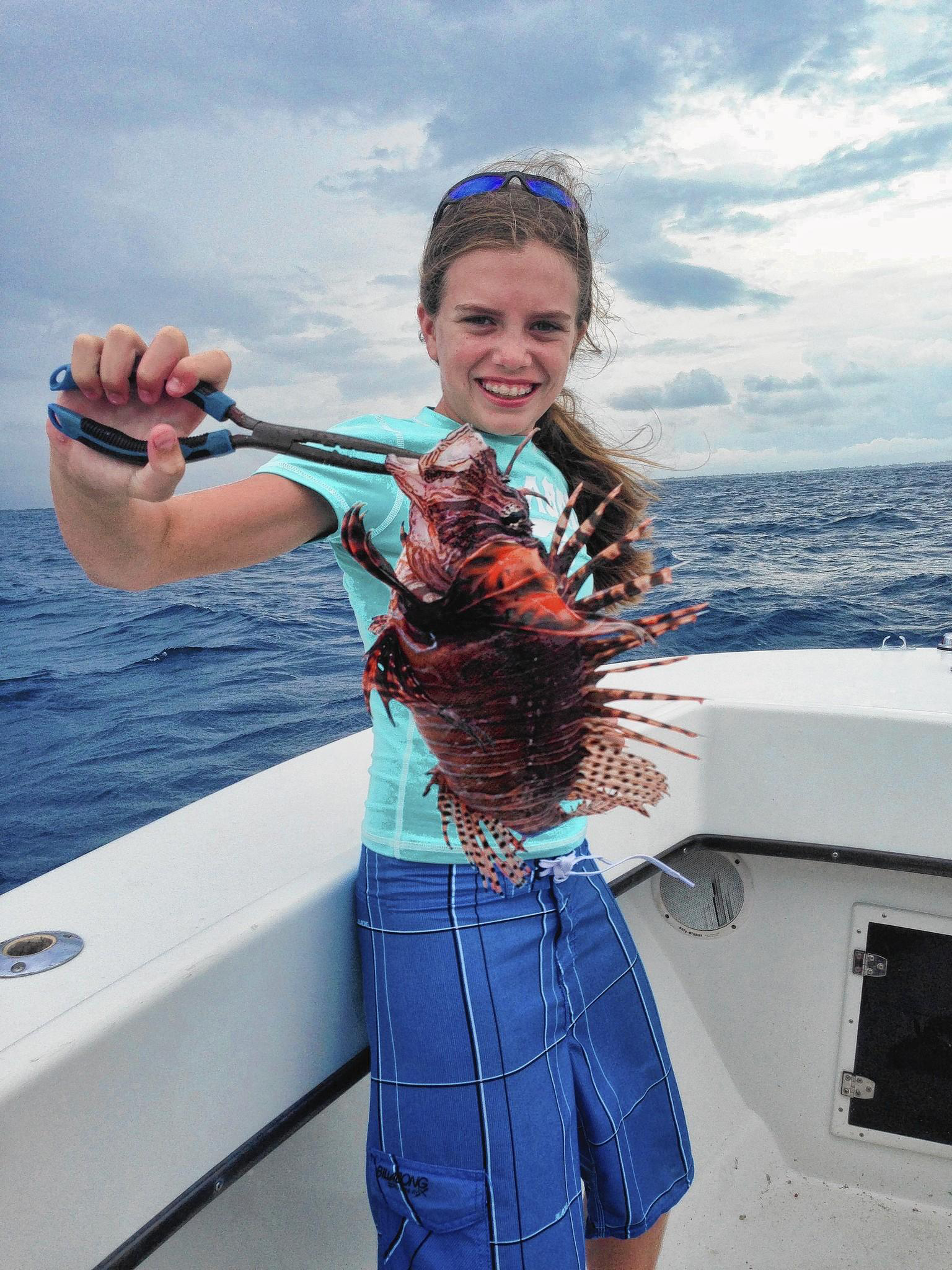
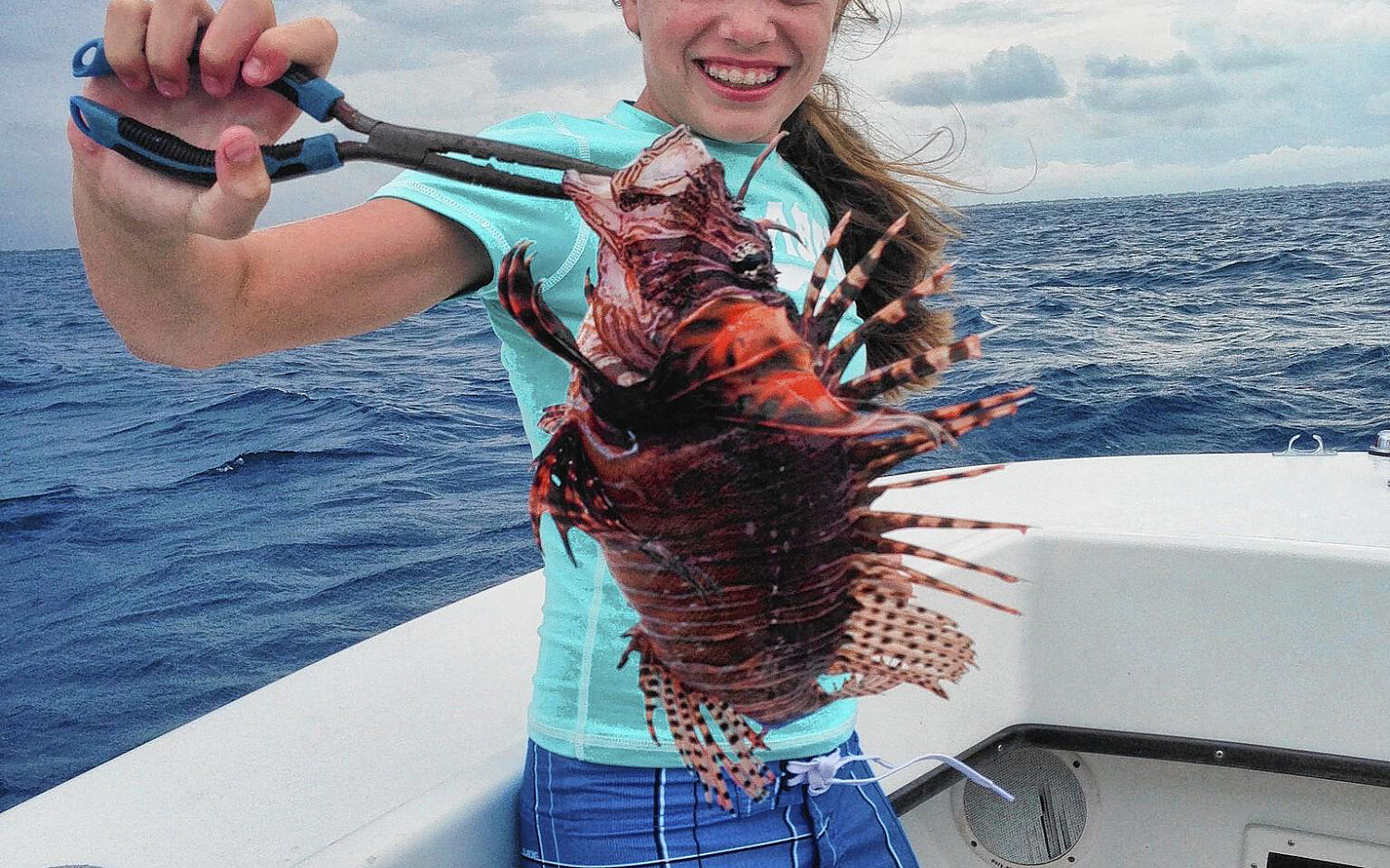
The family loves to fish and snorkel. Laura kept seeing lionfish in Florida’s ocean waters. That gave her an idea. She could see how salty the water needs to be for lionfish to stay alive. She wanted to see how far up the river lionfish could invade.
She caught lionfish. She put them in aquariums. Slowly she lowered the salt levels. She was in for a surprise! The lionfish stayed alive in water that had very little salt. When the project was finished, she let the fish go.
She won third place in the regional science fair.
Can the lionfish problem be solved?
Ocean waters off the island of Jamaica used to have way too many lionfish. But now there are fewer. Why?
Jamaica’s government put ads in newspapers, magazines, and on television and the internet. They encouraged people to catch lionfish.
At first, people who fish didn’t want to. A lionfish’s prickly spines look a little like porcupine quills. The spines are full of venom. A lionfish sting burns like fire.
But after a while, divers became very good at spearing them. People learned how to prepare lionfish. They discovered that it makes a tasty meal. Now
Jamaican fishermen sell lots of lionfish.
Look out, lionfish. There’s a new predator in the water—people!