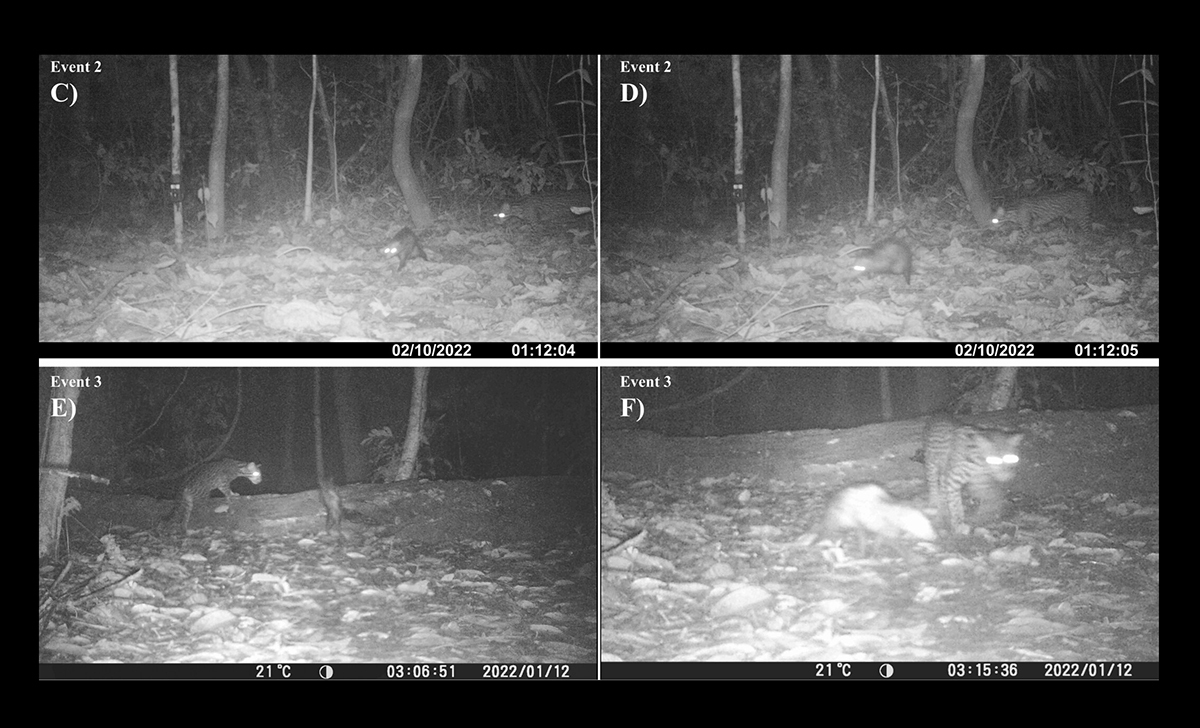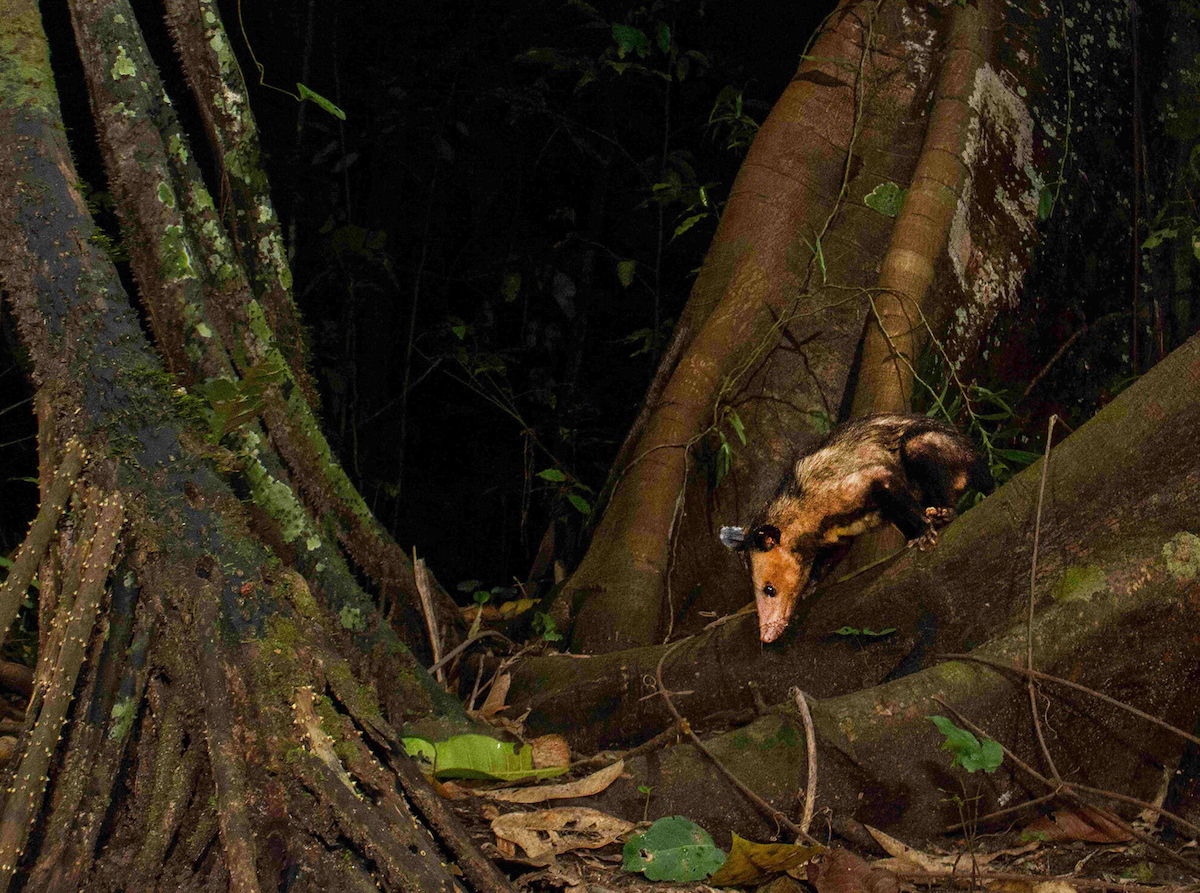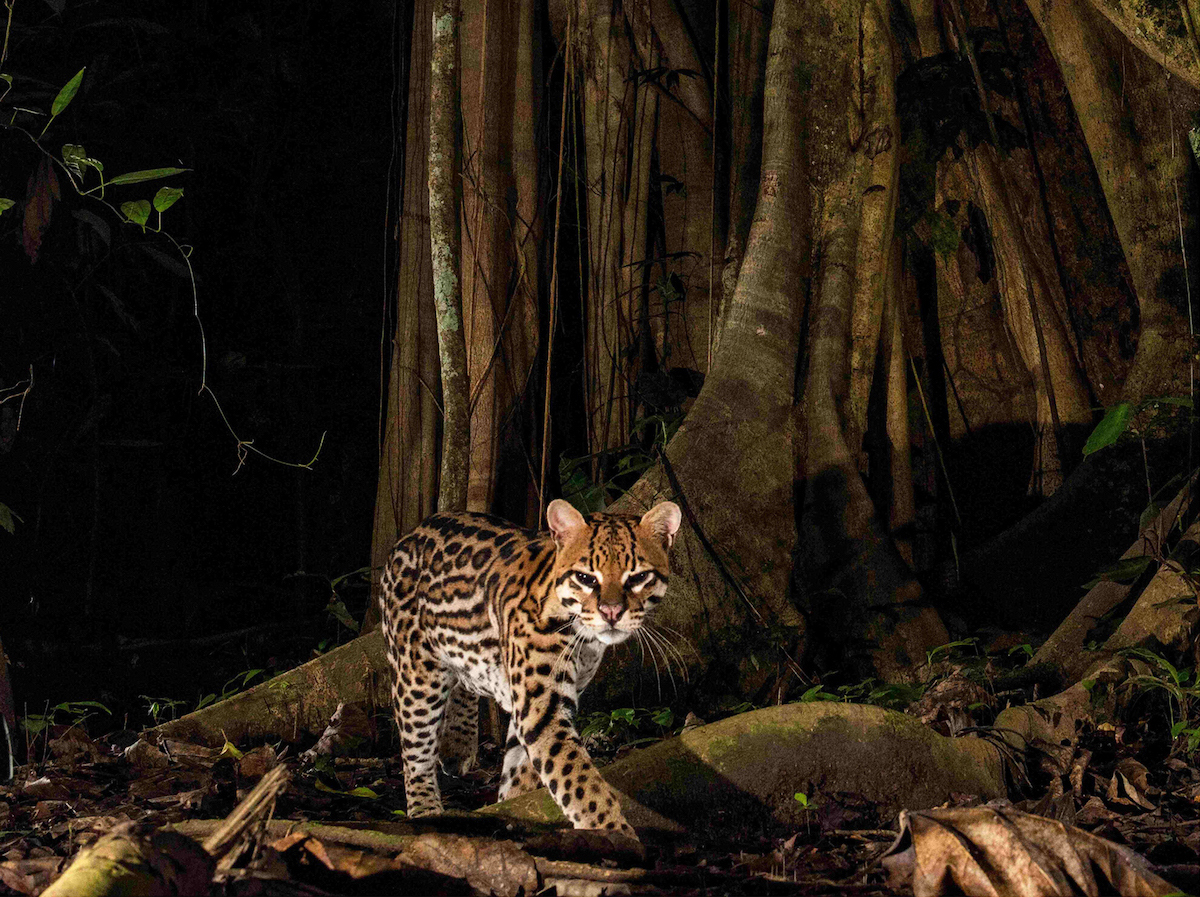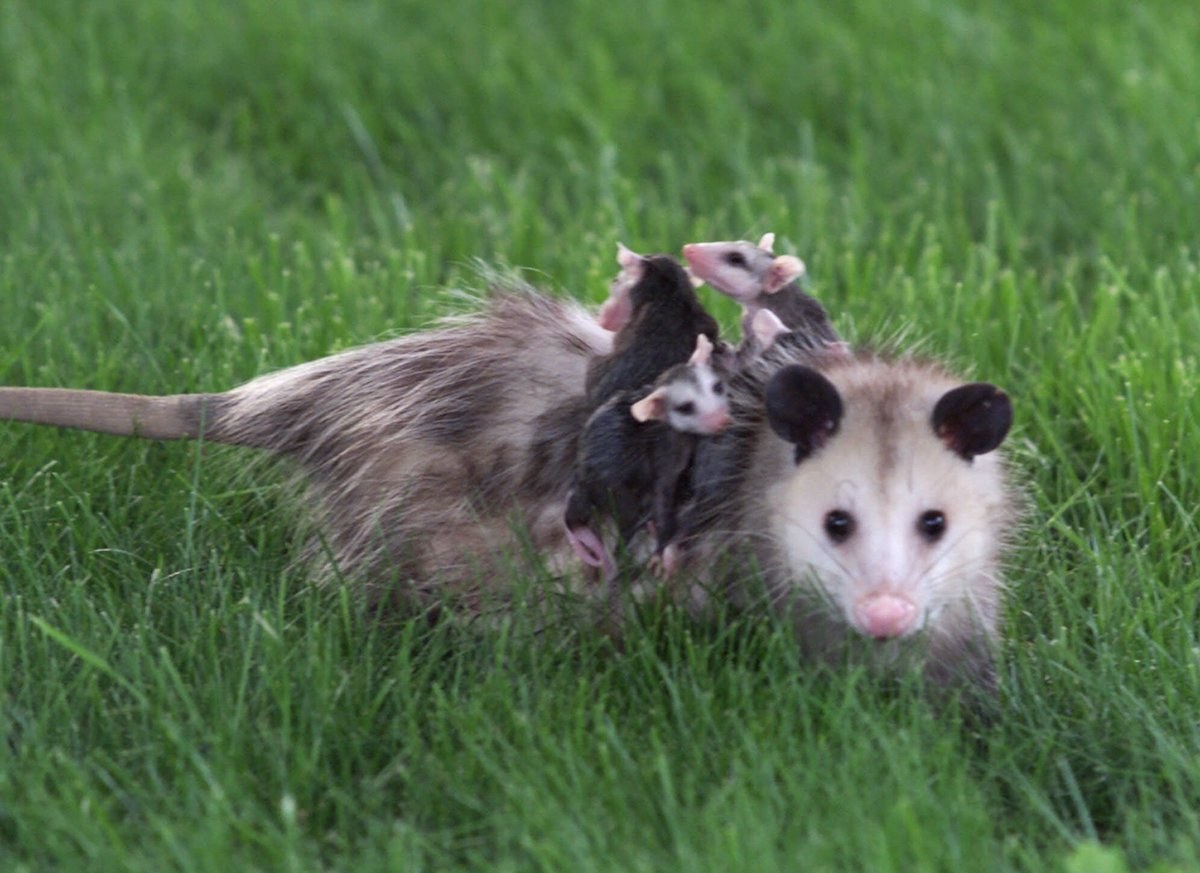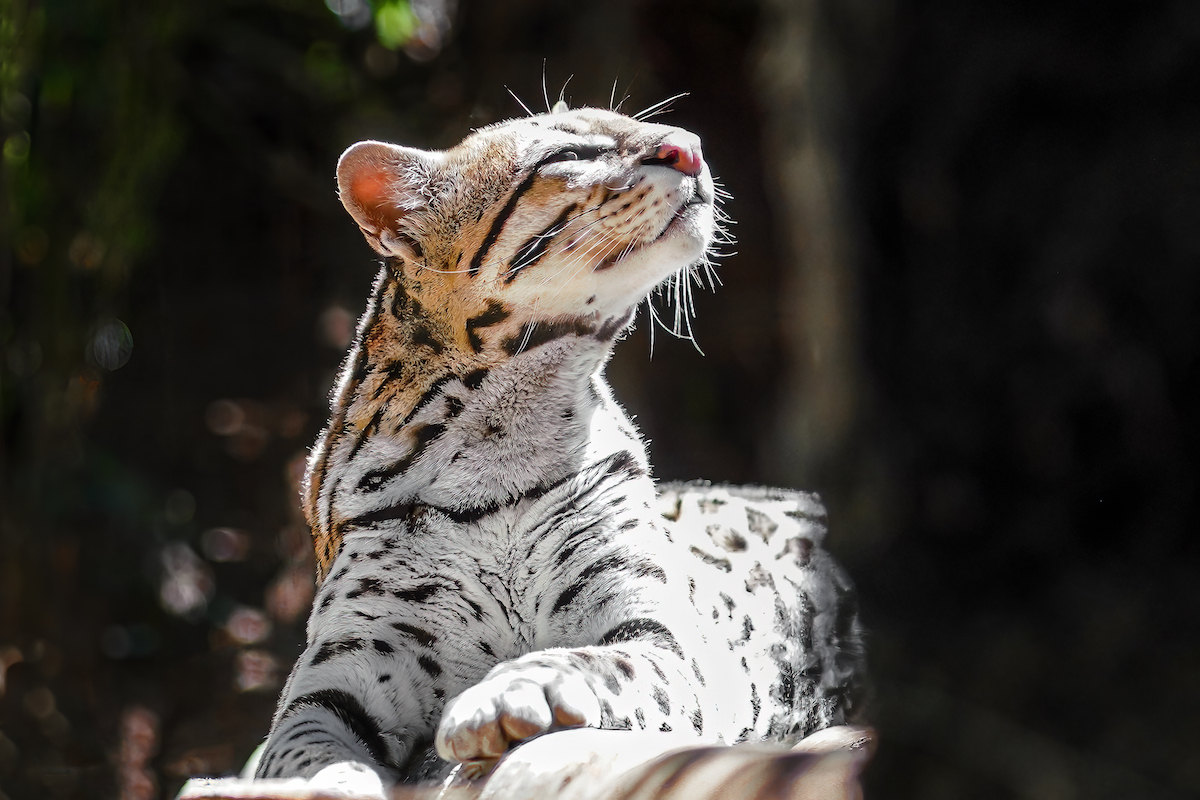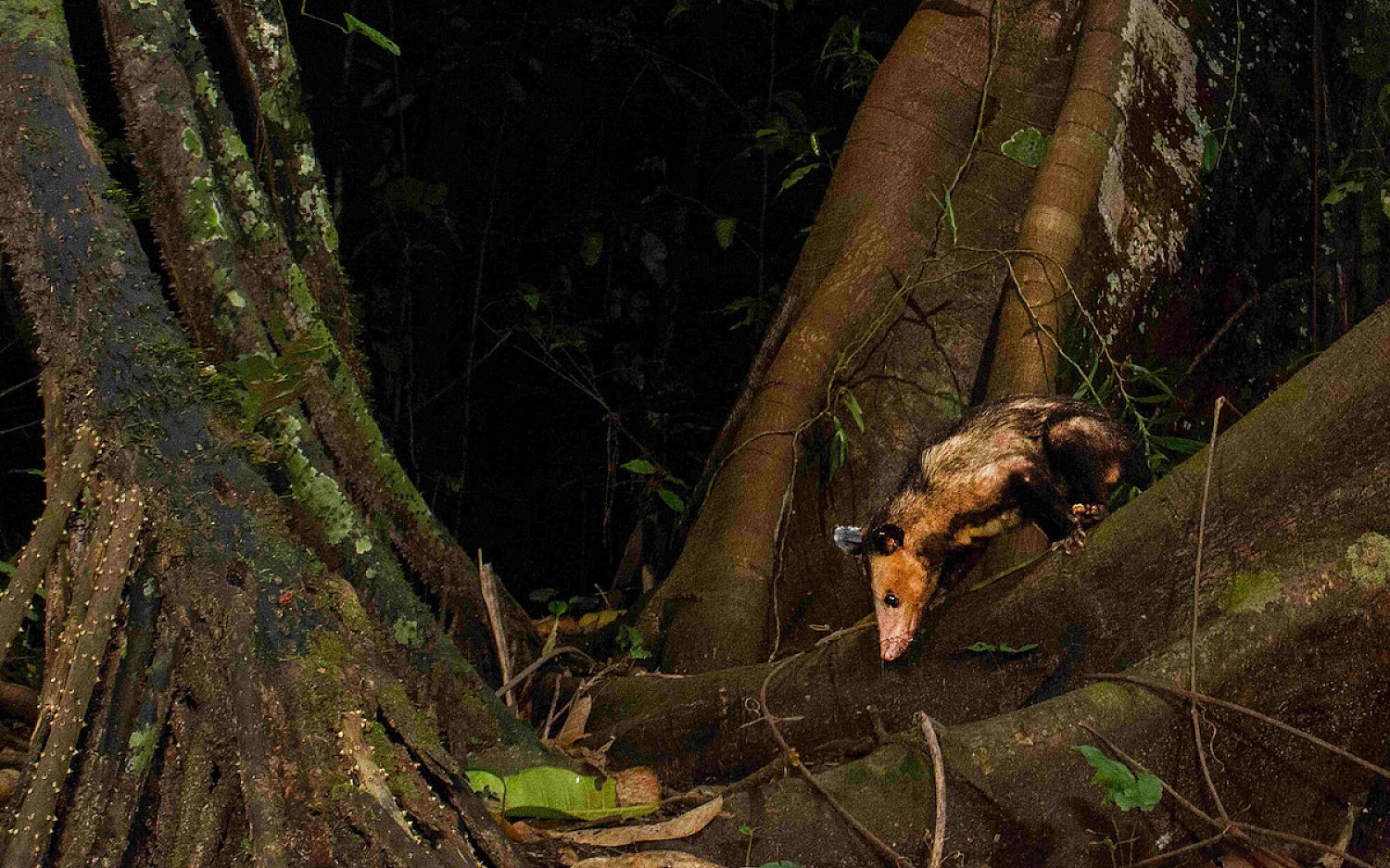
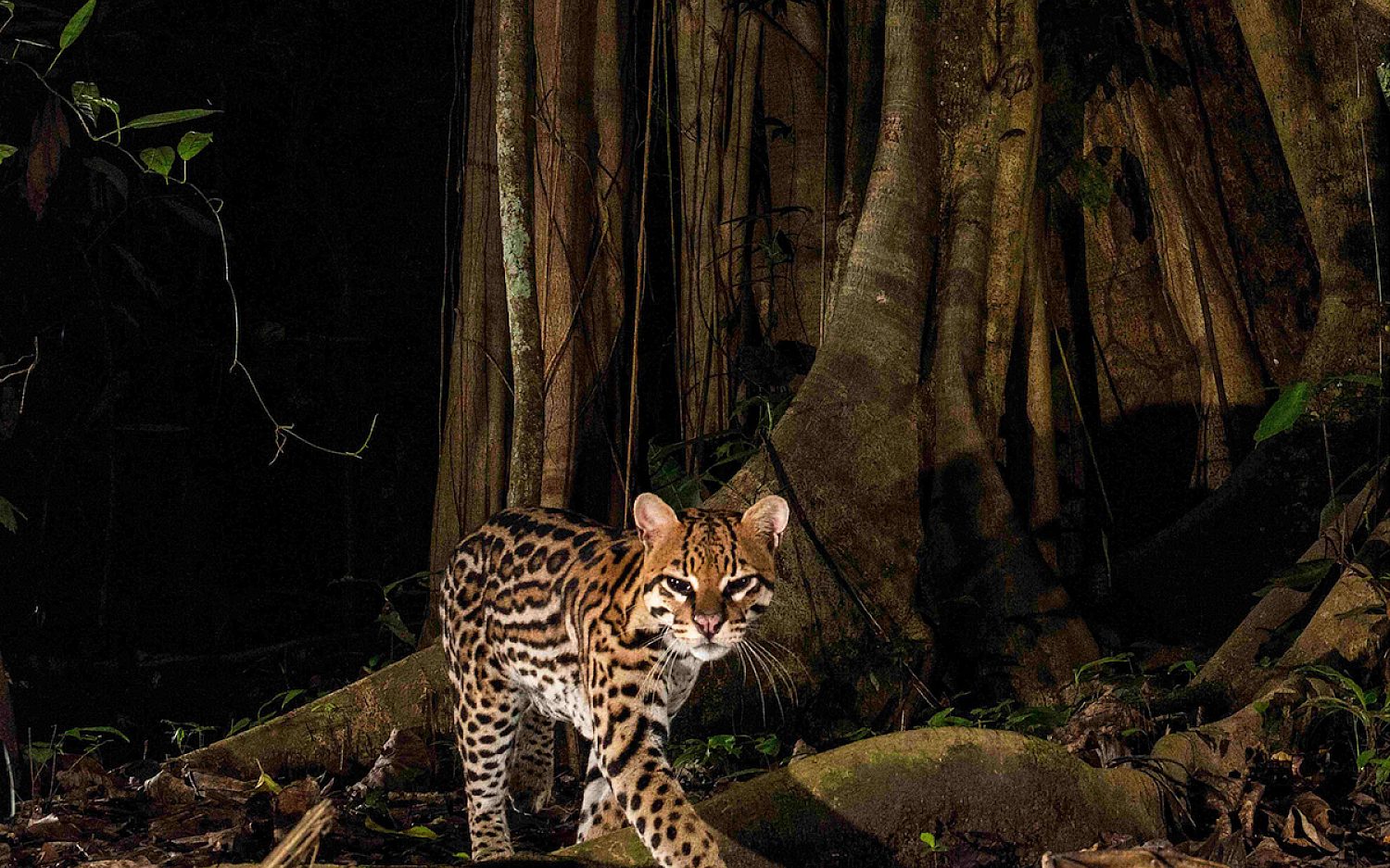
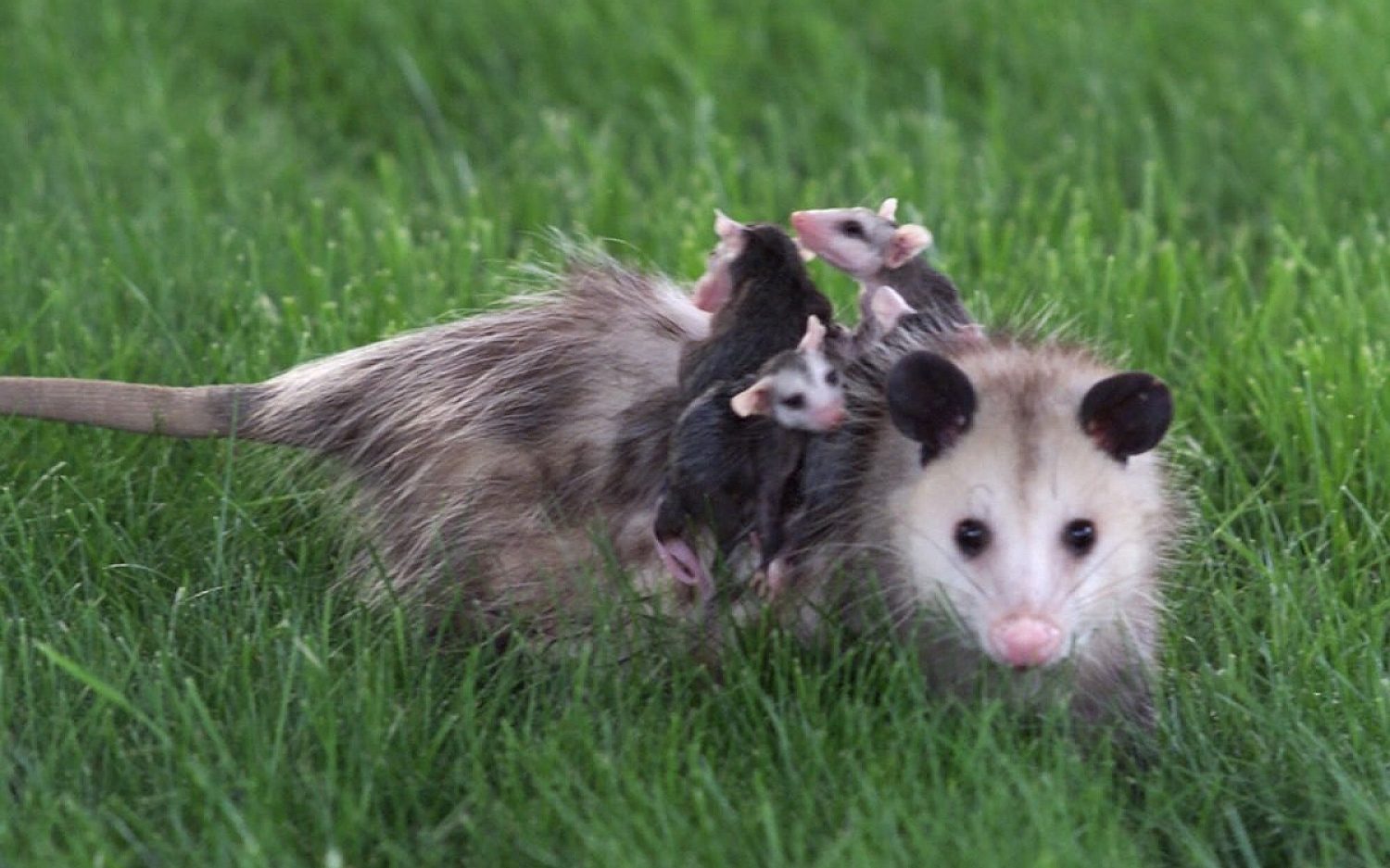
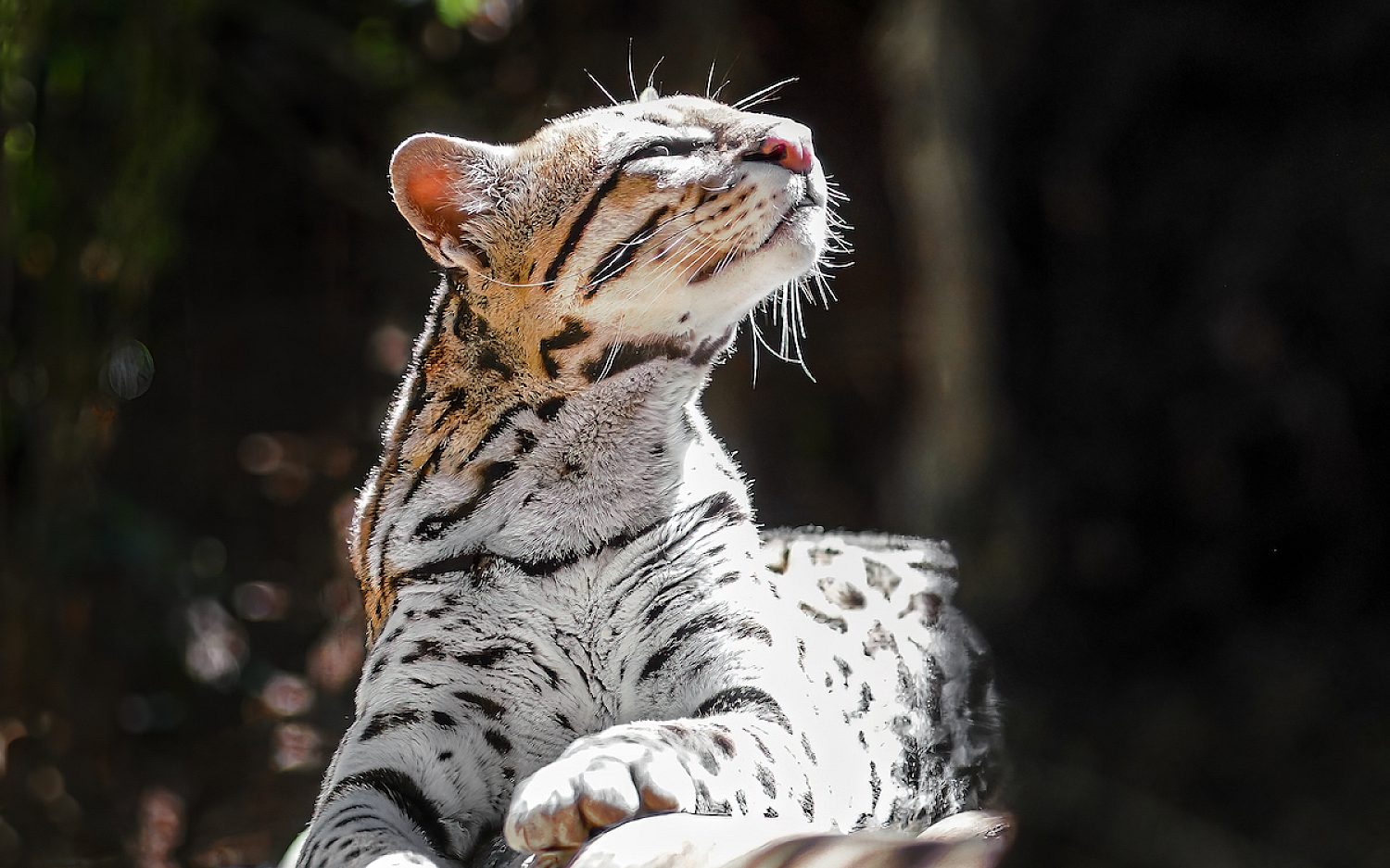

A strange pair strolls Peru’s rainforests at night. Researchers looked at trail camera pictures. They did a double take. Was that an ocelot padding along with a common opossum? Wild cats sometimes eat opossums!
The cameras were set up to study birds. But scientists got a striking view of two creatures most think of as rivals.
Dr. Isabel Damas Moreira is a scientist. She and her team did a study on the animal pals. They contacted more researchers in Peru. Others saw the same marvel. They found four cases of ocelot and opossum buddies between 2019 and 2023.
The researchers set up a test. They placed fabric strips with different scents in front of cameras. One smelled like an ocelot. Another smelled like a puma. The final was a control strip.
Opossums liked the ocelot smell. They rubbed, sniffed, or bit the fabric. They mostly ignored the other strips.
Why would an animal get chummy with its predator? Scientists have some guesses.
The common opossum releases stinky musk when it is in danger and plays dead. It smells like a rotting corpse. Other animals won’t disturb the opossum. They won’t easily smell a tag-along ocelot either! Ocelots have their own scent too. That could scare away opossum predators. Together, both may avoid attacks from other beasts.
Common opossums have another secret weapon. Most snake venom won’t hurt them. An ocelot looking for food may bump into a snake. No sweat! The opossum pal can take the bites. The ocelot can keep eating. When it is finished, its sidekick gets to scarf what’s left. Win-win!
“Nature is often more complex than we think,” Dr. Damas Moreira says.
Why? God surprises us with the ways He enables creatures to work together. He teaches us to make judgments with care. Someone who may seem like an enemy could become a friend. See John 7:24.