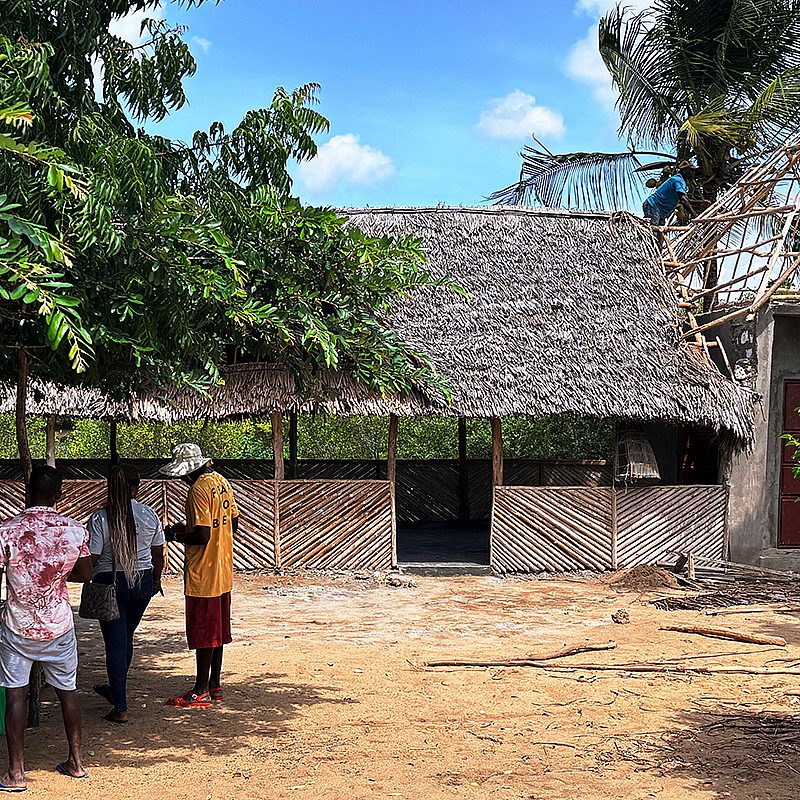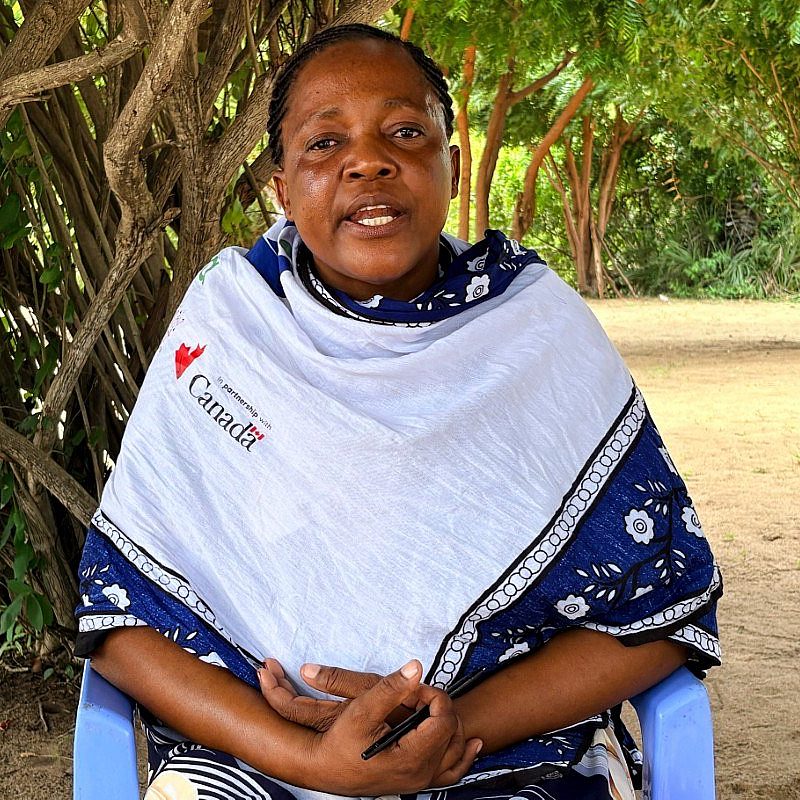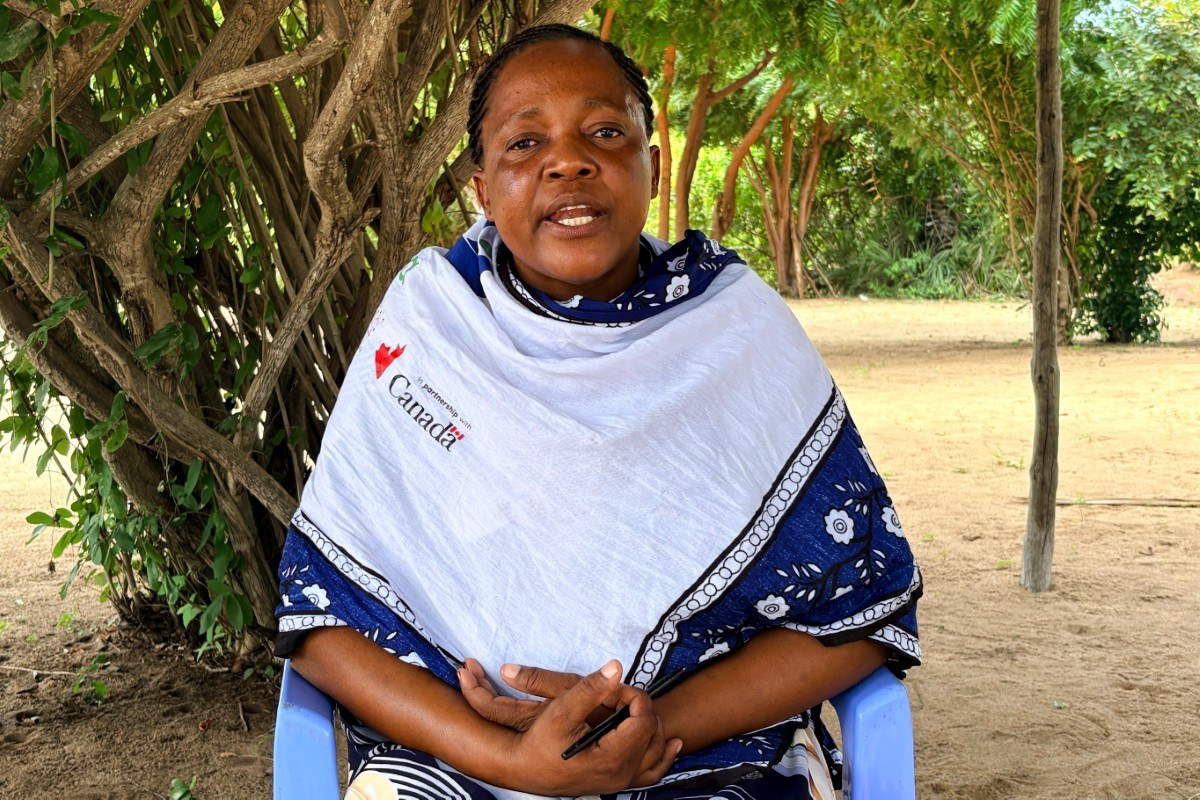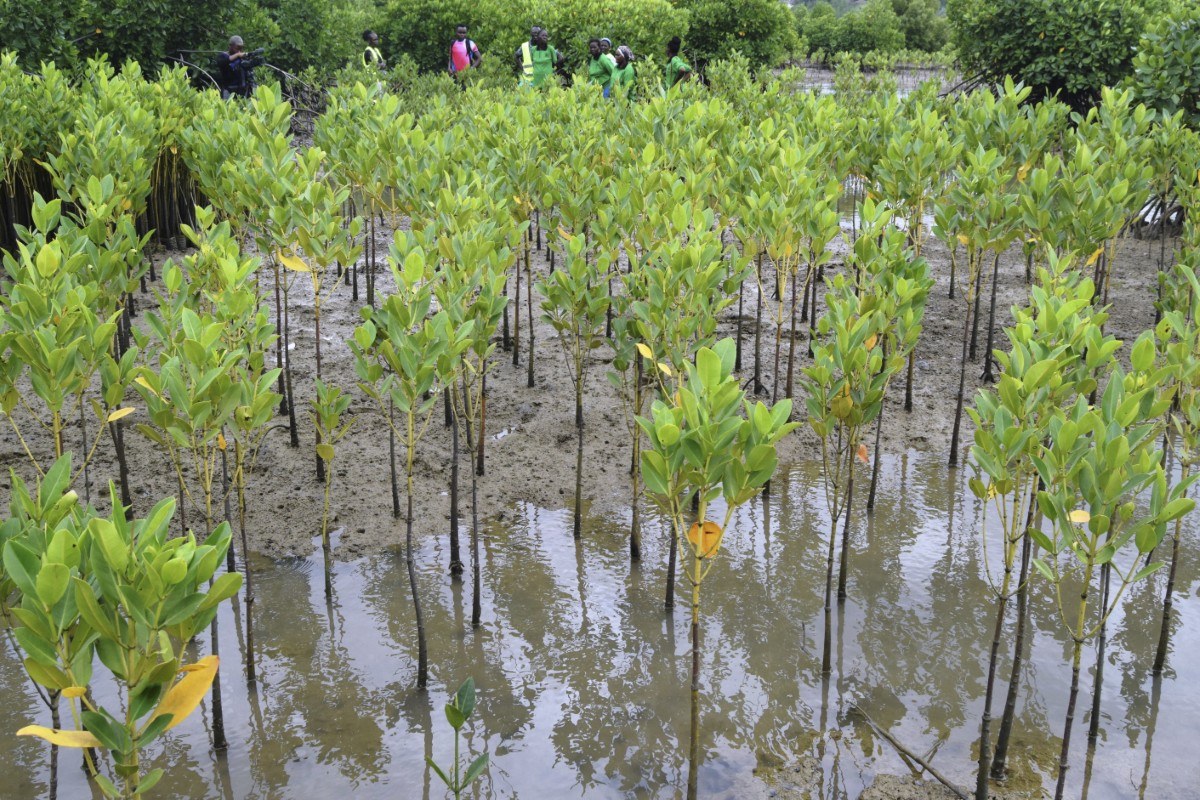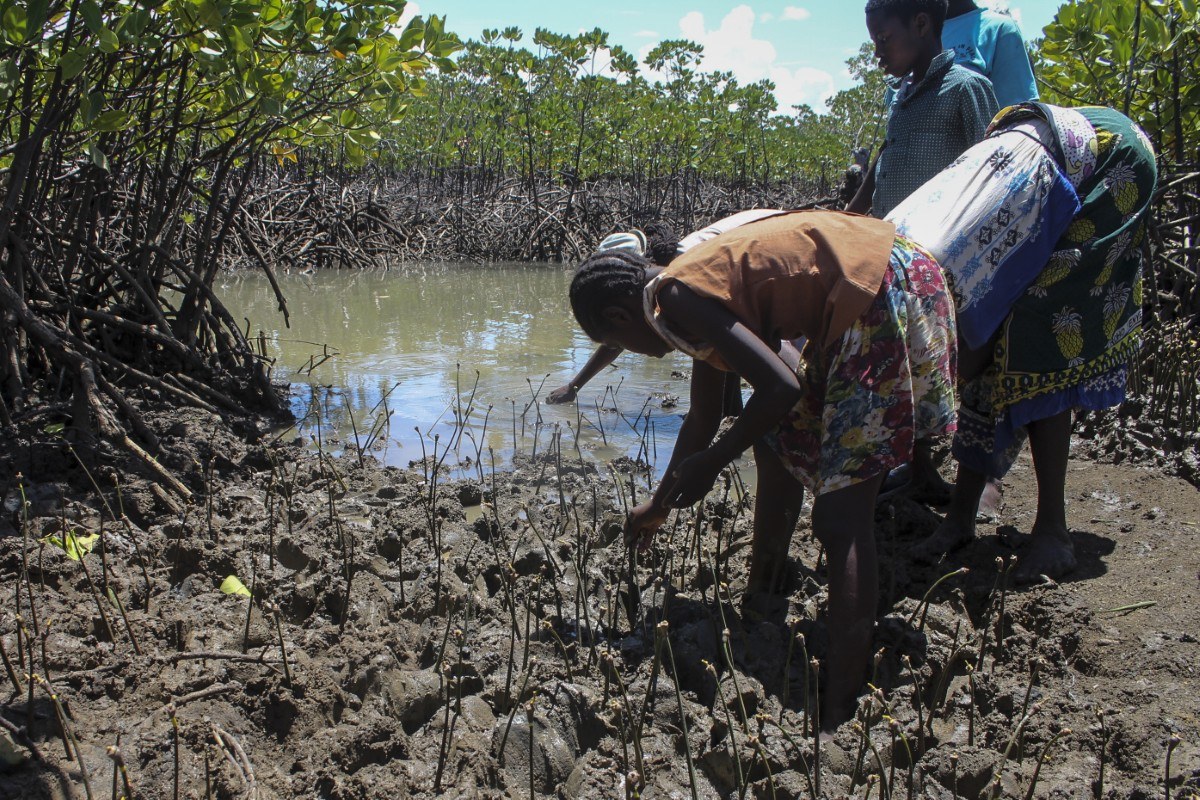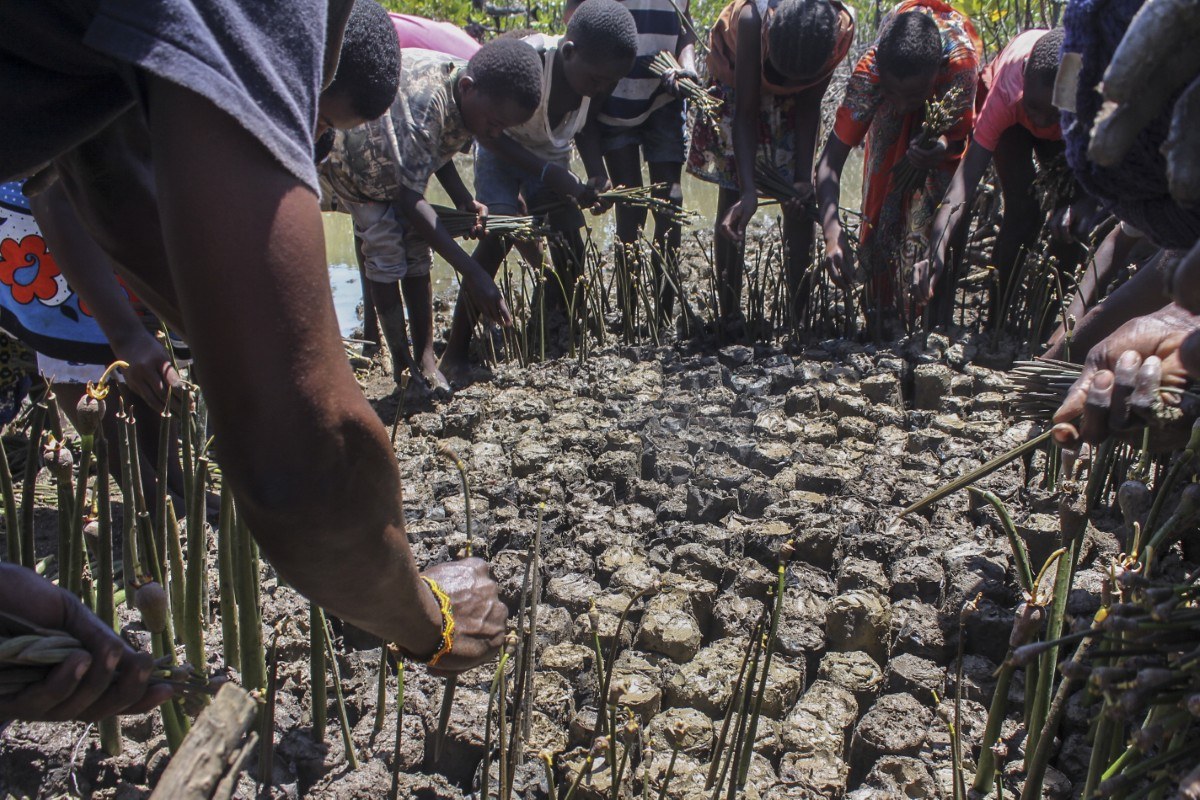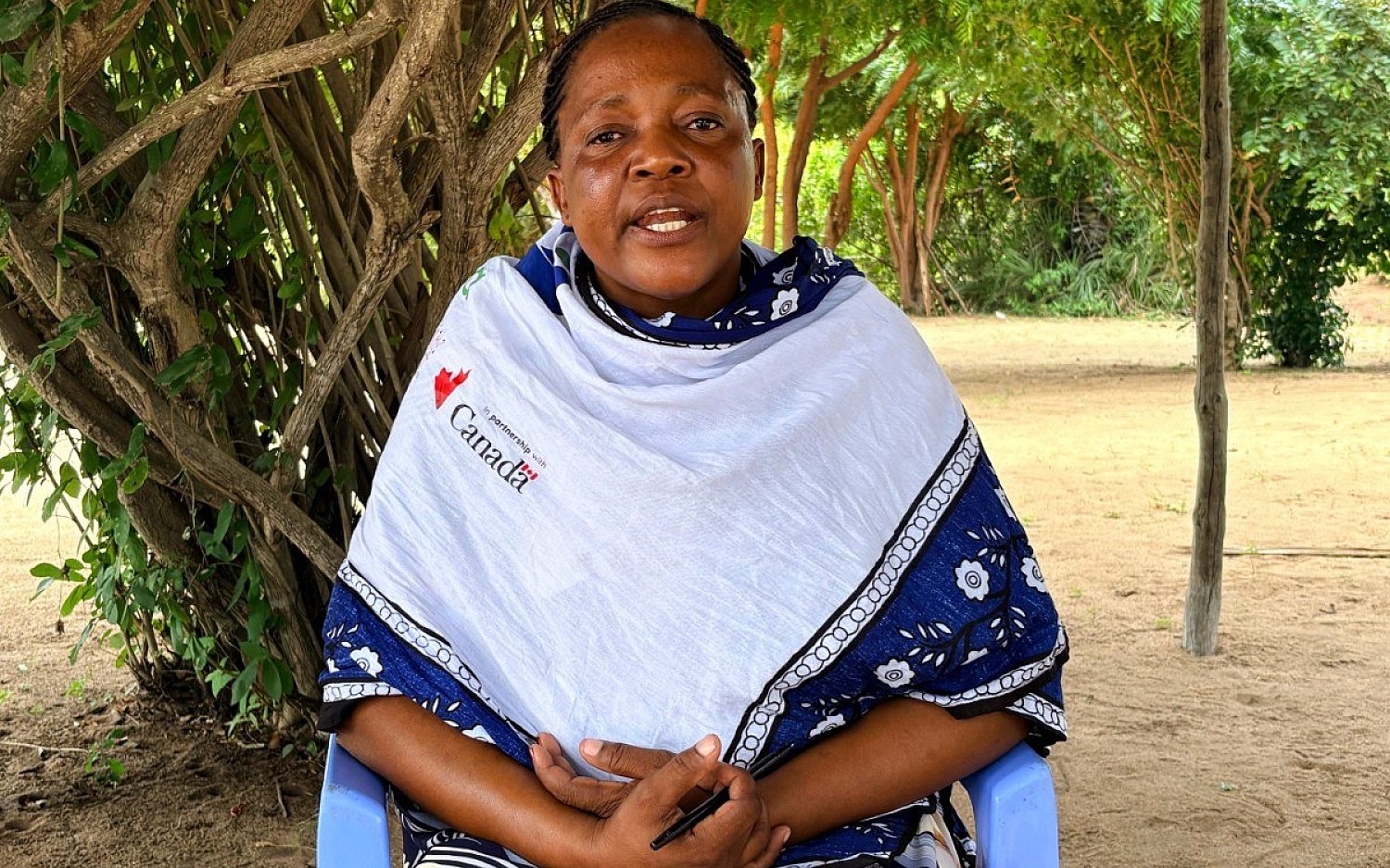
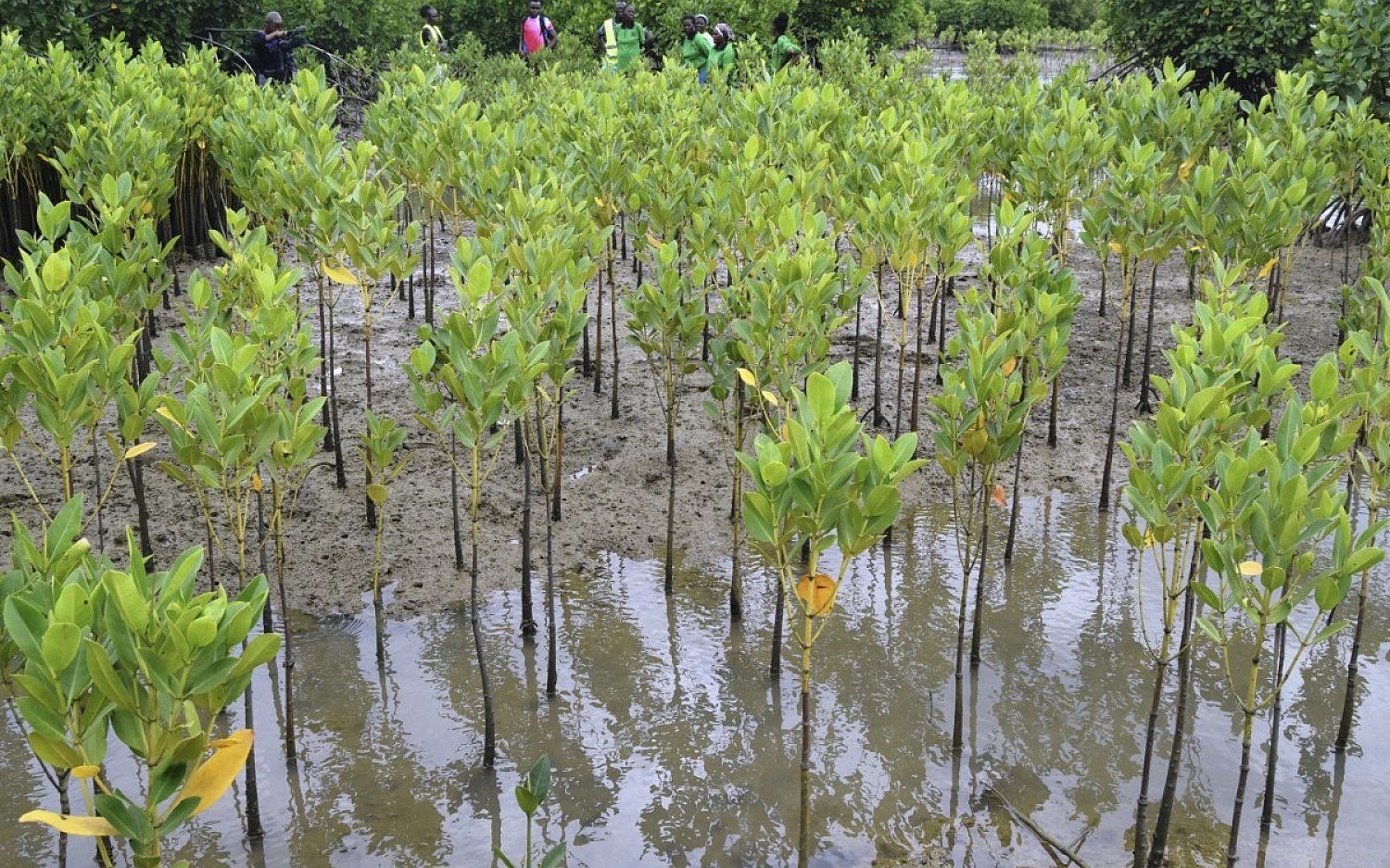
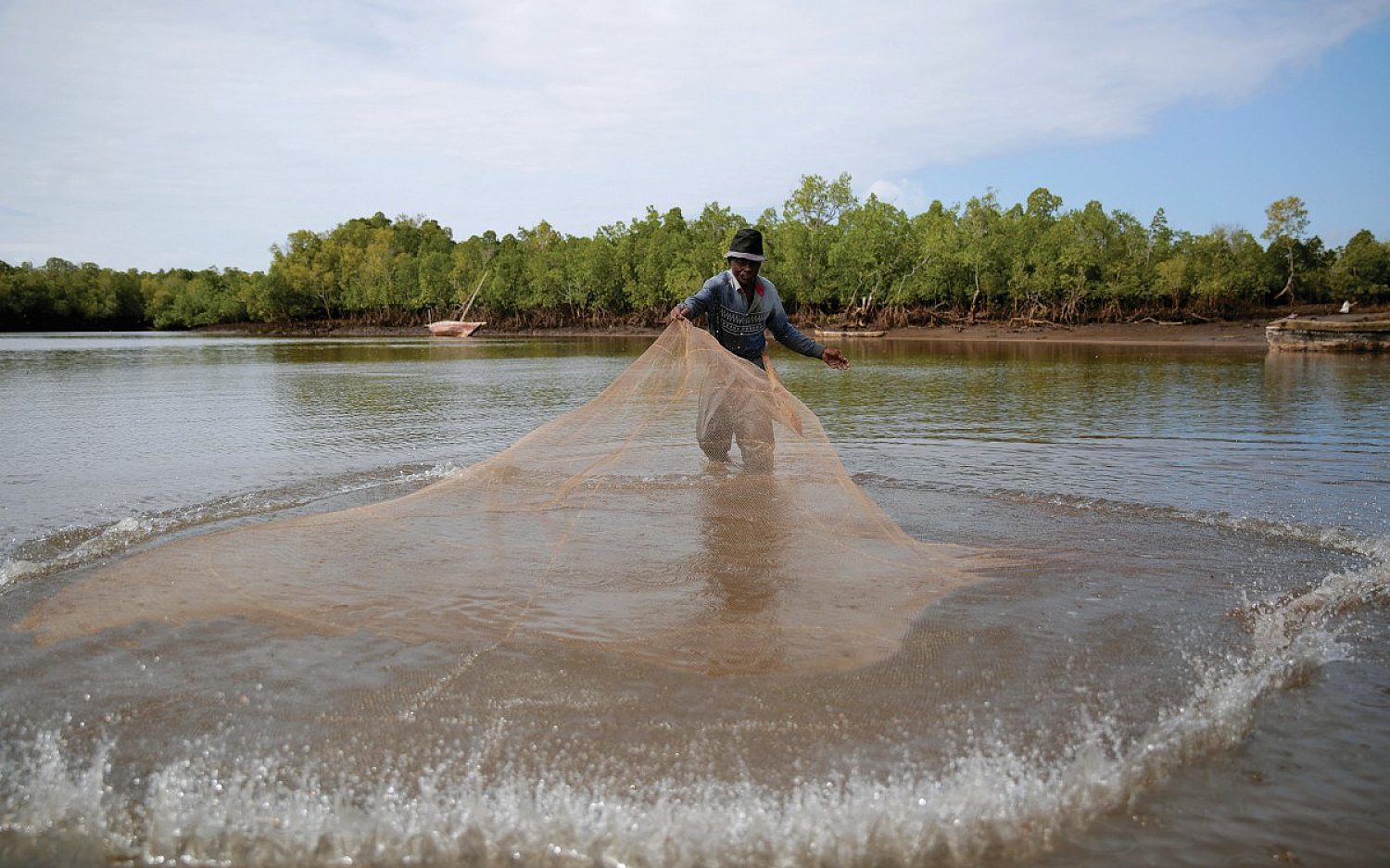
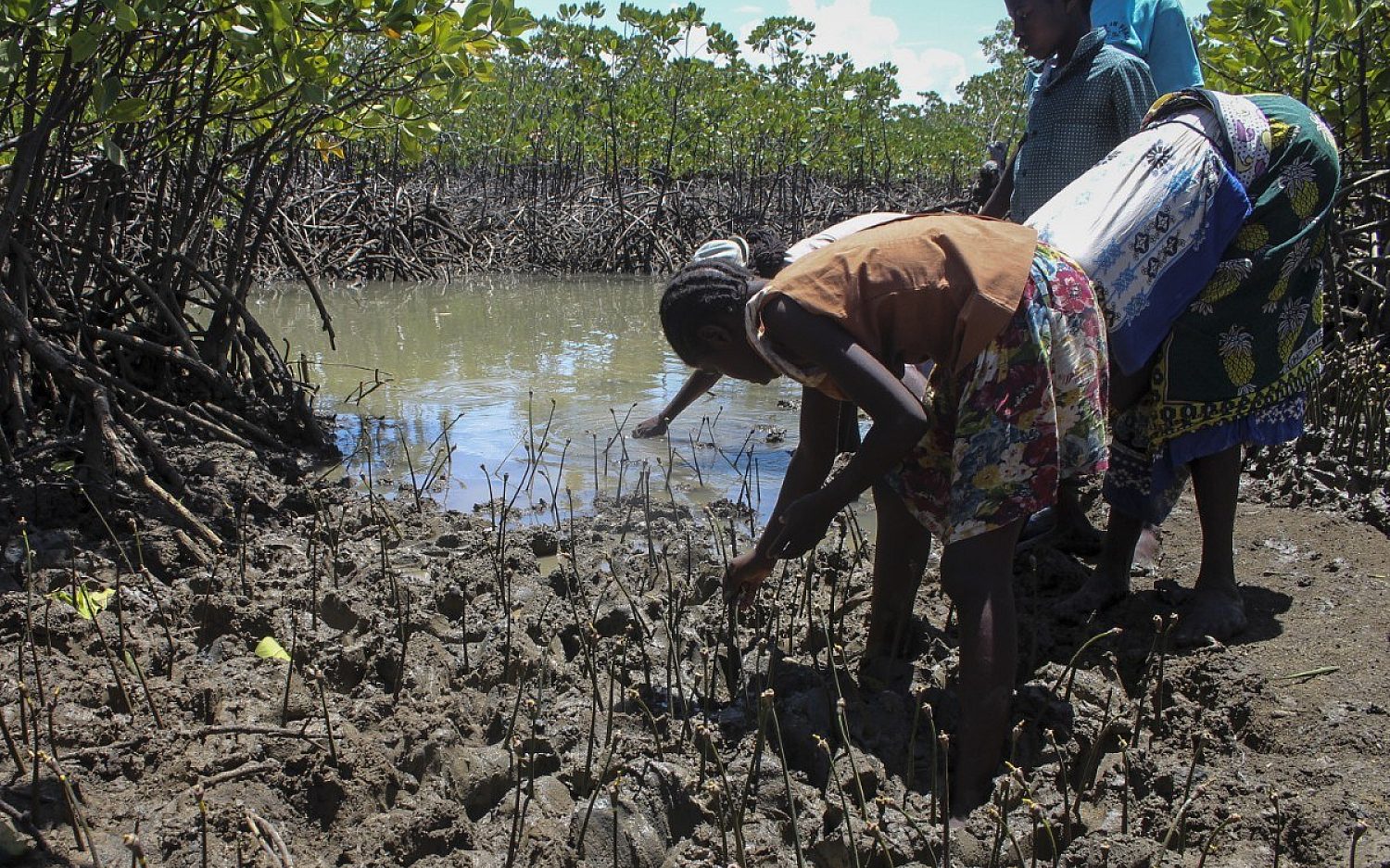
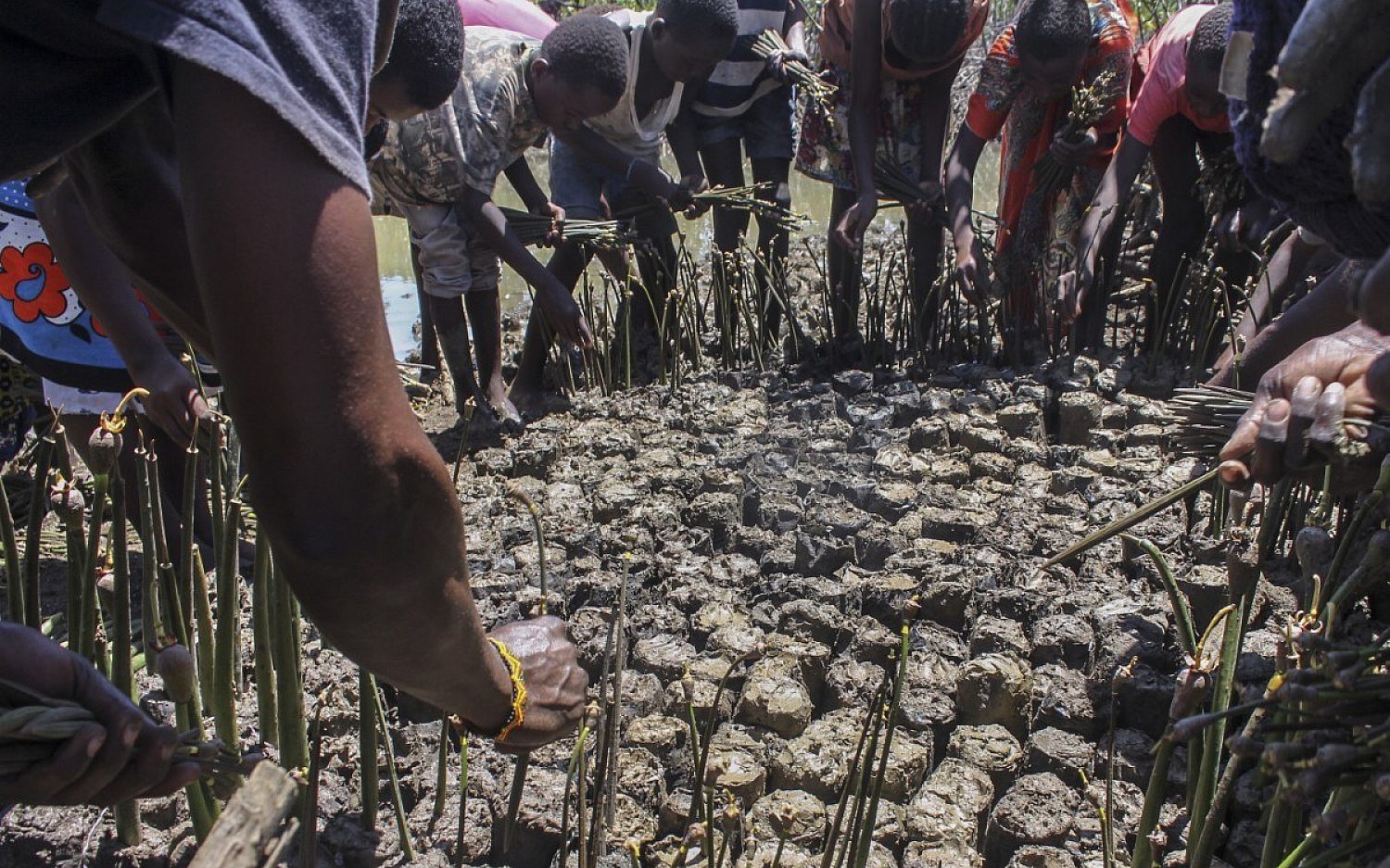

Just six miles from Nuru Mohammed’s new restaurant, the Sabaki River meets the Indian Ocean. Here we find another woman working hard. Her name is Beatrice Mwanyiro. She too runs a restaurant. Plus, she manages a mangrove nursery.
Mangroves are tropical plants. Their superpower? God made them to survive well in loose, watery, salty soil—just the kind you’ll find on the African coast. Mangrove forests exist where sea and land meet. They send out networks of strong roots. Like coral reefs and sea grass meadows, mangroves protect coastlines from storm erosion and make homes for fish.
“We have to adapt to the changing times,” Ms. Mwanyiro says. “The number of fish coming into the shallow waters [is] falling every year. Without another source of income, we won’t be able to feed our families.”
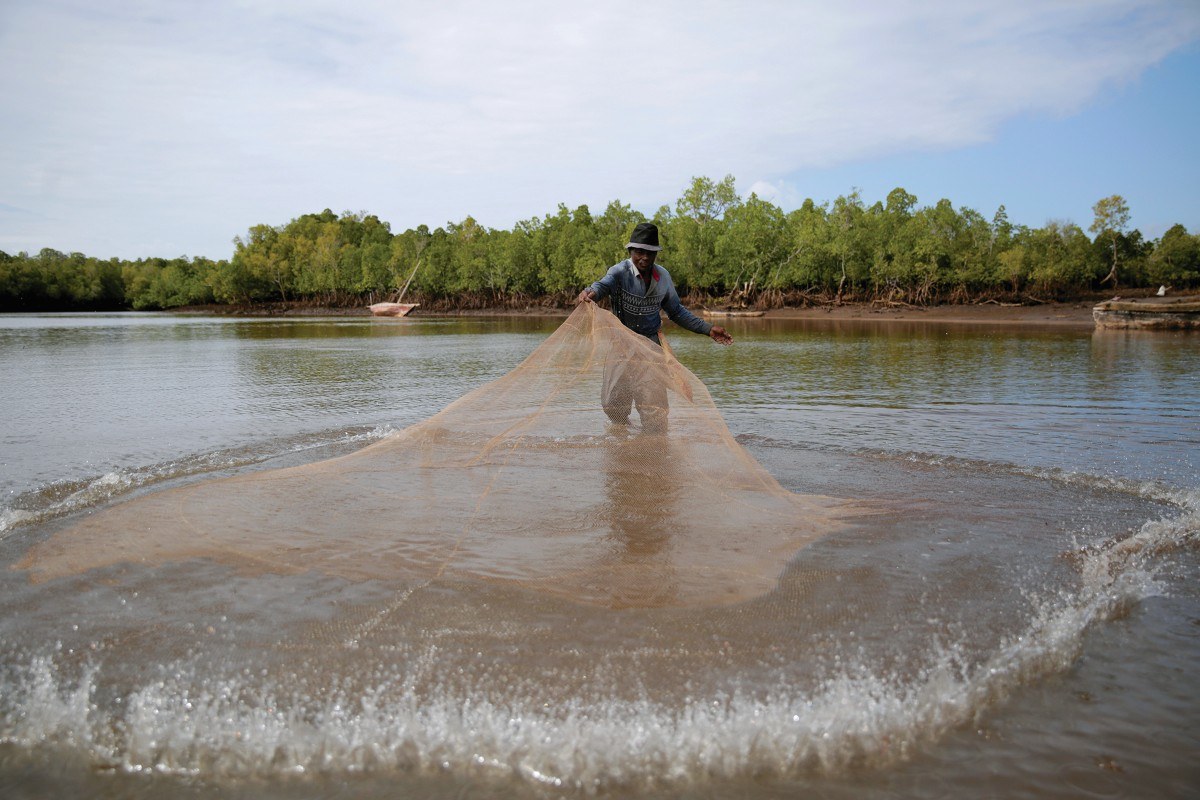
In Lamu, Kenya, boats used to come in carrying 220 or so pounds of fish. Now they may haul in less than 66. Why?
Here’s a big reason: Trawlers. These commercial fishing boats use conical nets called trawls. Trawls drag through the water, capturing fish as they go. Kenyan law says no trawlers can fish within five miles of shore. But fishers say trawlers regularly break this law.
This problem goes beyond Kenya. Illegal fishing happens in many parts of the world. It can harm sea species. It snatches food from people who rely on fish.
“The trawlers fish offshore during the day, but at night they move into the shallow waters,” says fisherman Mohamed Somo. “By morning, there’s very little left for us.”
So African nations race to protect the ocean. Leaders meet to make an agreement nicknamed the “High Seas” treaty. This agreement would require nations to share sea resources. This treaty already binds many nations on other continents.