

When we think of water bears, a famous line from writer William Shakespeare comes to mind: “Though she be but little, she is fierce.”
Shakespeare wasn’t describing tardigrades, of course. Yet the saying fits. Tardigrades can survive extreme conditions.
How extreme? Tardigrades can live in temperatures from about -328 to 304 degrees Fahrenheit! Without water, tardigrades dry out. Their teeny digestive tracts, nervous systems, and other organs slow down. They’re dehydrated but not dead. They can survive this way for decades. They can wait for water. Unusual proteins protect the tardigrade’s cells. When they get water again, the water bears wiggle into action.
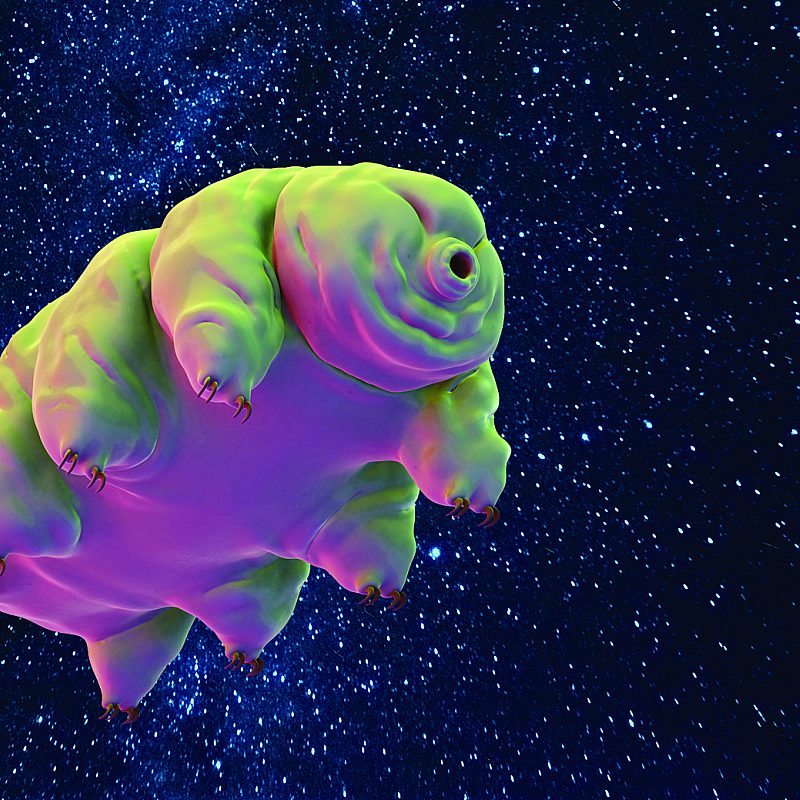
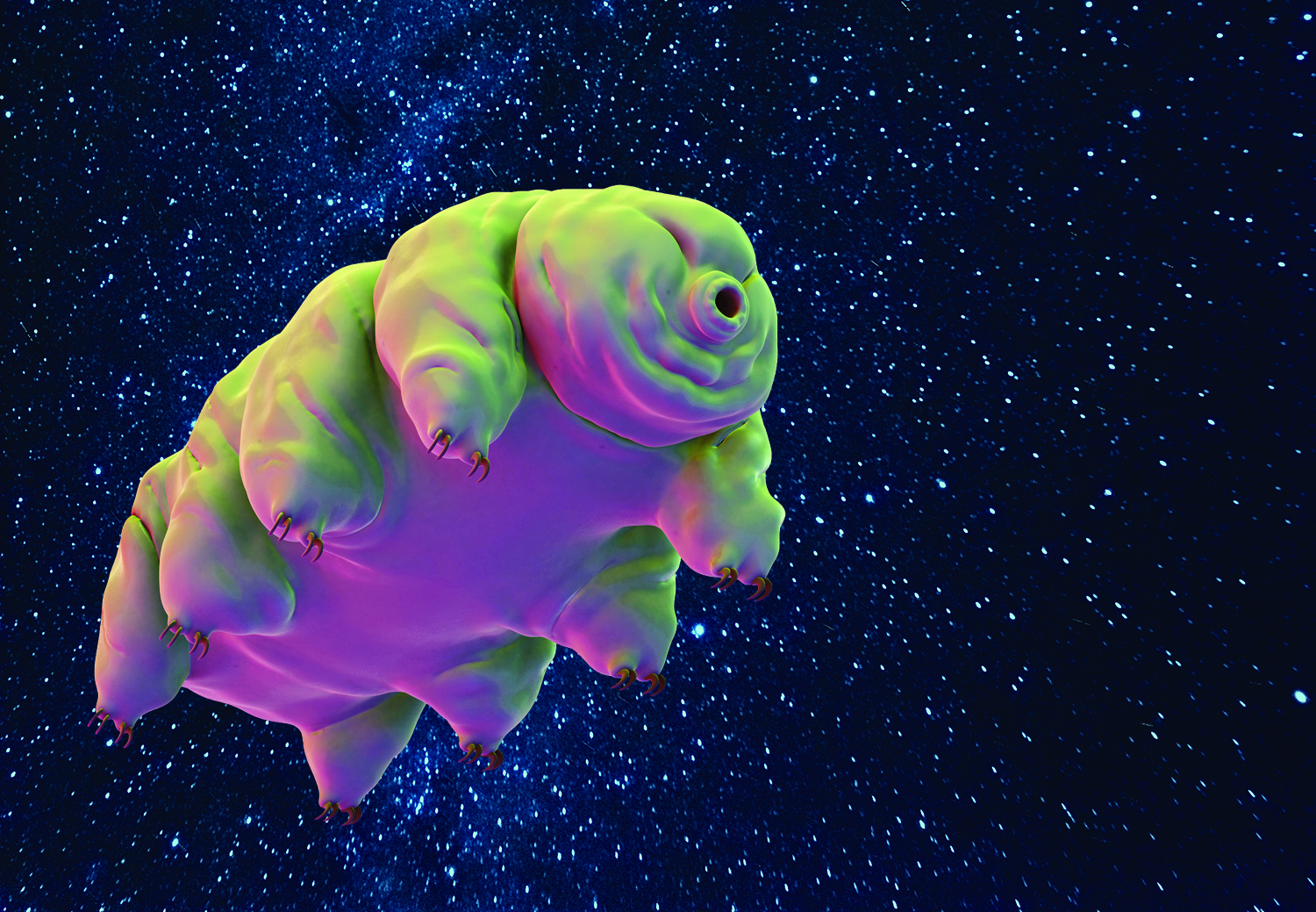
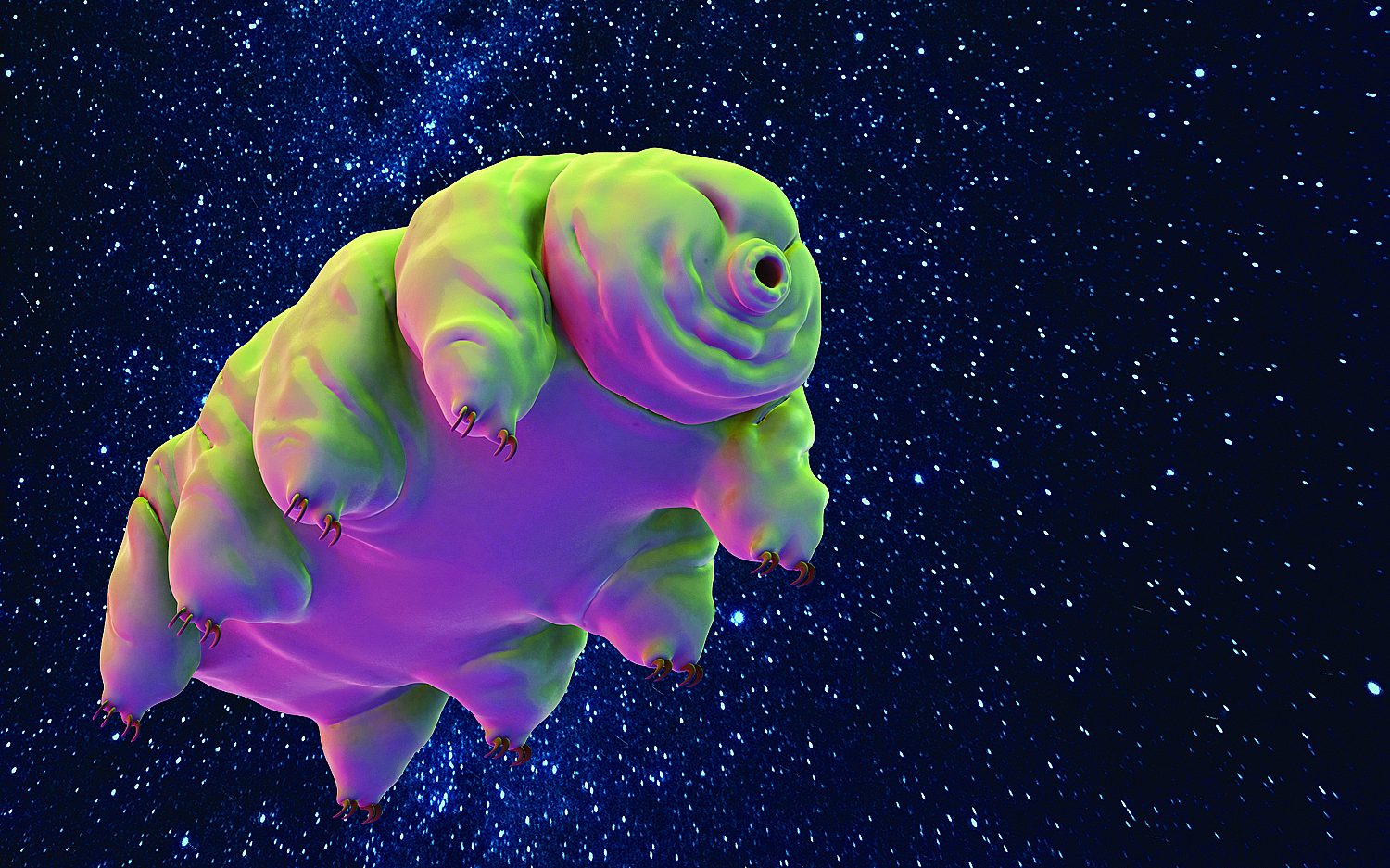
Water bears can even survive in space. Scientists proved that in 2007. They launched two tardigrade species into orbit. Space is hardly hospitable to life. It’s freezing cold, has no air, and radiation pours in from the Sun and other stars. There, water bears weathered what would kill a human.
Why do scientists care so much about tardigrades? Because people can use their abilities for good purposes. Scientists hope to use knowledge about the animals’ talent for drying out and reviving to make dry medicine. These medicines would help people in places without electricity or refrigeration. (Have you ever had to take a liquid medicine that needs to be refrigerated? In parts of the world, it’s nearly impossible to keep that kind of medicine from spoiling.) Researchers hope tardigrades will help us learn about aging, outer space, and more.
Water Bear Facts:
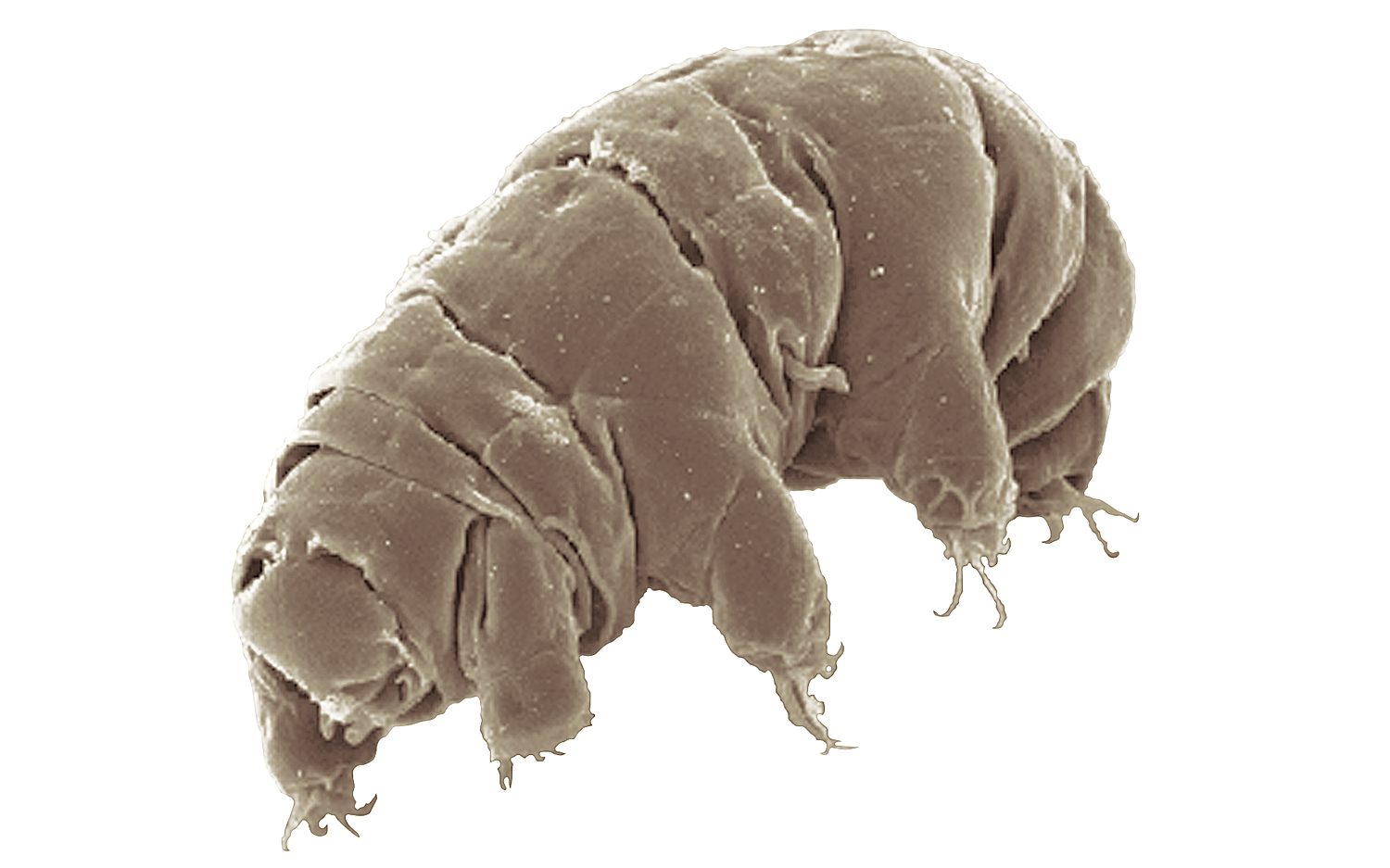
What: A tardigrade is as small as a period on this page. It has eight legs, with the rear two facing backward. Inside, it has no bones or circulatory system.
Where: Tardigrades live all over Earth—on the tops of mountains, under the sea, and maybe even in your back yard.
How many: There are more than 1,300 tardigrade species . . . that we know of.
Recommended Reading: For more about water bears, read Tardigrade Science Project Book by Michael W. Shaw.