

What language do you speak at your house? Many of you will probably say, “English!” But did you know that out of every 10 Americans, two speak another language at home?
Earlier this year, President Donald Trump made a new law. It makes English the official U.S. language. But behind closed doors, the United States is multilingual. Folks come from other lands. Many bring along their customs, food, and languages too. And some languages were here before English-speakers ever showed up! “This is a big part of who we’ve been over a long period of time,” says William Frey. He’s a demographer—a person who studies changes in human populations.
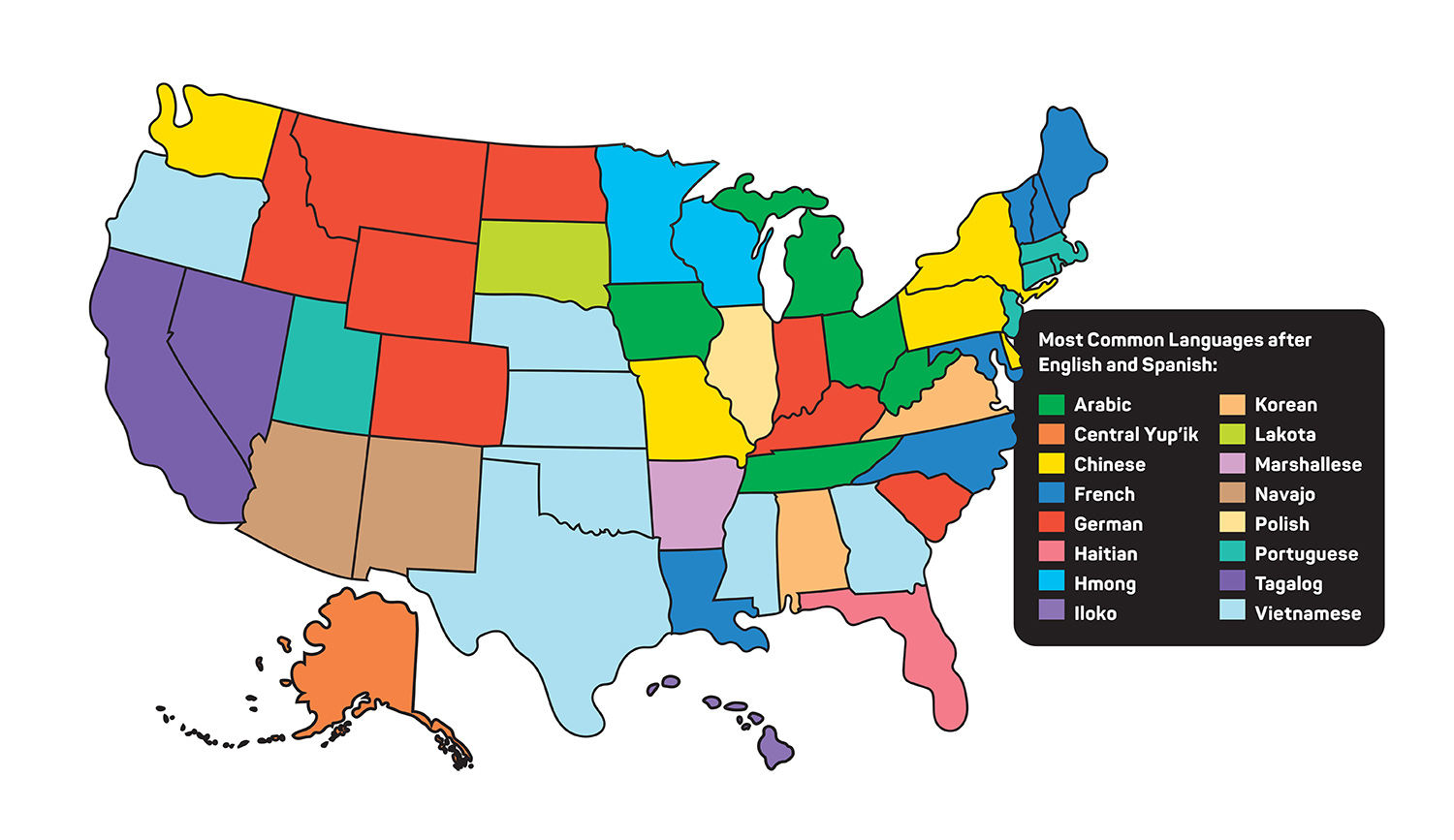
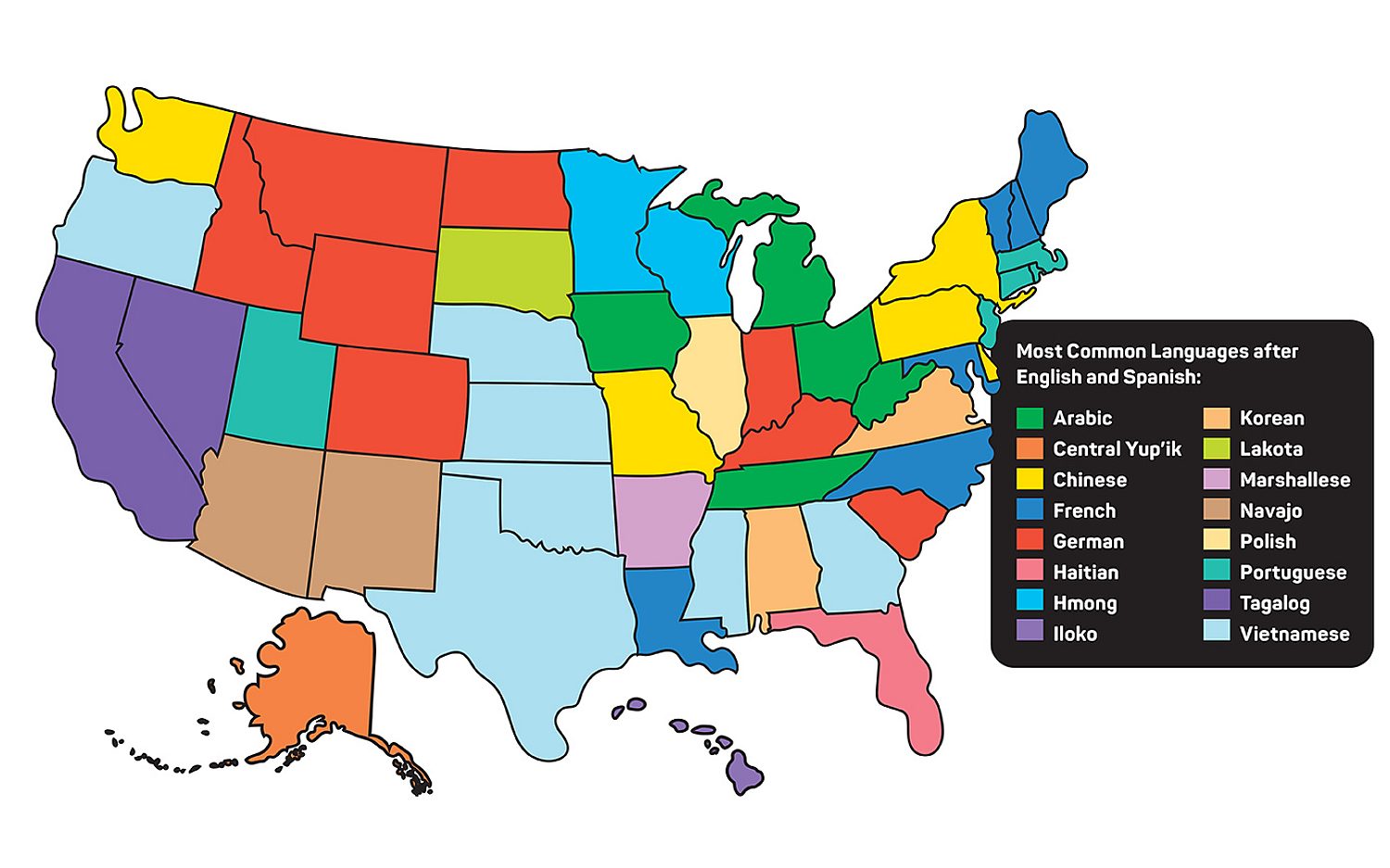
So if people aren’t speaking English at home, what language are they speaking? It depends on where you live. A census (people-count) shows that in most U.S. states, Spanish is the most common language after English. But not so in Hawaii. There, it’s Iloko. That language comes from the Philippines. In Maine and Vermont, French follows English. People have moved there from French-speaking parts of Canada.
Read the beginning of Acts 2. In that chapter, God’s church is brand new. God gives His apostles an amazing gift. They can suddenly speak foreign languages. Why? Because God wanted everyone—people of all tongues—to hear the good news about Jesus. God has not changed. Sharing the gospel with people of all languages is still important to Him!
A Snapshot of Languages at Home
Most common languages after English and Spanish:
- Arabic in Iowa, Michigan, Ohio, Tennessee, and West Virginia
- Central Yup’ik in Alaska
- Chinese in Delaware, Missouri, New York, Pennsylvania, and Washington
- French in Louisiana, Maine, Maryland, New Hampshire, North Carolina, Vermont, and Washington, D.C.
- German in Colorado, Idaho, Indiana, Kentucky, Montana, North Dakota, South Carolina, and Wyoming
- Haitian in Florida
- Hmong in Minnesota and Wisconsin
- Iloko in Hawaii (Spanish is Hawaii’s fifth-spoken language.)
- Korean in Alabama and Virginia
- Lakota in South Dakota
- Marshallese in Arkansas
- Navajo in Arizona and New Mexico
- Polish in Illinois
- Portuguese in Connecticut, Massachusetts, New Jersey, Utah, and Rhode Island
- Tagalog in California and Nevada
- Vietnamese in Georgia, Kansas, Mississippi, Nebraska, Oklahoma, Oregon, and Texas
Why? God includes all tribes, tongues, and nations in His kingdom. It matters to Him that we love people of all languages and share the gospel with everyone.