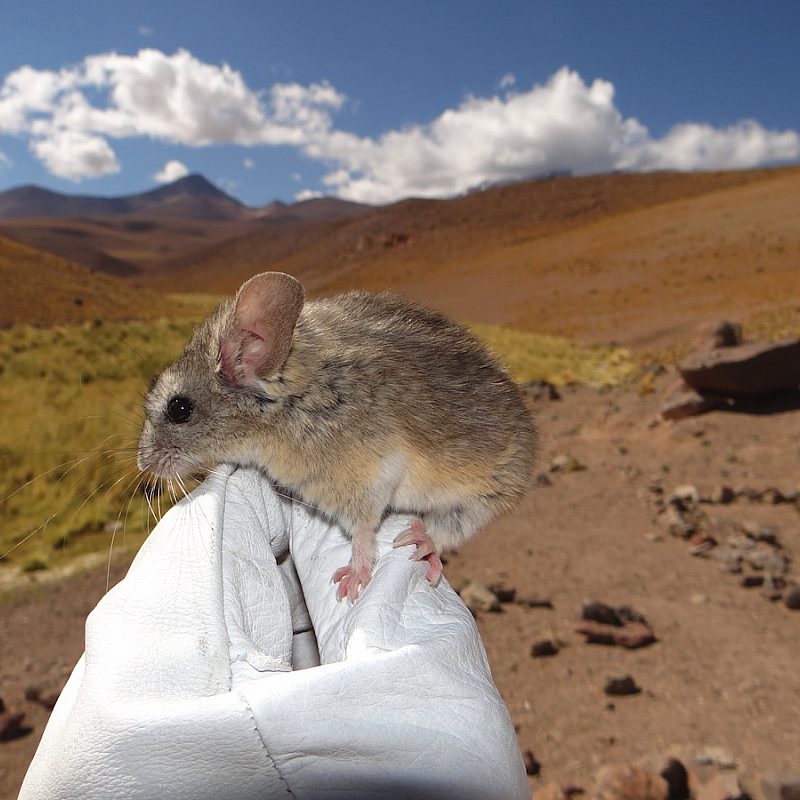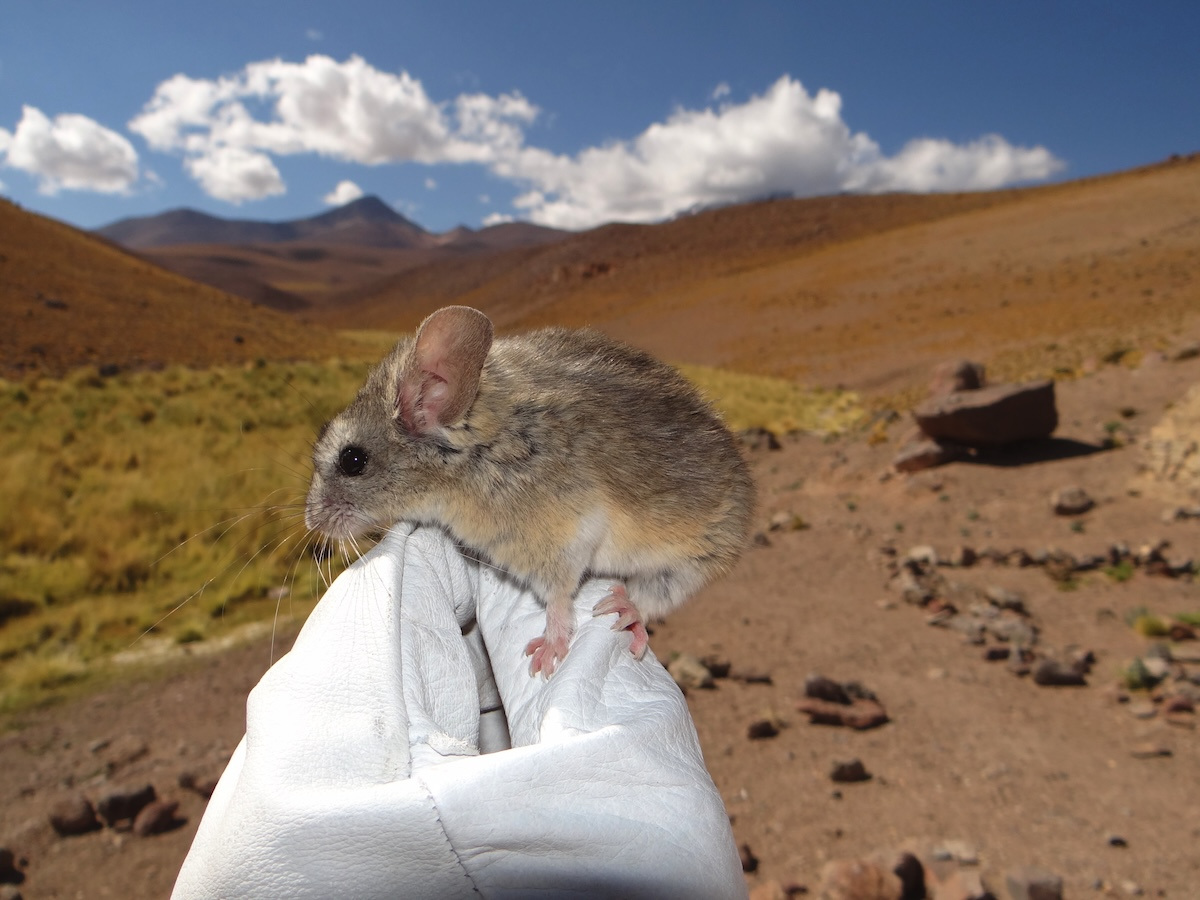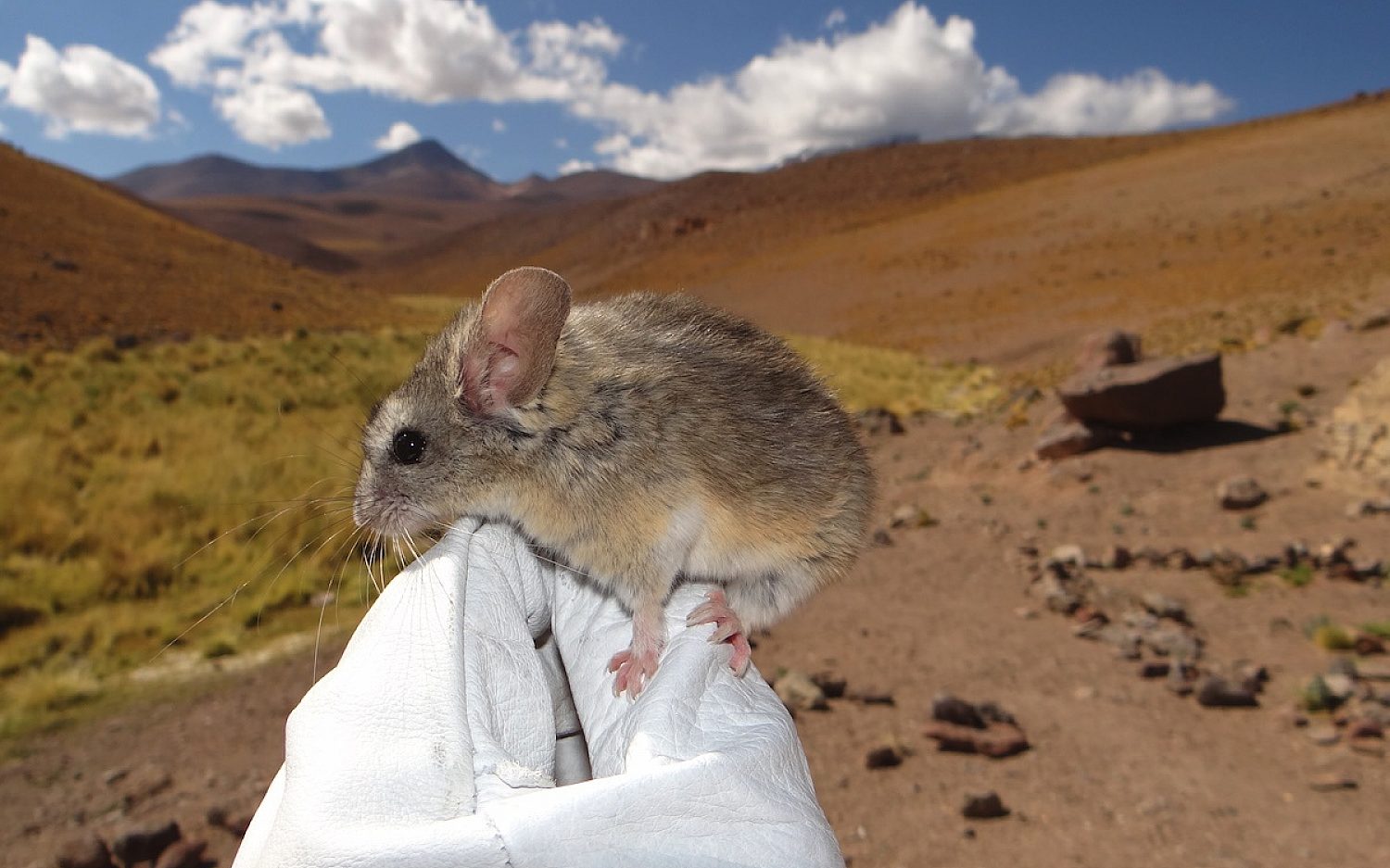




Most mice like to live in cozy, warm spots. They build soft nests out of straw, leaves, or shredded paper. But certain Andean leaf-eared mice aren’t your average rodents.
Some of these creatures enjoy rugged mountain living. They dwell under rocks and boulders. They stay at peaks of up to 22,000 feet high in Chile.
There’s plenty of oxygen at sea level. There is less than half that amount where these mice nest. Temperatures stay below freezing almost all the time. No other mammal calls such a brutal place home.
A well-trained mountain climber can handle a hike at 22,000 feet—for one day. After that, the trekker needs extra oxygen to survive.
The smaller a creature is, the easier it is for it to lose heat. So what are teeny Andean leaf-eared mice doing in the low-oxygen, frosty highlands? Researchers studied 167 of these mice. Some were from sea level. Others were from the highest peaks.
Experts looked at their mitochondria. These are like microscopic power plants inside cells. They turn food into energy. Some Andean leaf-eared mice have super mitochondria!
The mountaineer mice have muscles that make more energy than other mice. Their brown fat produces more body heat than the brown fat of mice living at lower altitudes.
Field mice like to nibble fruits, nuts, and insects. Andean leaf-eared mice don’t have those options. Not much grows in frigid places. God made these rodents able to digest what’s available. Plants that are toxic to other creatures make fine meals for these scavengers.
Some heart and lung diseases prevent people’s bodies from getting enough oxygen. Scientists hope studying mice that live with less oxygen can show doctors how to care for such patients.
Why? God designed each creature to inhabit a certain home. He designed people for eternal communion with Him.