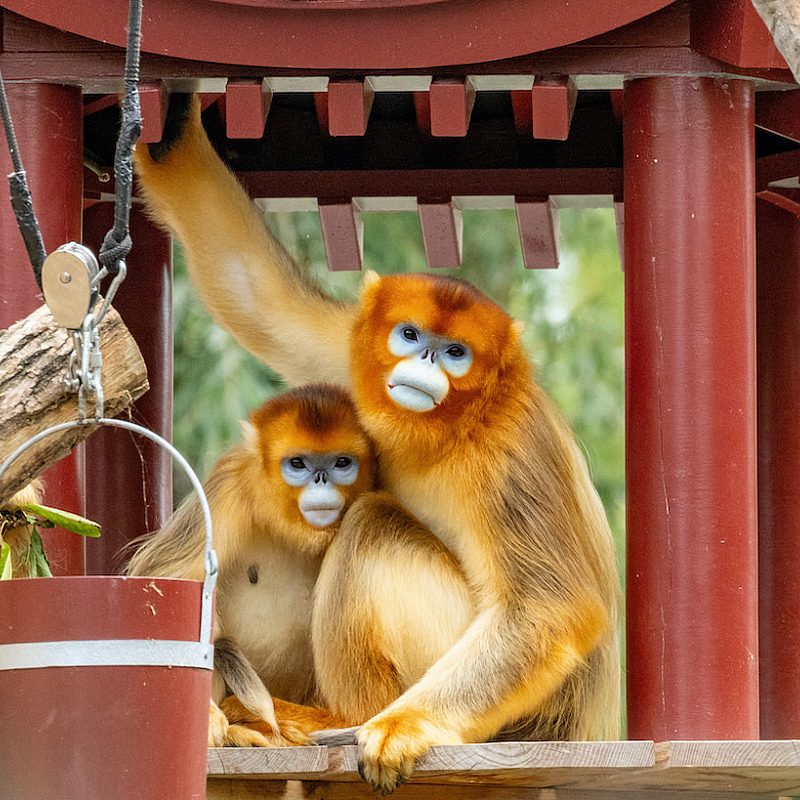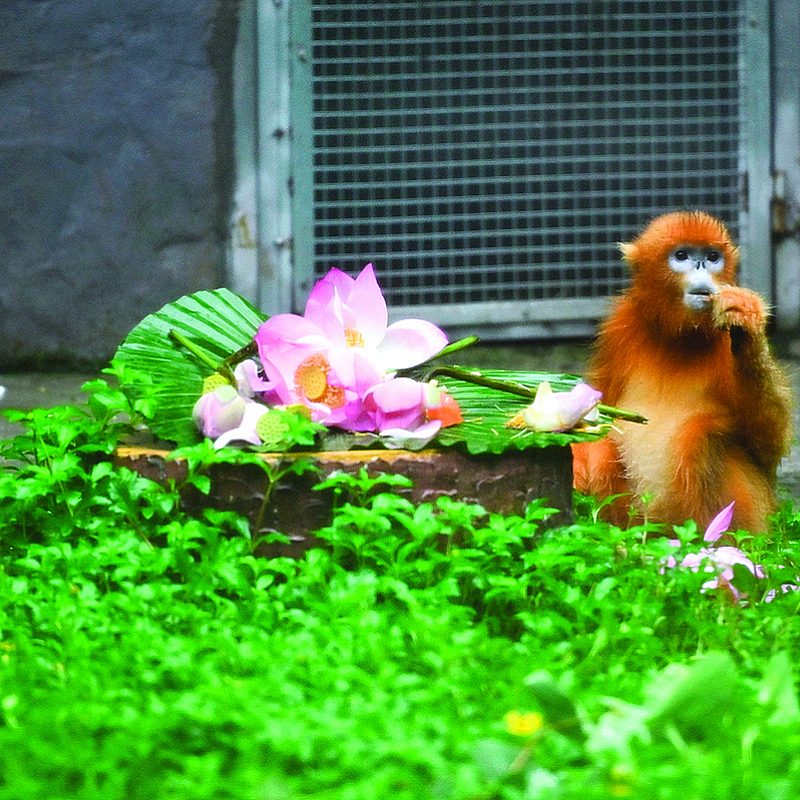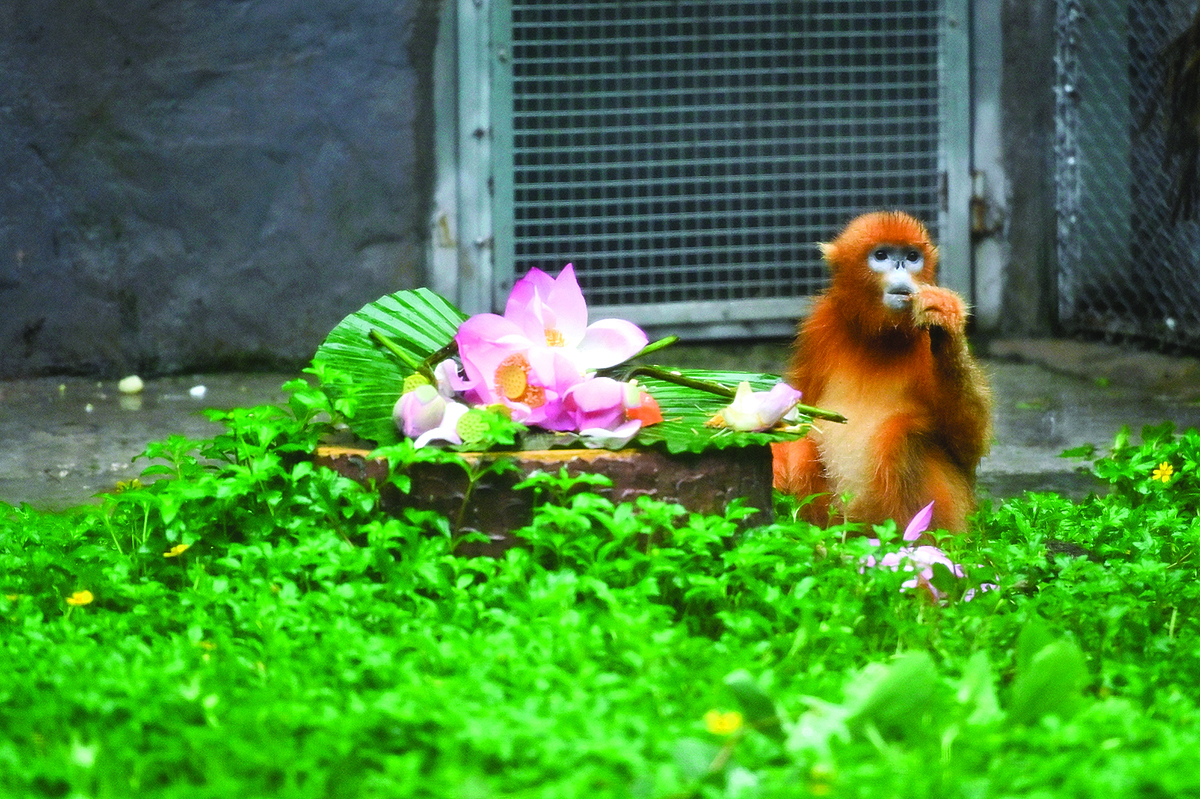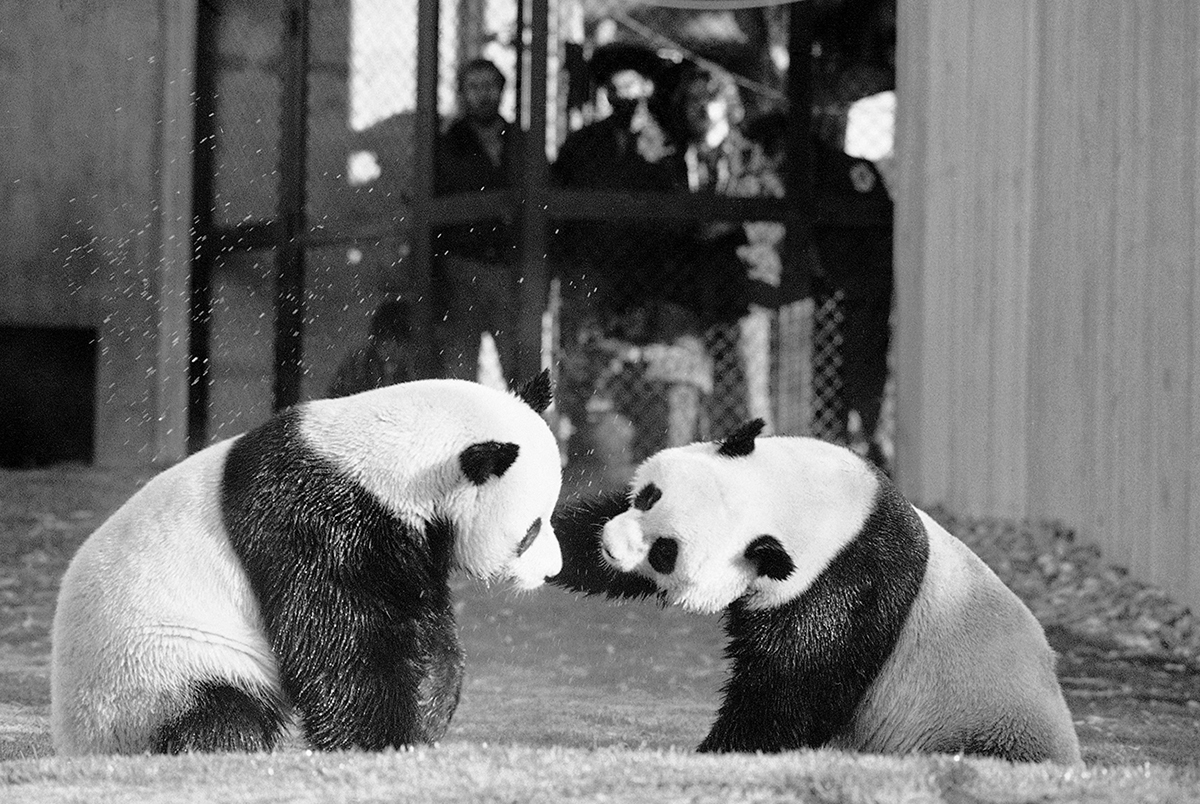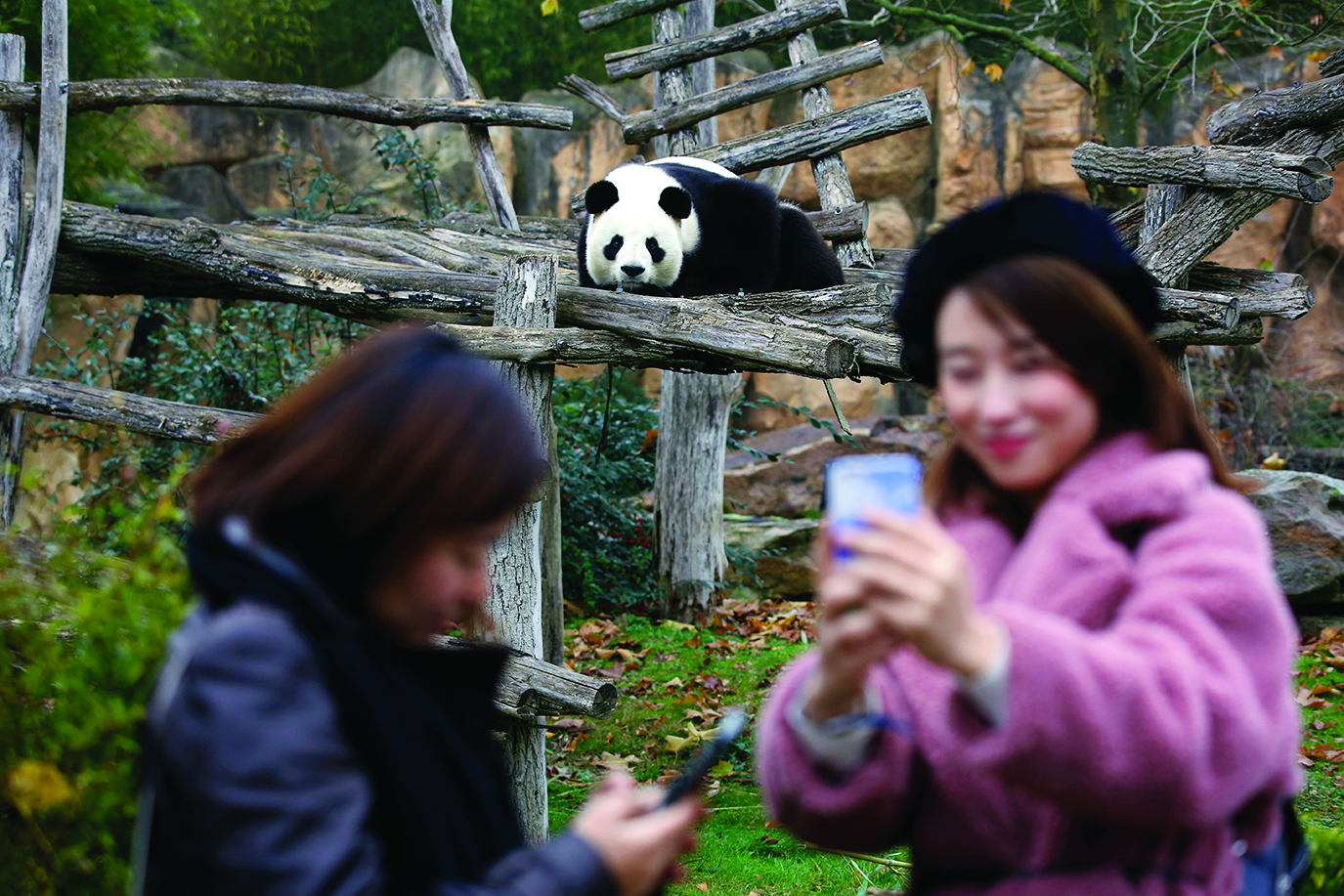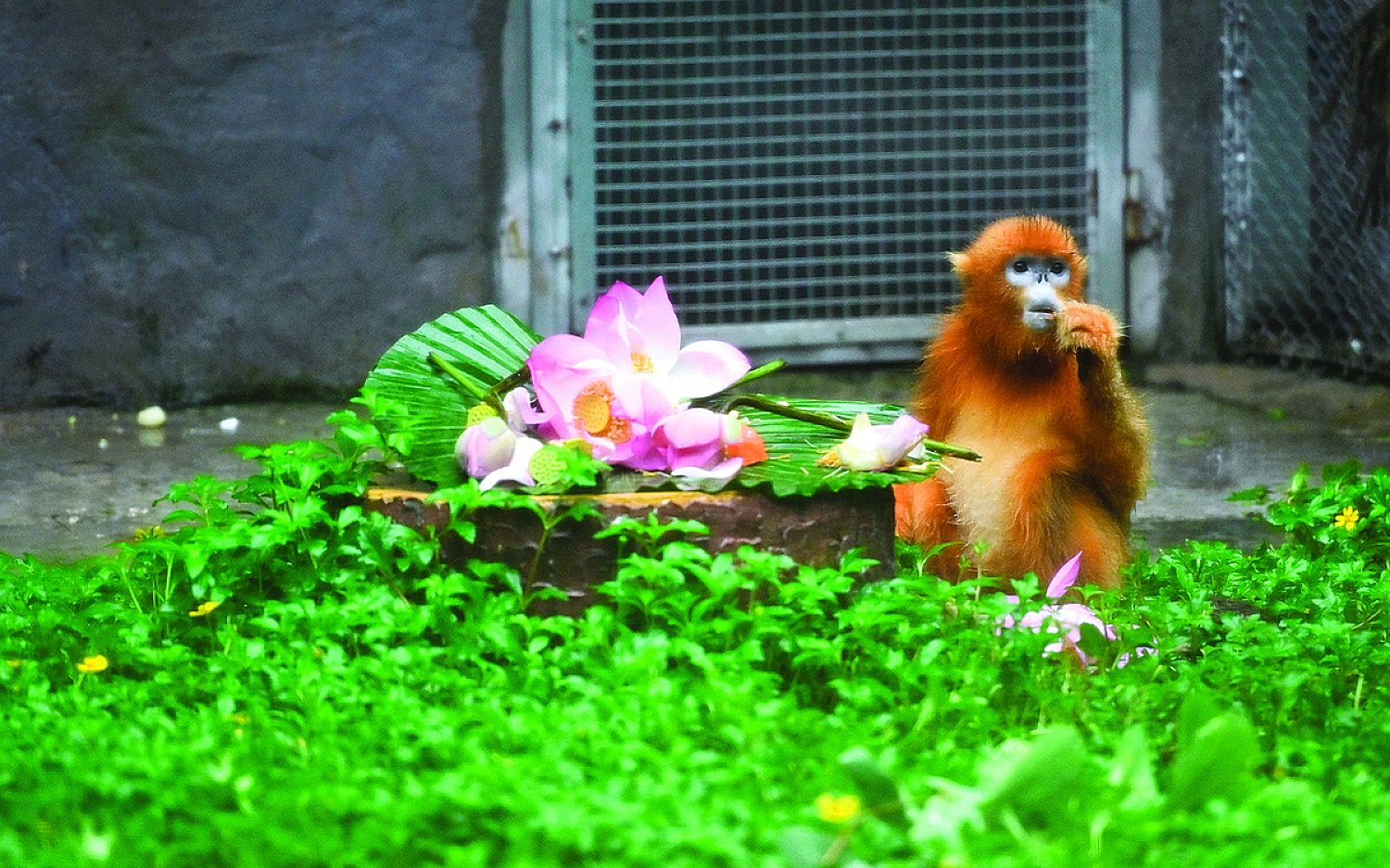
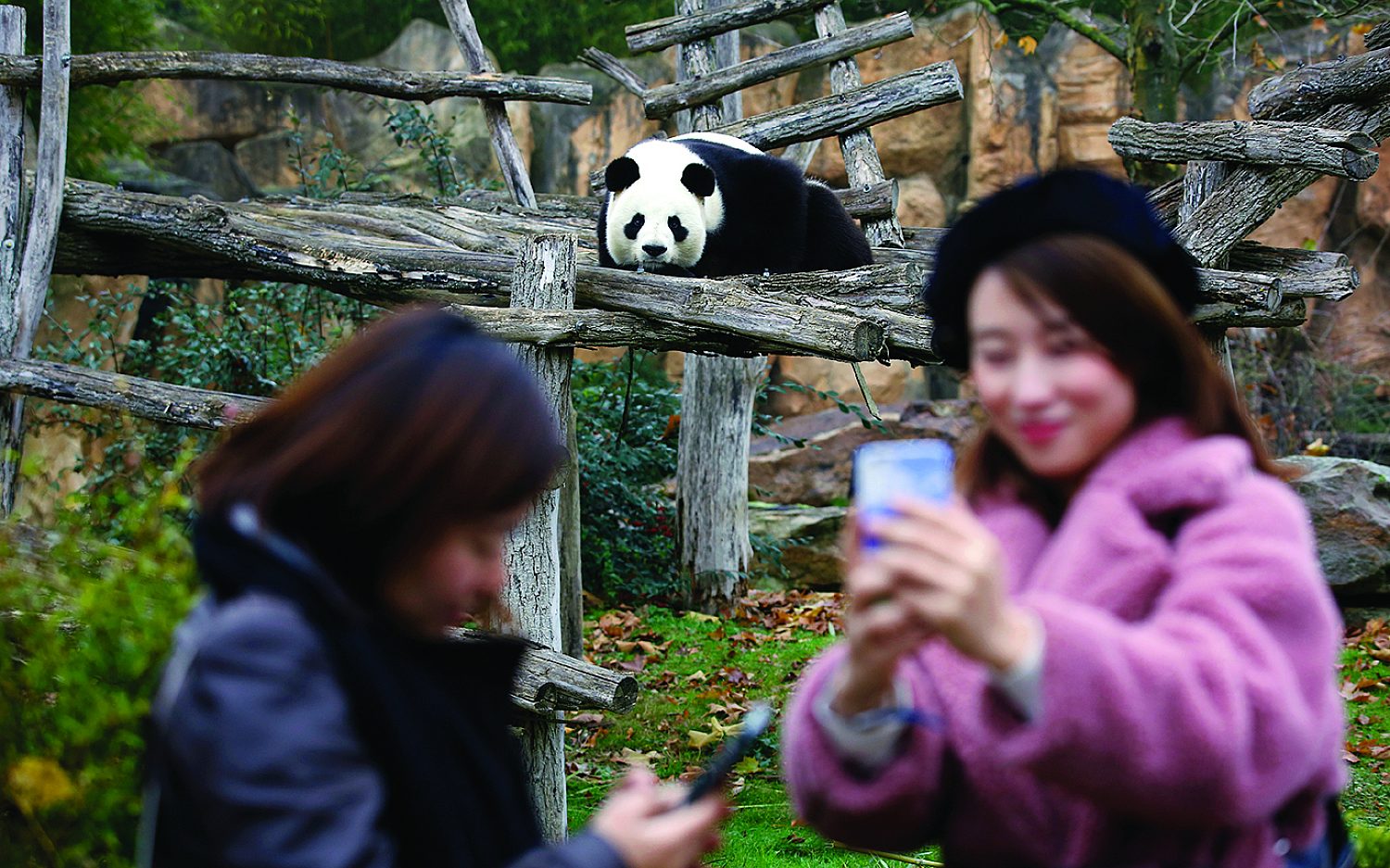
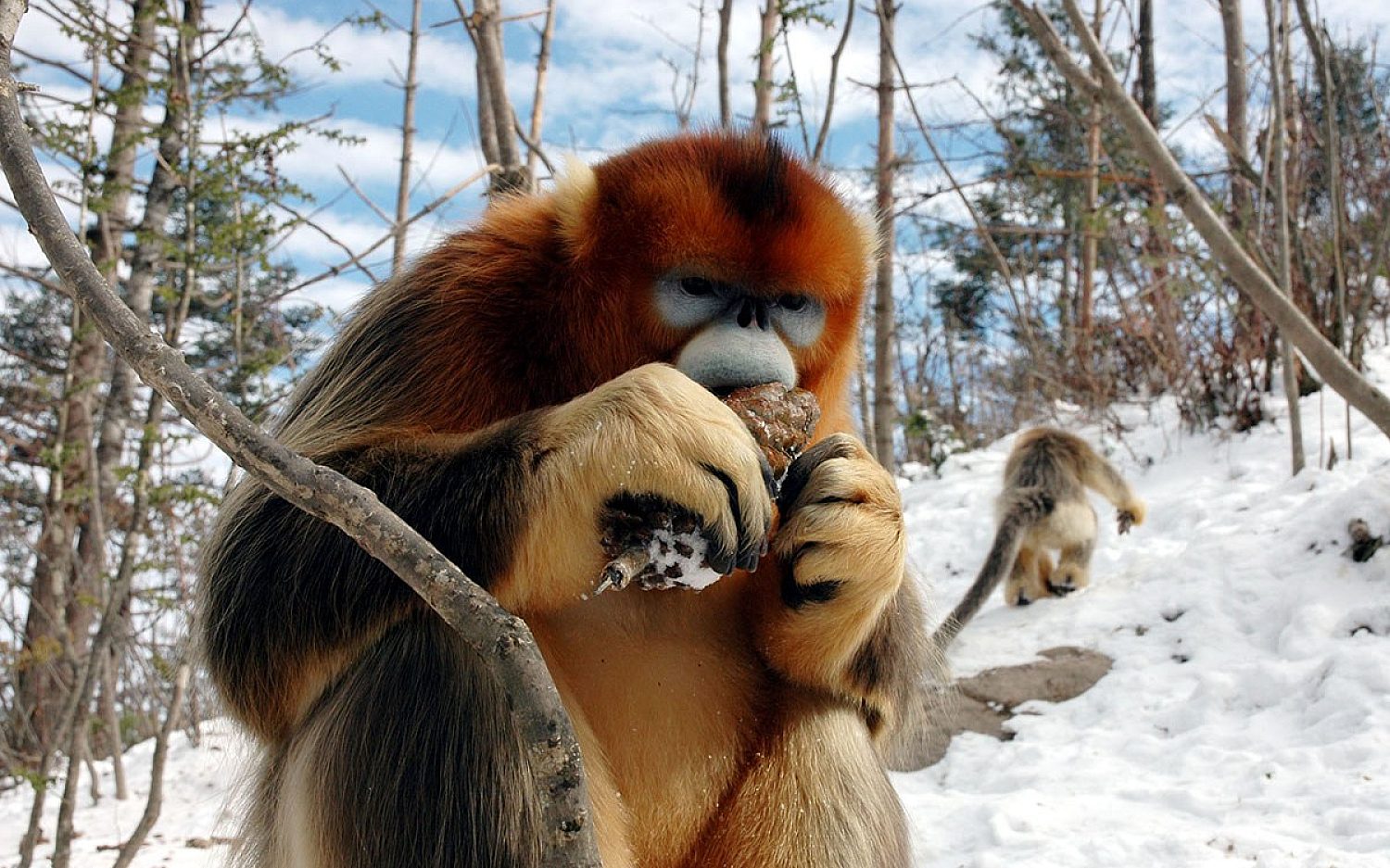

Both pandas and golden snub-nosed monkeys are national treasures in China. Both are endangered. And neither may be moved out of the country without permission from the Chinese government.
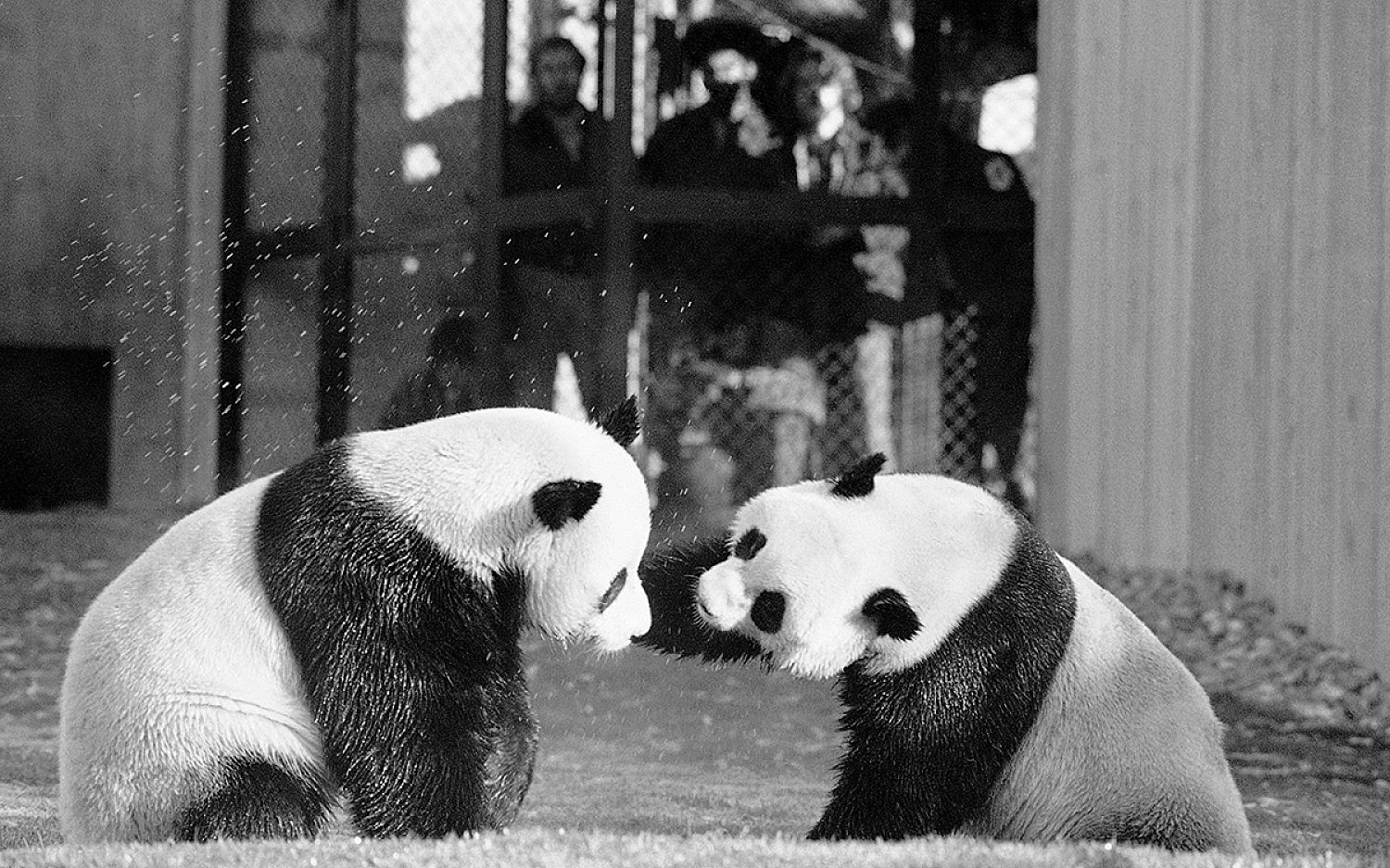
Pandas started to represent China around 1957. That year, China sent giant pandas Ping Ping and Qi Qi to the Soviet Union. A pair of pandas first came to the United States in 1972. In later years, China stopped giving pandas as gifts. China loaned the animals instead. In any case, pandas have become symbols of modern China. Monkeys are an old symbol of China. They appear in historic paintings and stories.
At home in China, the two species even live in the same ecosystems. The golden snub-nosed monkeys eat from trees—fruits, flowers, buds, and bark. Giant pandas, meanwhile, eat bamboo. As they clear bamboo, trees have more room to grow, giving monkeys more food. In turn, the monkeys’ munching lets sunlight in, giving bamboo more light to fuel growth.
Will the species now work together in politics too? The golden snub-nosed monkeys at zoos in France and Belgium are so far the only ones outside of Asia.
Susan Brownell is a China historian at the University of Missouri, St. Louis. “China’s golden snub-nosed monkeys aren’t globally iconic yet,” she says. “But there may be potential for them to be in the future.”
Golden snub-nosed monkeys . . .
are herbivores, though they sometimes also eat insects;
are hunted by wolves, Asiatic golden cats (a type of wild cat), leopards, golden eagles, and goshawks (a type of hawk);
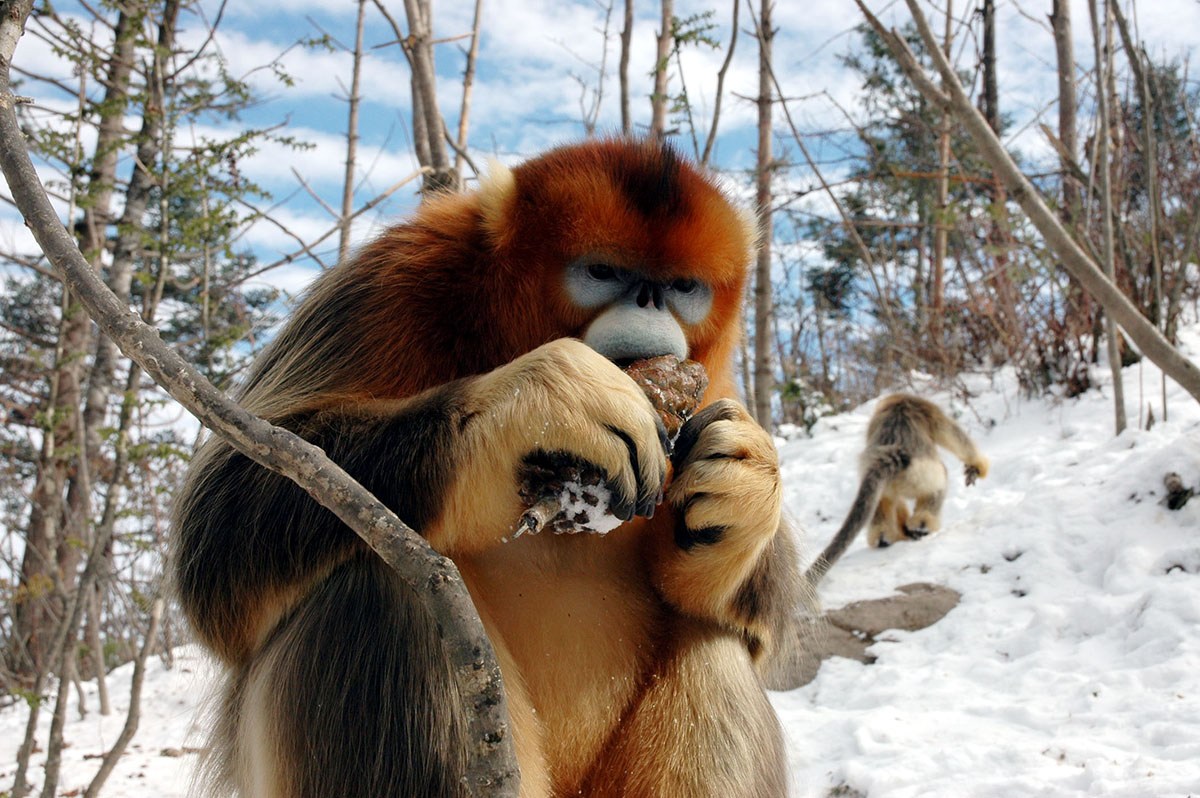
eat lichen and snow in winter;
spend most of their lives in trees;
look orange in winter. In summer, their coats are gray-brown. The thicker, bright orange coats show up with the cold weather.