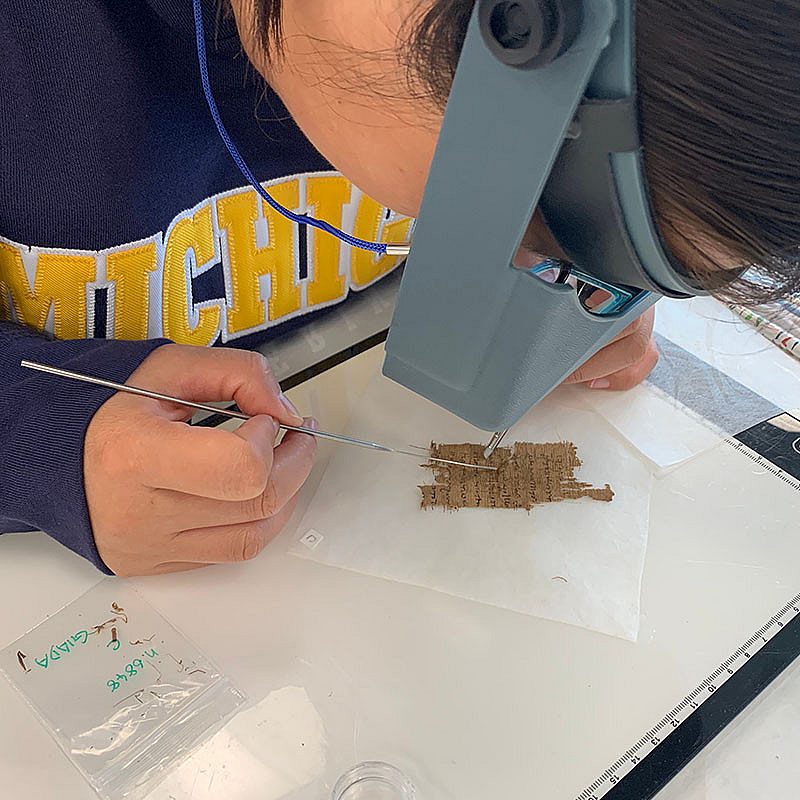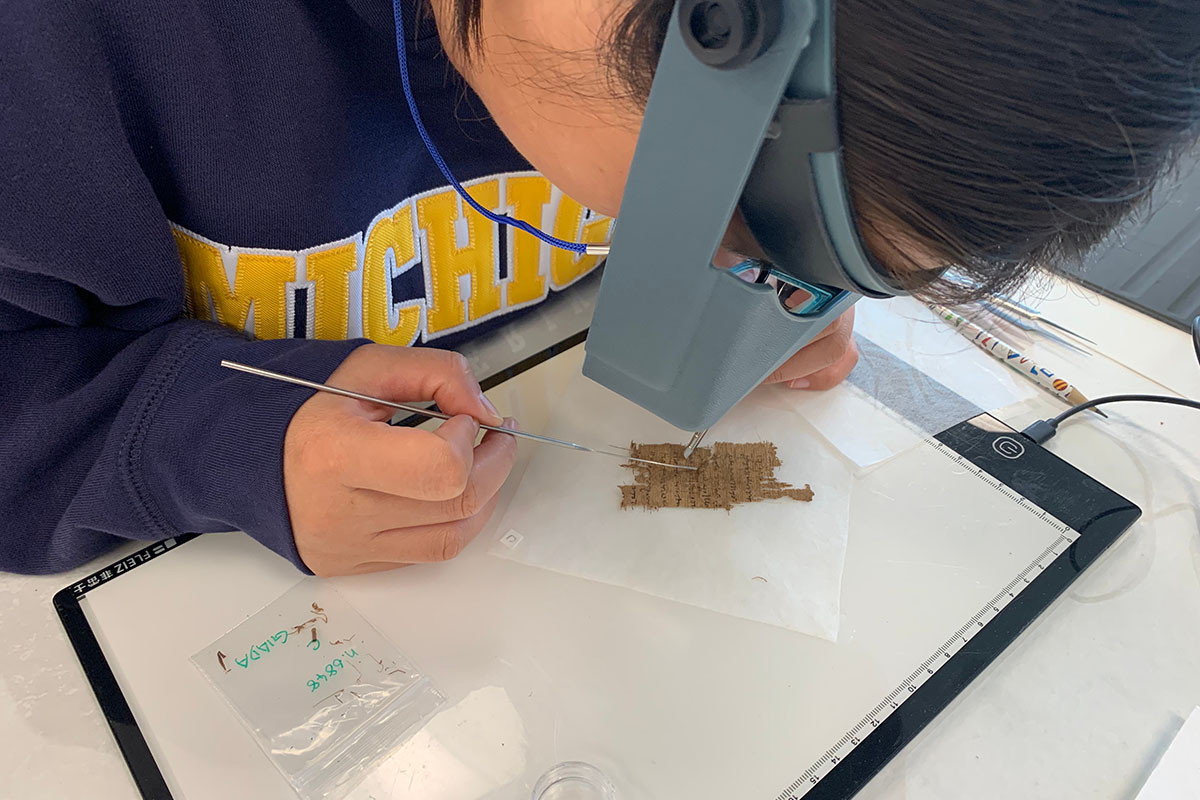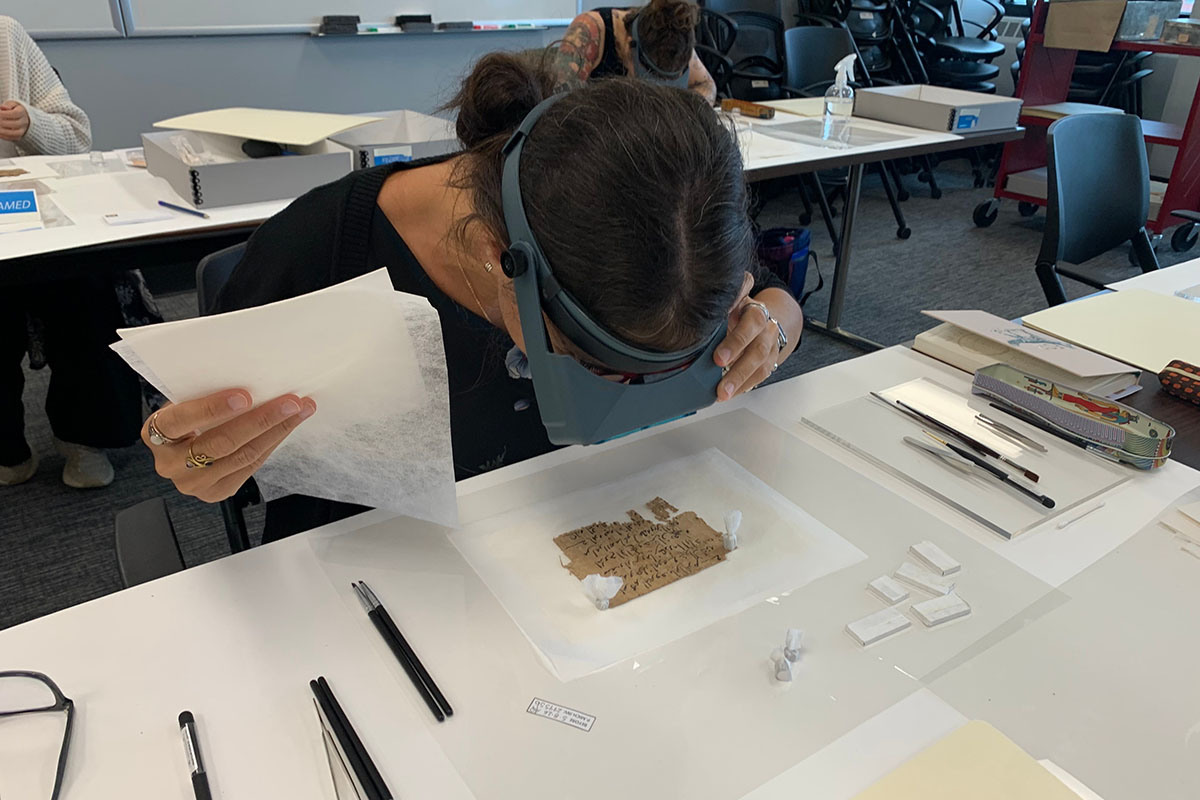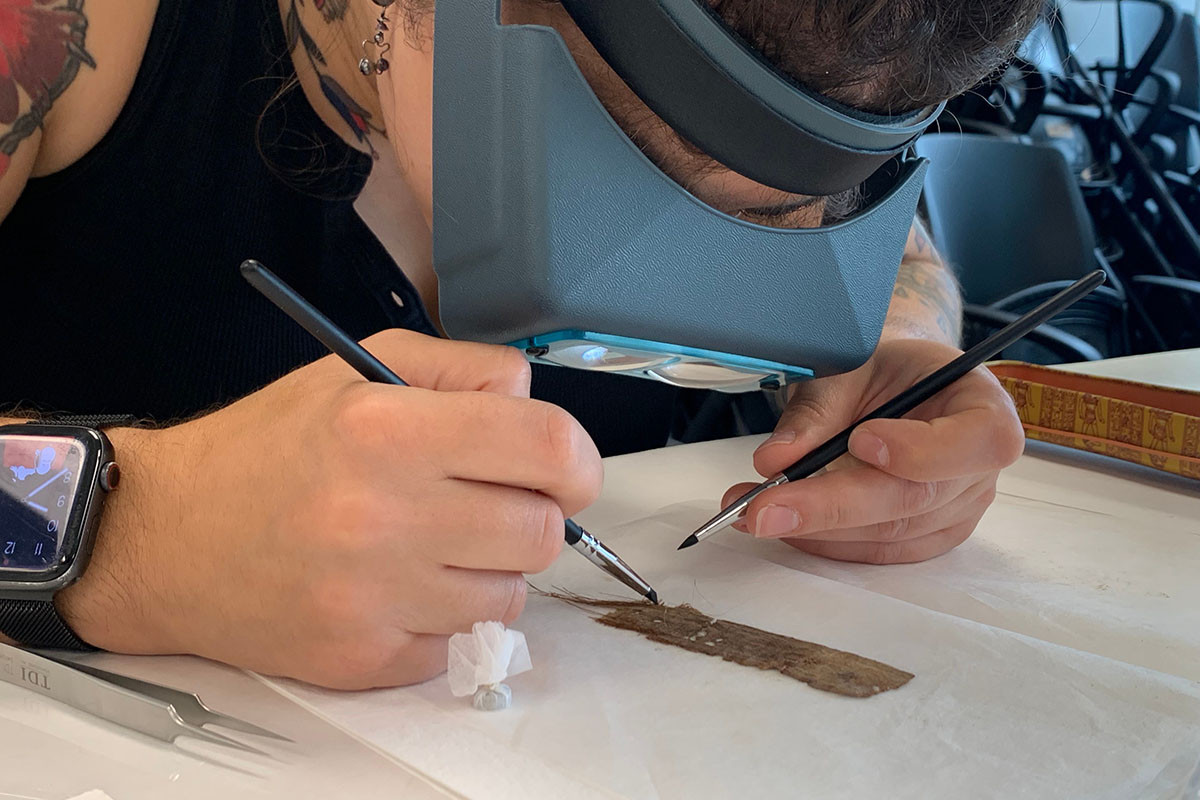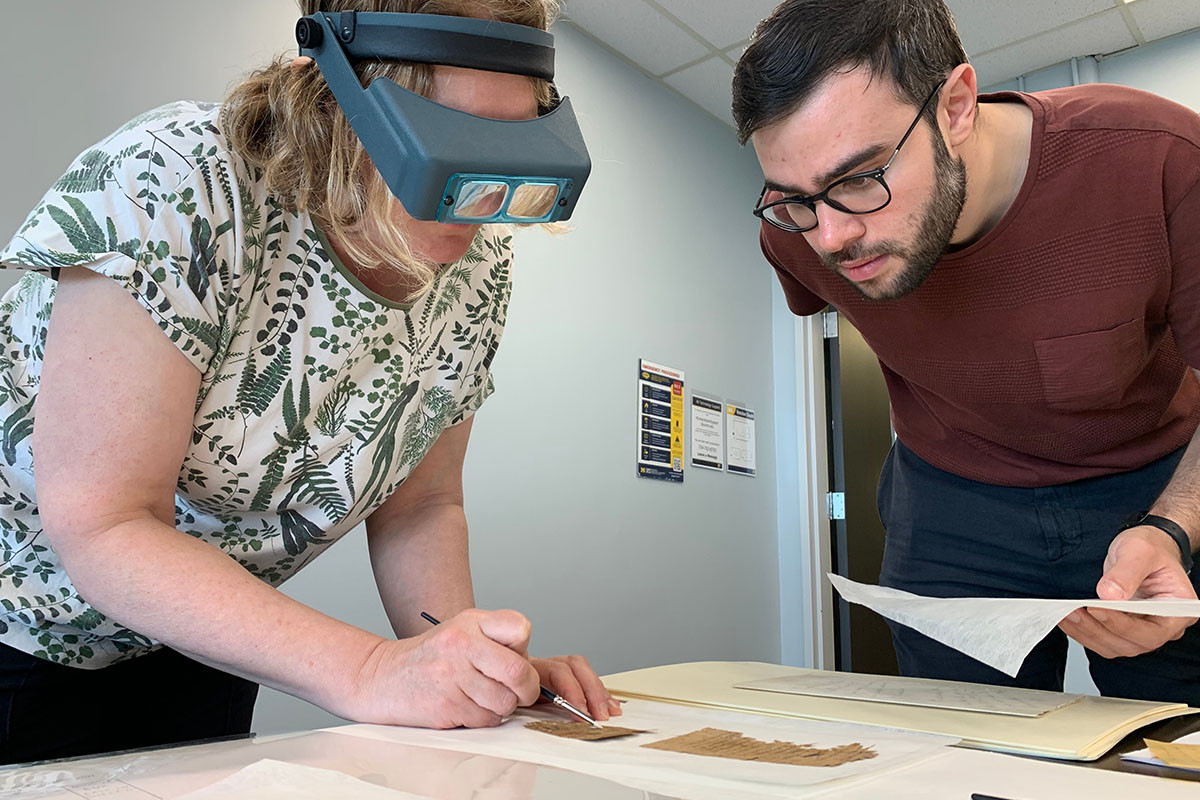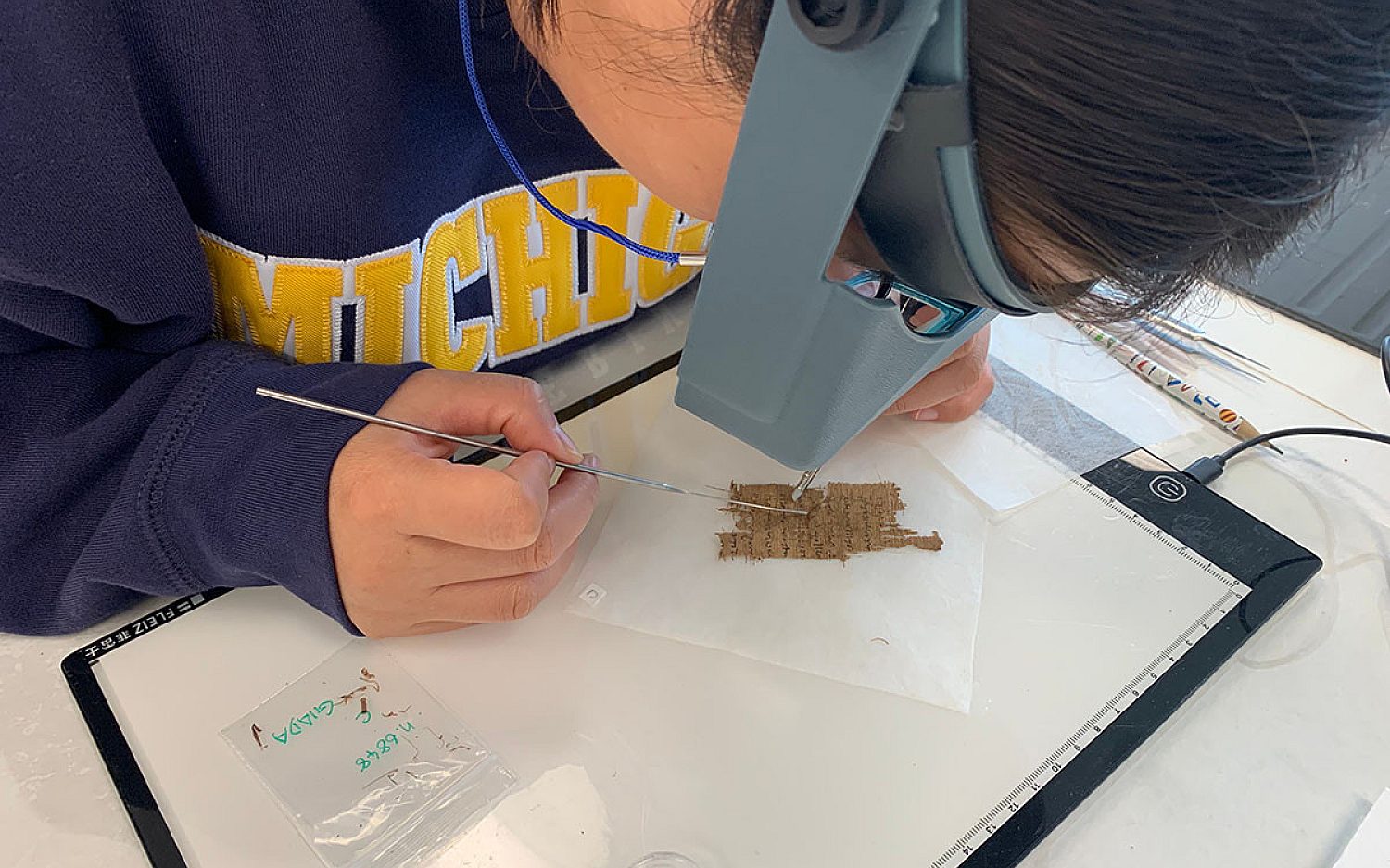
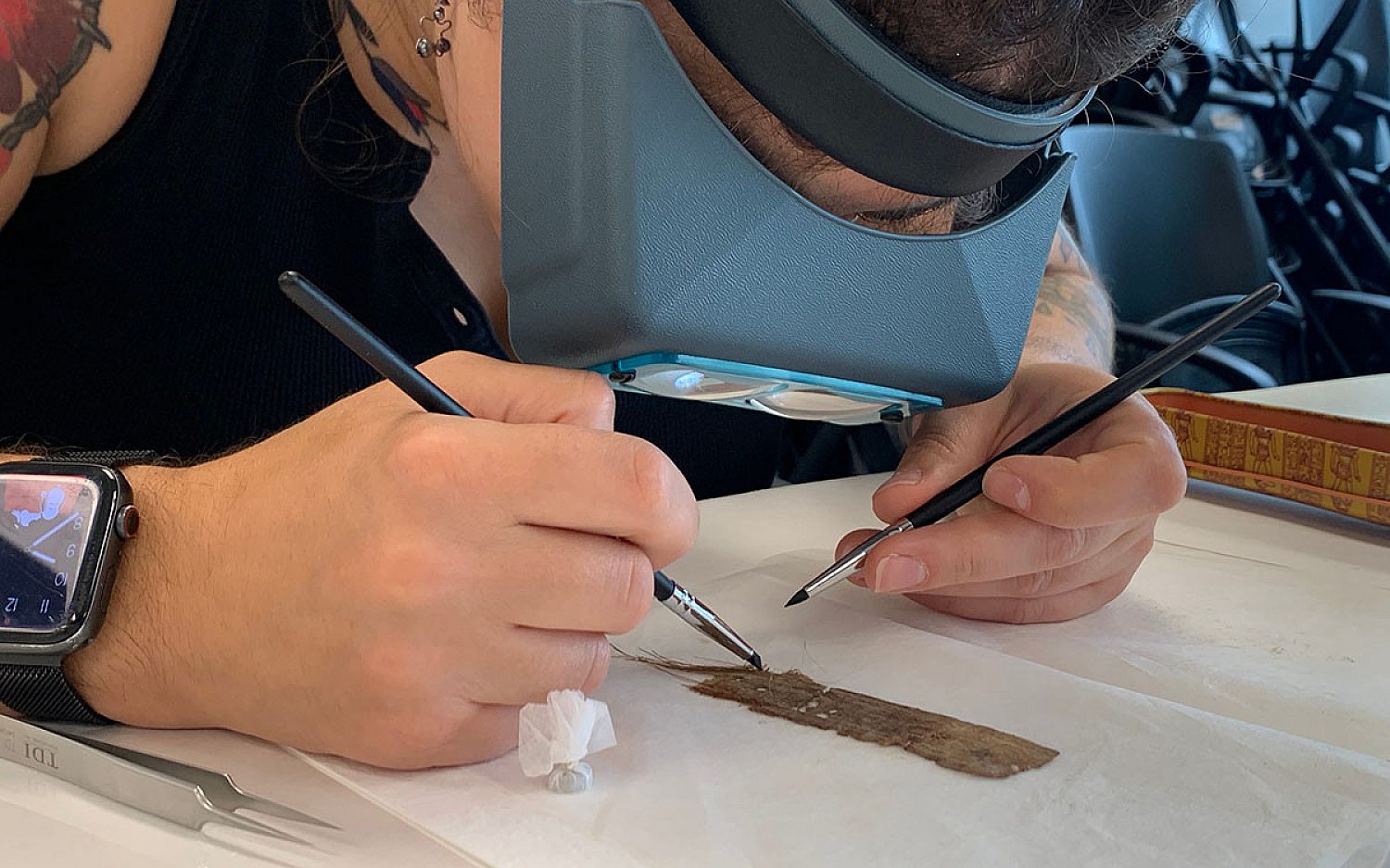
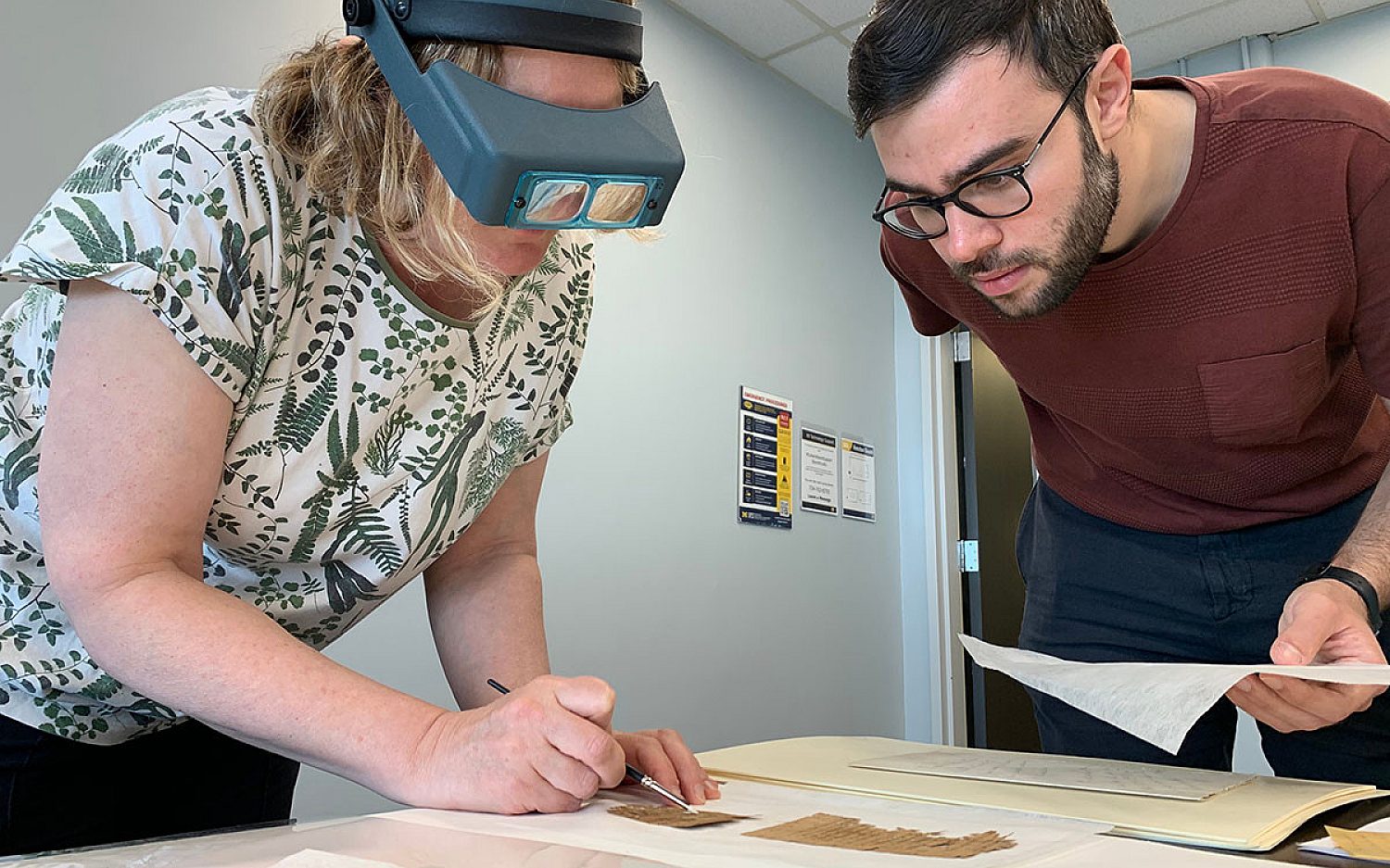

Shijin Jiang pulls a binocular headband over her eyes. She hunches down. In front of her, an ancient text rests on a light board.
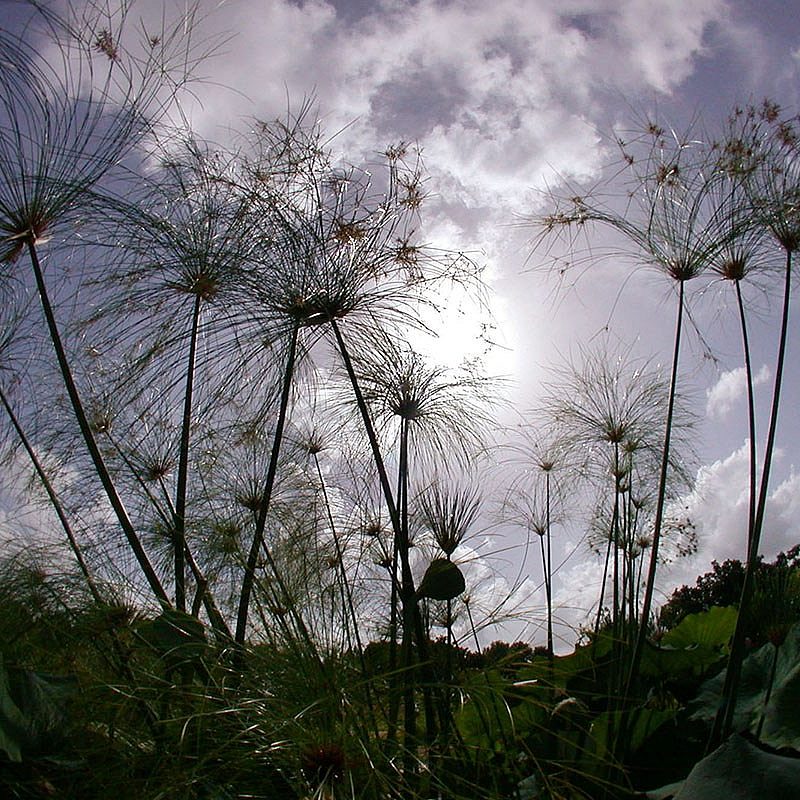
Using a pair of hand tools, Shijin carefully inspects the sheet. It’s made from the papyrus plant. No wonder she’s being careful. She’s probably the first person to touch this page in 100 years. No one has read it for thousands.
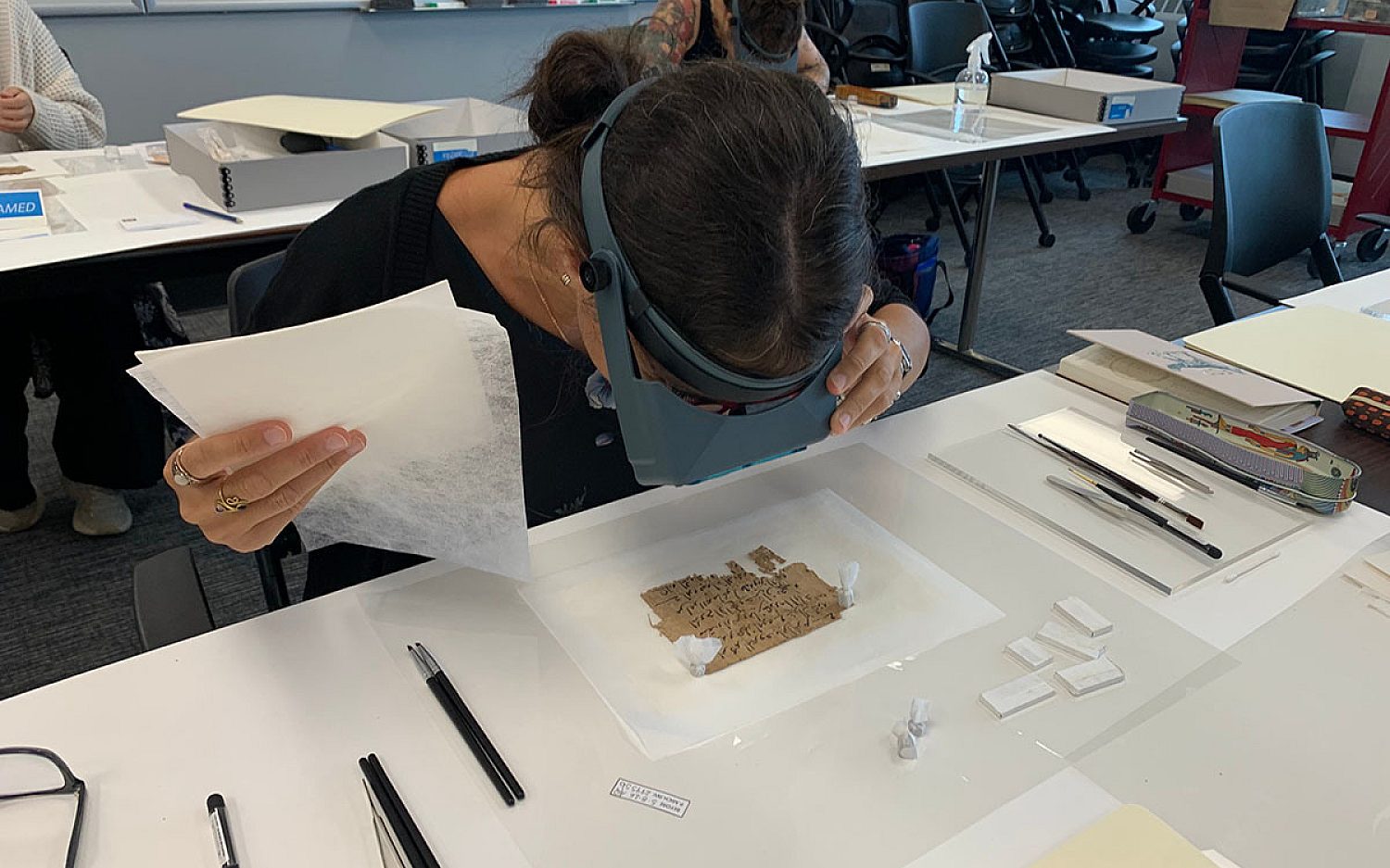
How did she get here? She enrolled in the Papyrus Conservation Summer Seminar at the University of Michigan. Very few places in the world offer this kind of learning.
“If you touch this papyrus, you can feel the history,” says Ms. Shijin. She comes from China. Eight other students join the program too from around the world: Ireland, Italy, the United States. The course lasts just 10 days. But the students learn a lot.
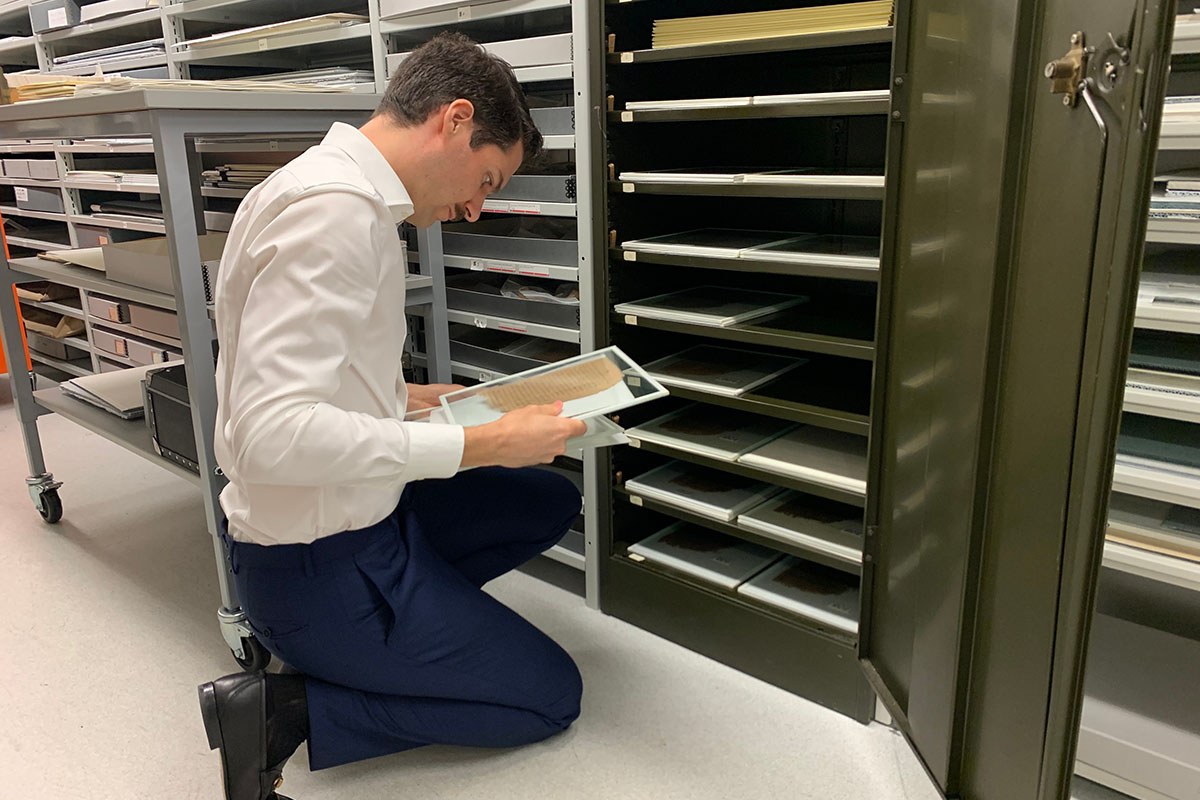
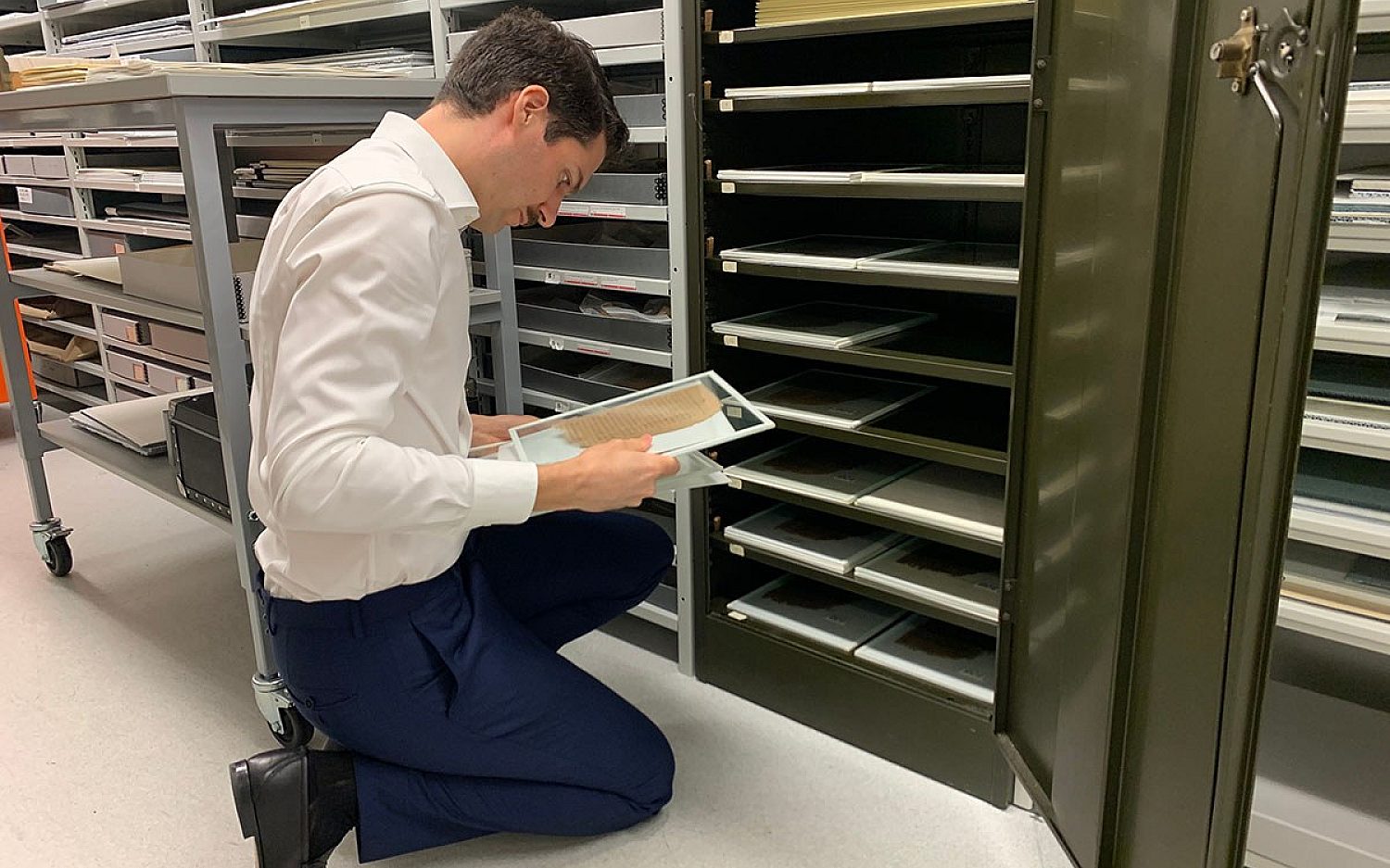
And they have plenty of material to study. The university has documents from 1000 B.C. to A.D. 1000. That’s more than researchers have been able to examine. The students could check out parts of Homer’s epic poems The Iliad and The Odyssey. They could even peer into the oldest-known copies of the letters Paul wrote to the early churches.
“There’s nothing I love more than getting people together from all over the world, sharing ideas, learning from each other,” says Marieka Kaye. She’s in charge of keeping the materials safe.
How would you feel if you got to touch such treasures? Excited? Nervous?
Ms. Kaye says she tries to make “things comfortable and not scary, because a lot of people just feel terrified working on these ancient things.”
Why? Paper is an amazing gift from God. We can use it to learn His words—and to write our own.
Recommended Reading: For more about papyrus, read The Golden Goblet by Eloise Jarvis McGraw.