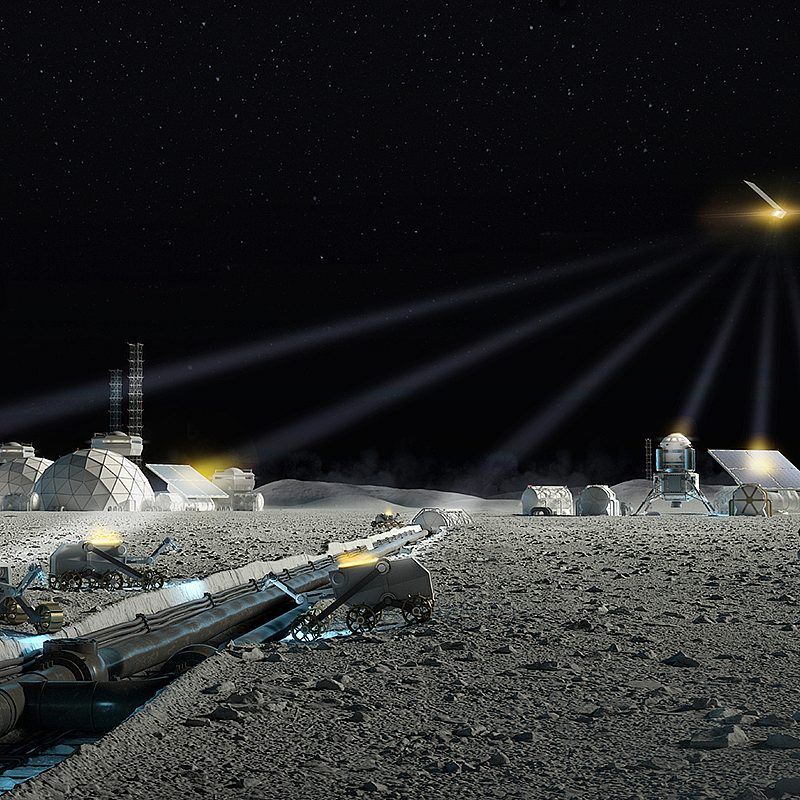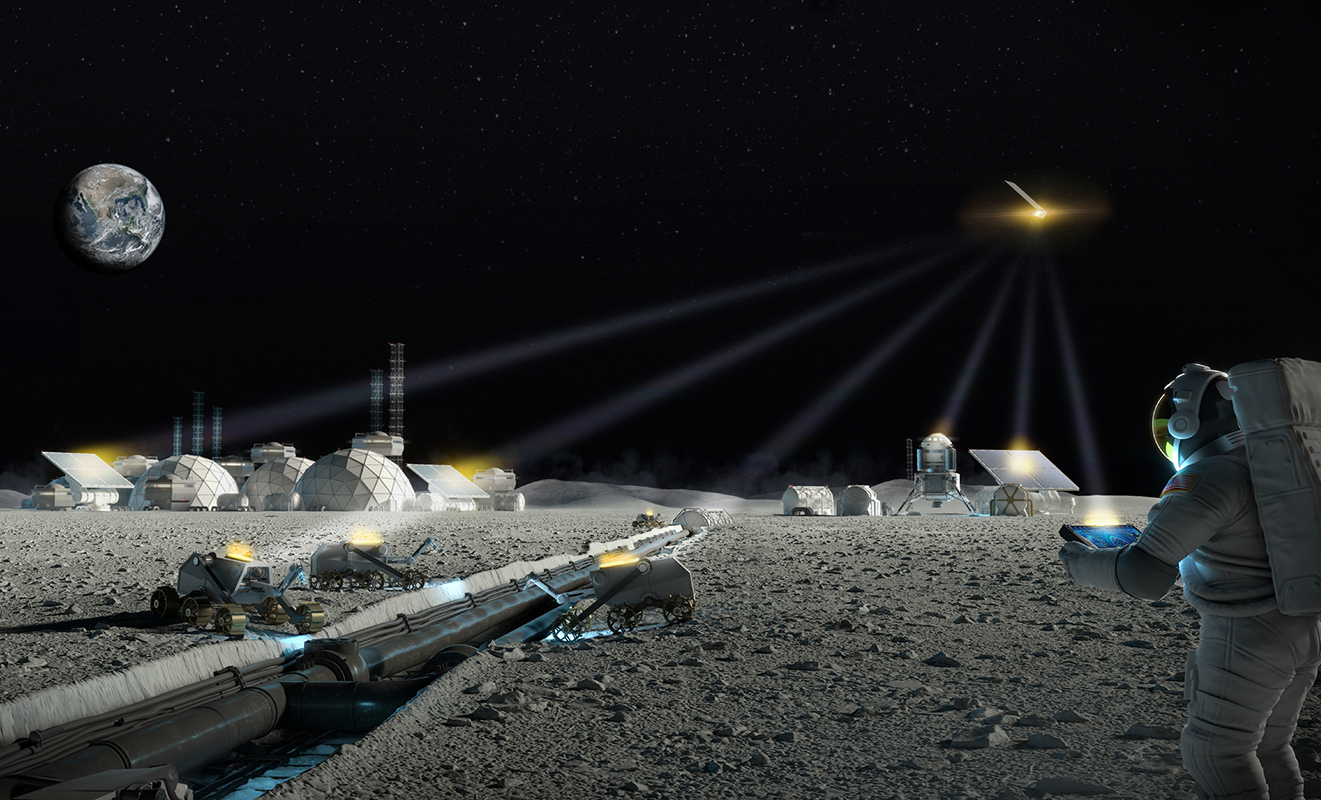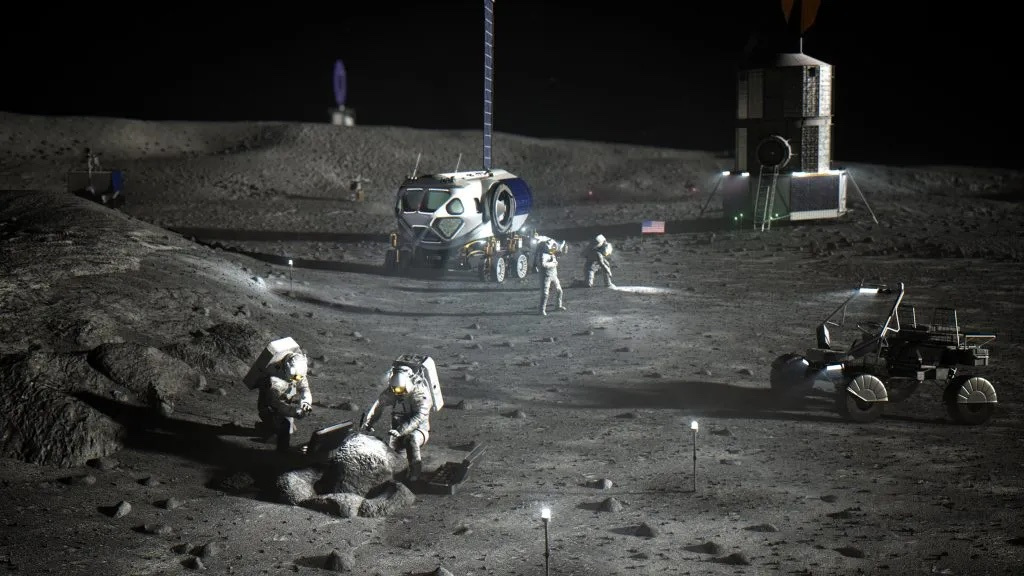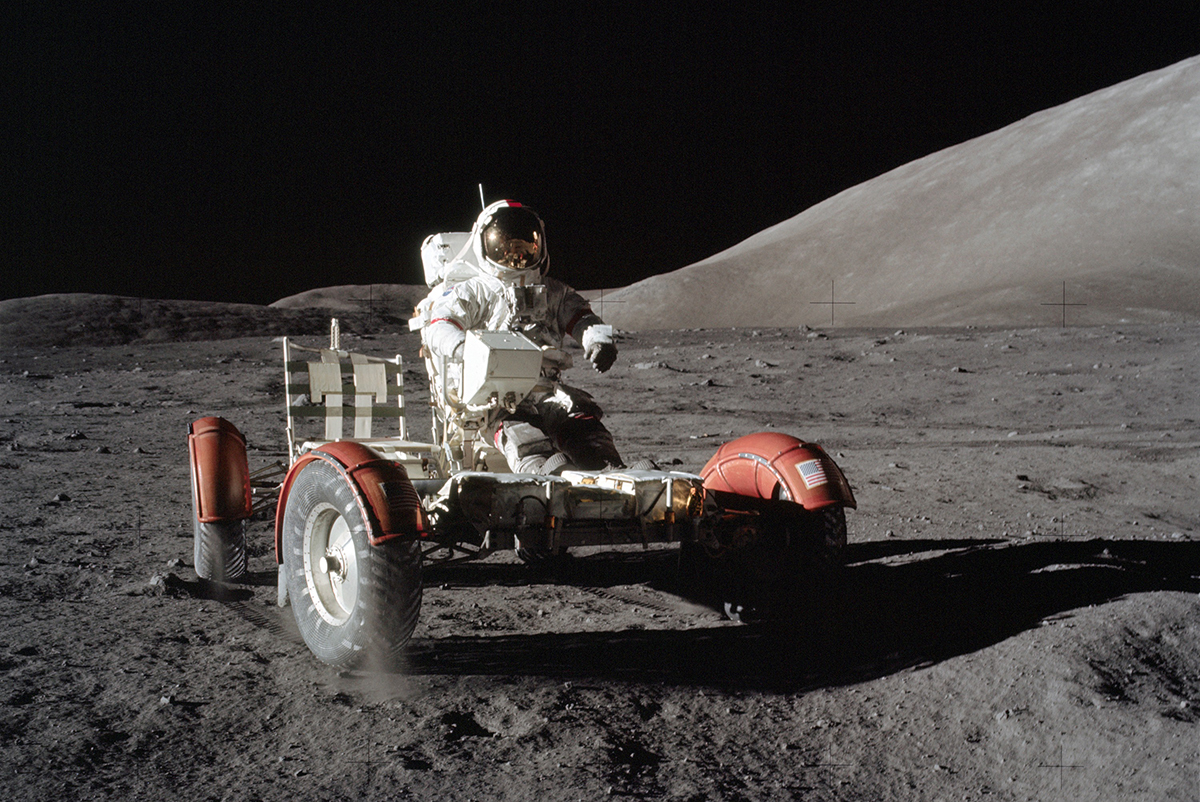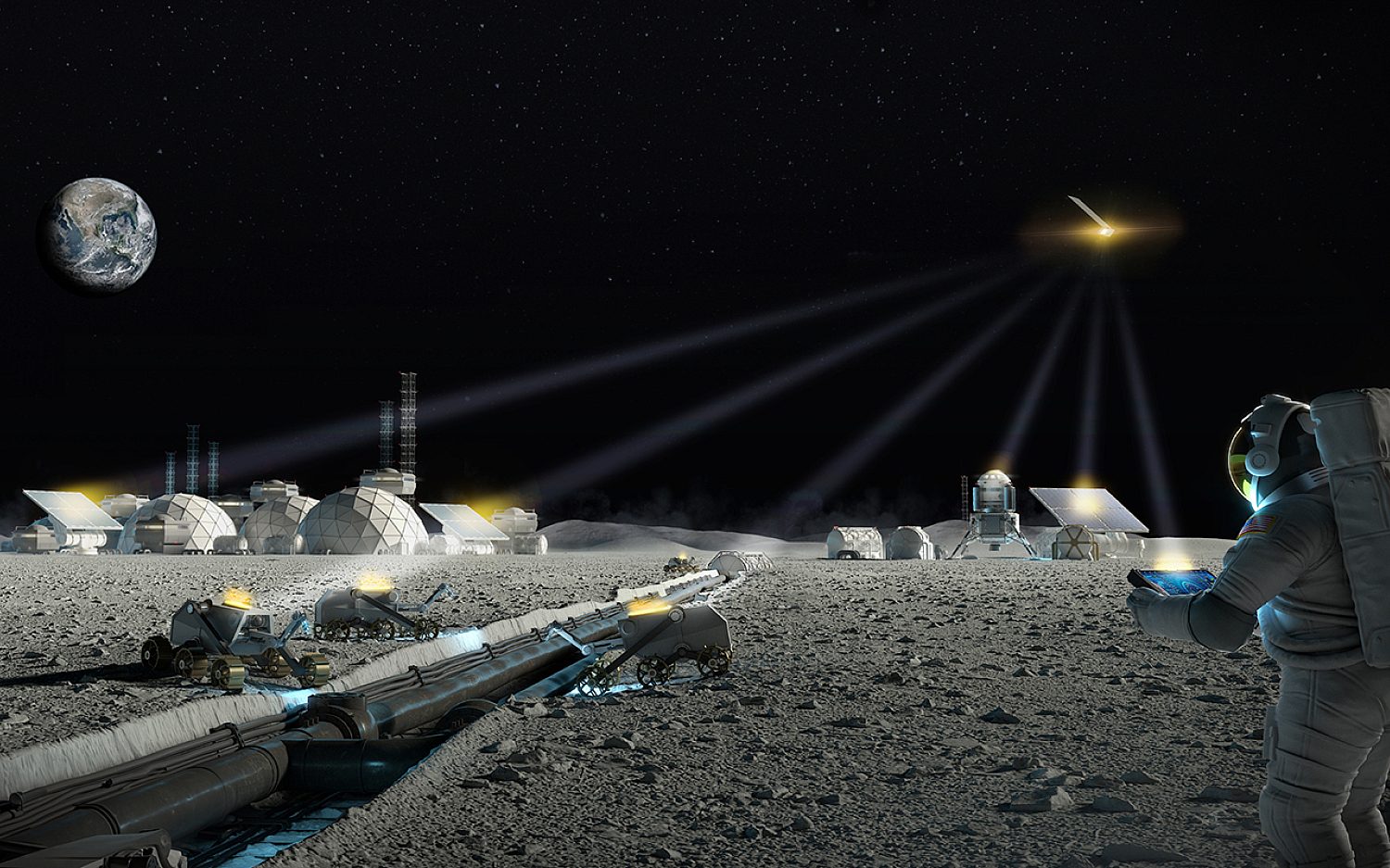
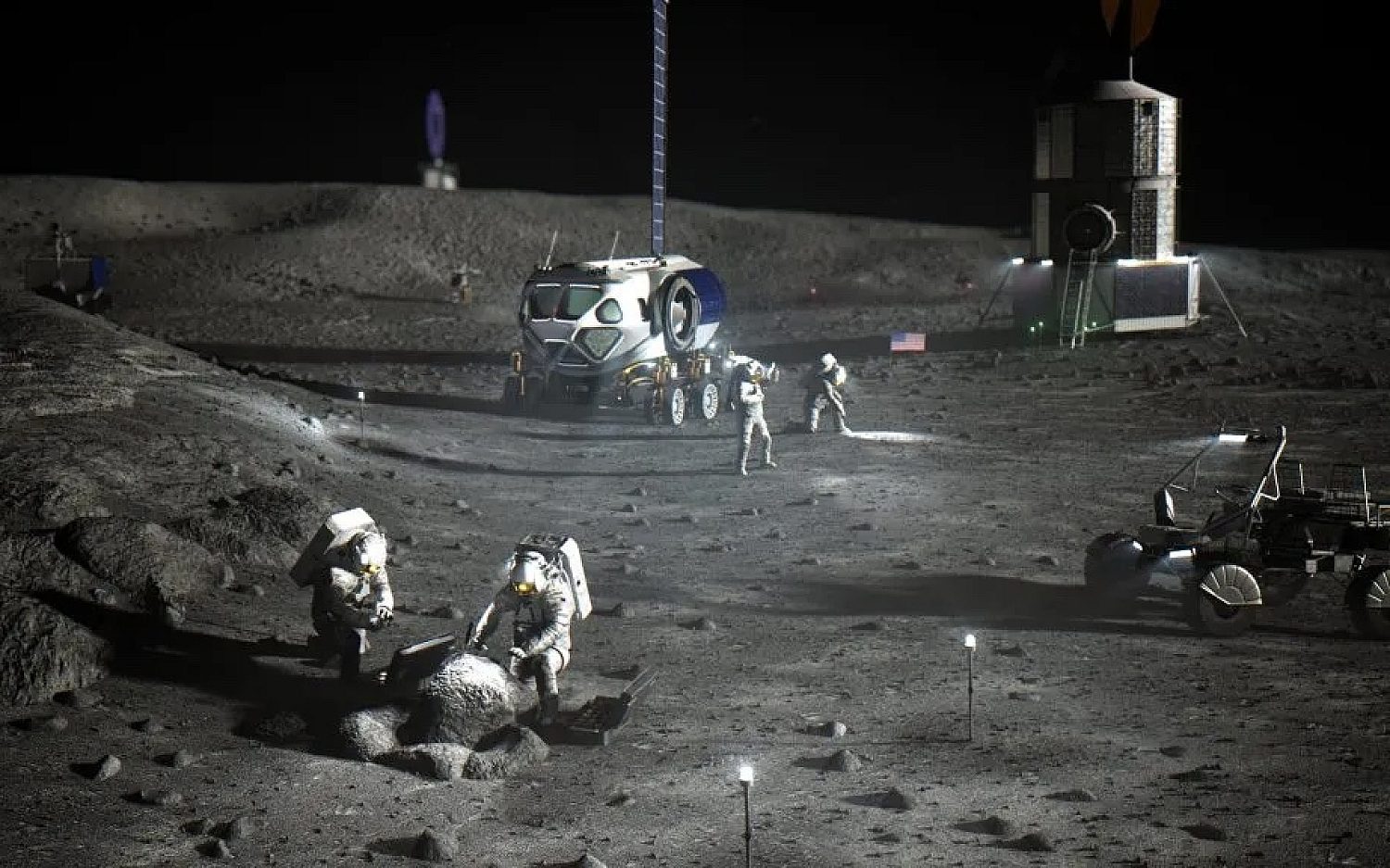
In 2025, President Donald Trump issued an executive order. He told NASA to build a Moon base as soon as it’s able. NASA already has plans for the project—the Artemis Base Camp.
To make it work, NASA needs to figure out more than food.
Water
Where can you find water on the Moon?
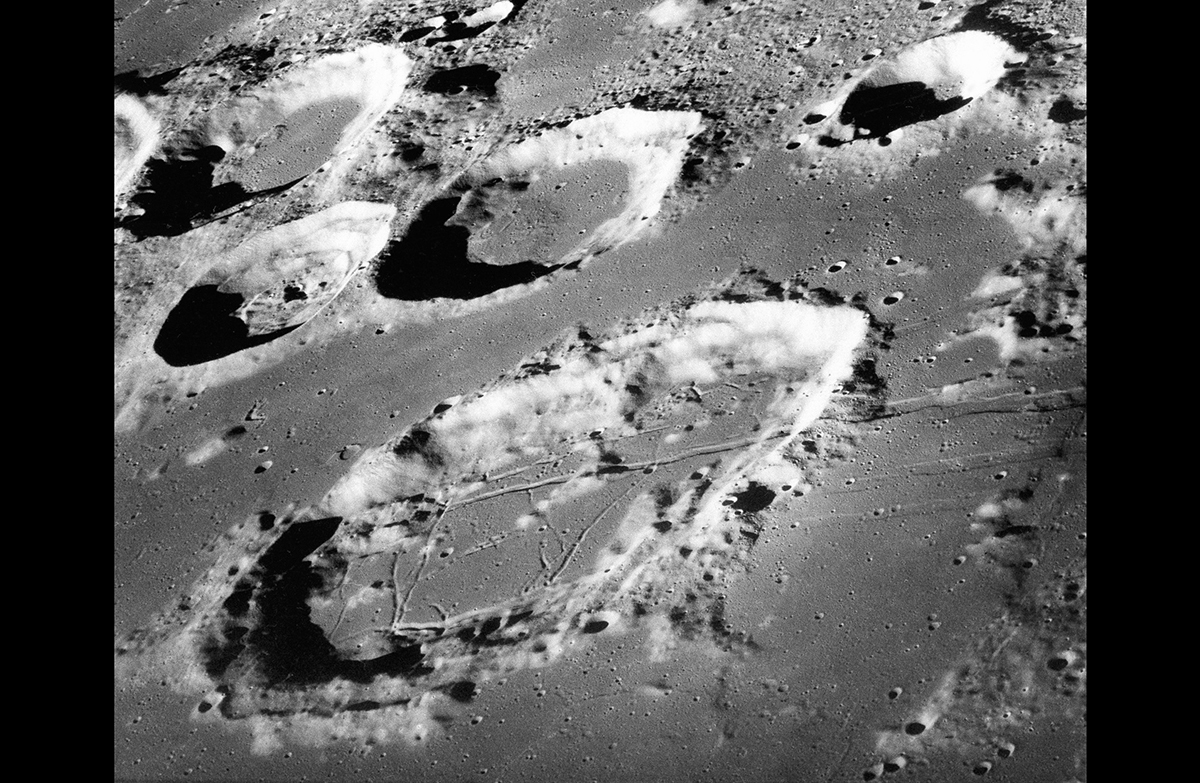
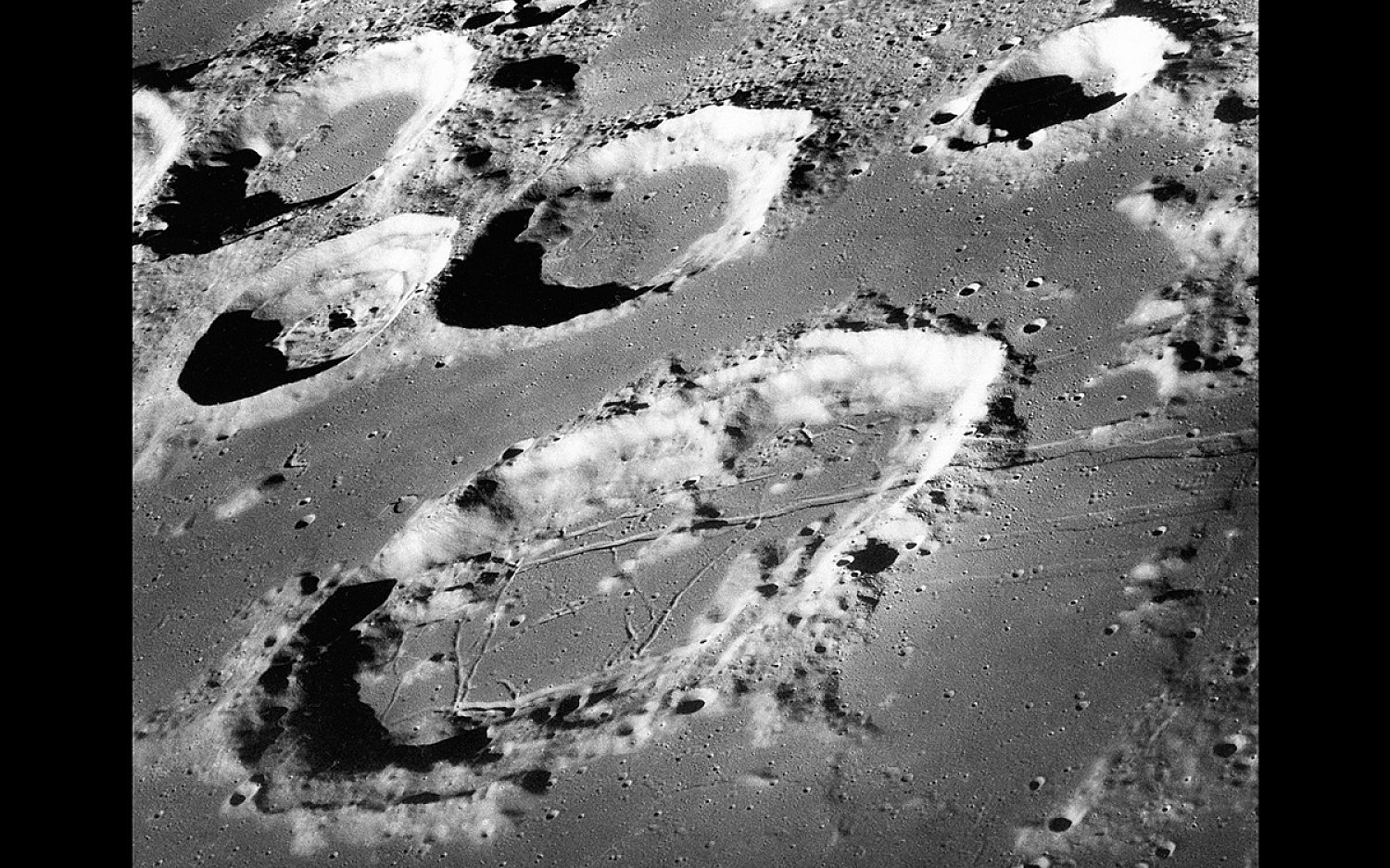
The answer might lie at the bottom of craters. On the Moon’s South Pole, some craters remain always in shadow. Sunlight never reaches their bottoms. In sunlight, temperatures exceed the boiling point of water. But in these craters, water stays frozen. Scientists have spotted water ice there.
Astronauts could mine those craters for water. That’s one reason NASA plans to park its base at the South Pole.
Power
Other parts of the Moon almost never see shadow. That makes them perfect for harvesting solar energy. Power storage is important for sunless times. NASA wants its base to store enough power for eight days.
Government officials hope to build a small power plant on the Moon someday. This plant would use fission power. NASA engineers work with other government agencies to make that possible.
Shelter
Moon landing vehicles might serve as temporary shelter. But NASA wants a more permanent Moon habitat. Engineers work to design a base that can house astronauts for a month at a time.
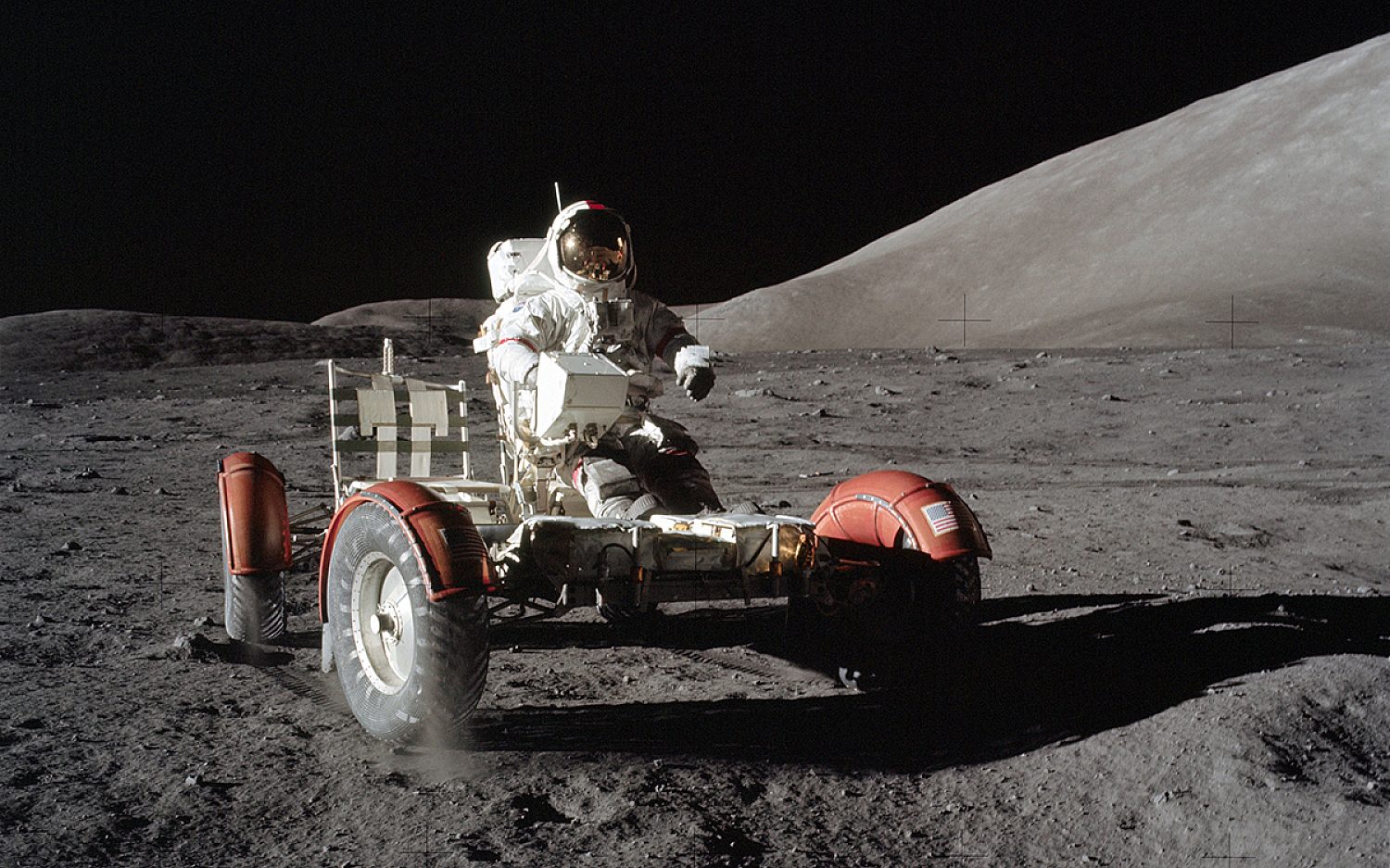
They’re also developing a lunar terrain vehicle (LTV) that doubles as a mobile shelter. Inside, it would have breathable air and safe pressure. Astronauts could work and rest without space suits.
These challenges can teach scientists valuable lessons. A Moon base could even help NASA explore farther into the Solar System.
How would you design the perfect Moon base? Send your ideas and drawings to WORLDkidseditor@gwnews.com!