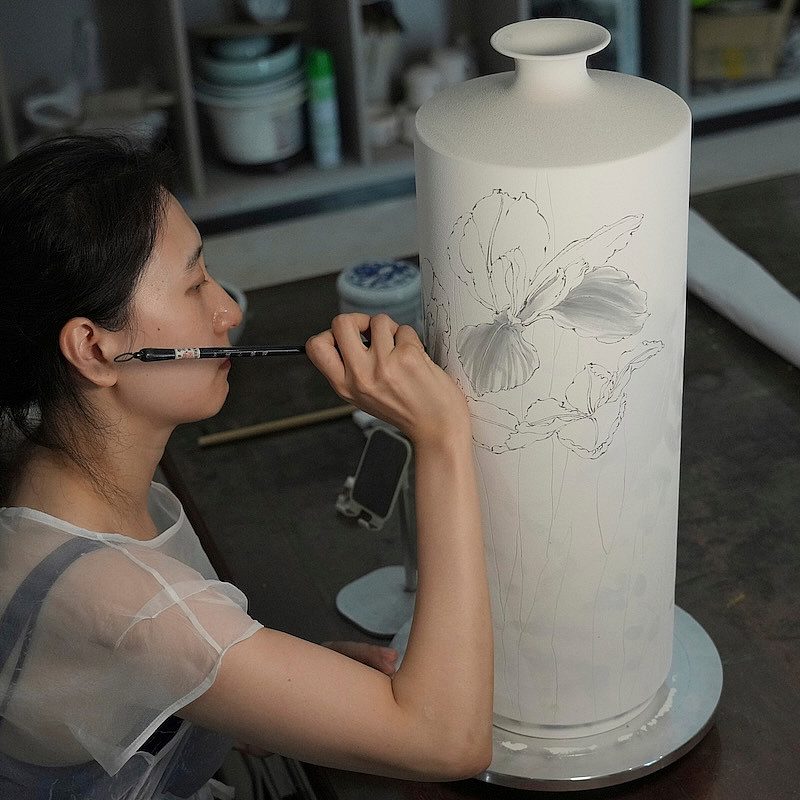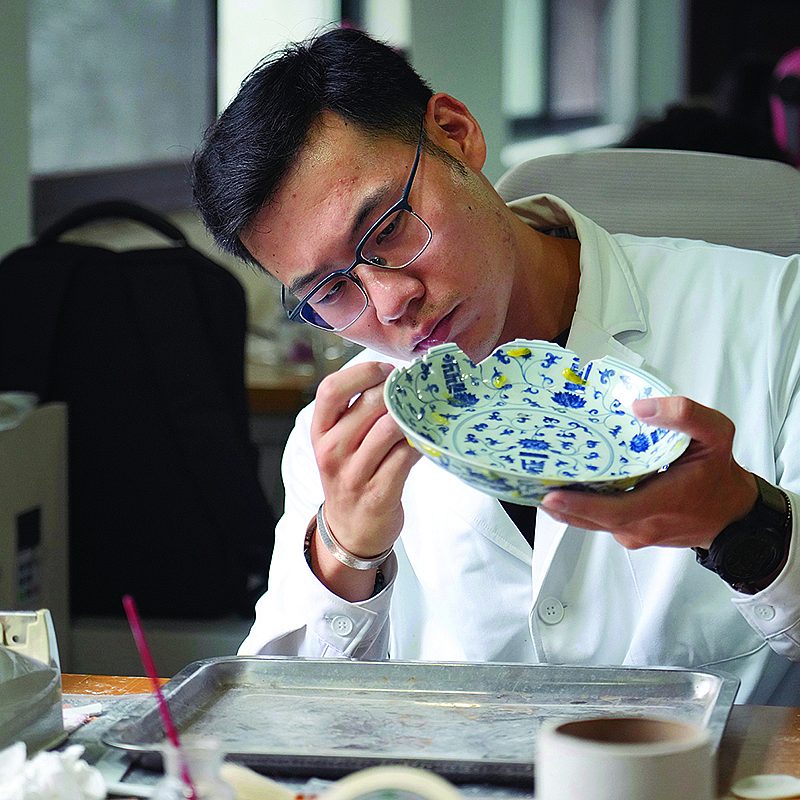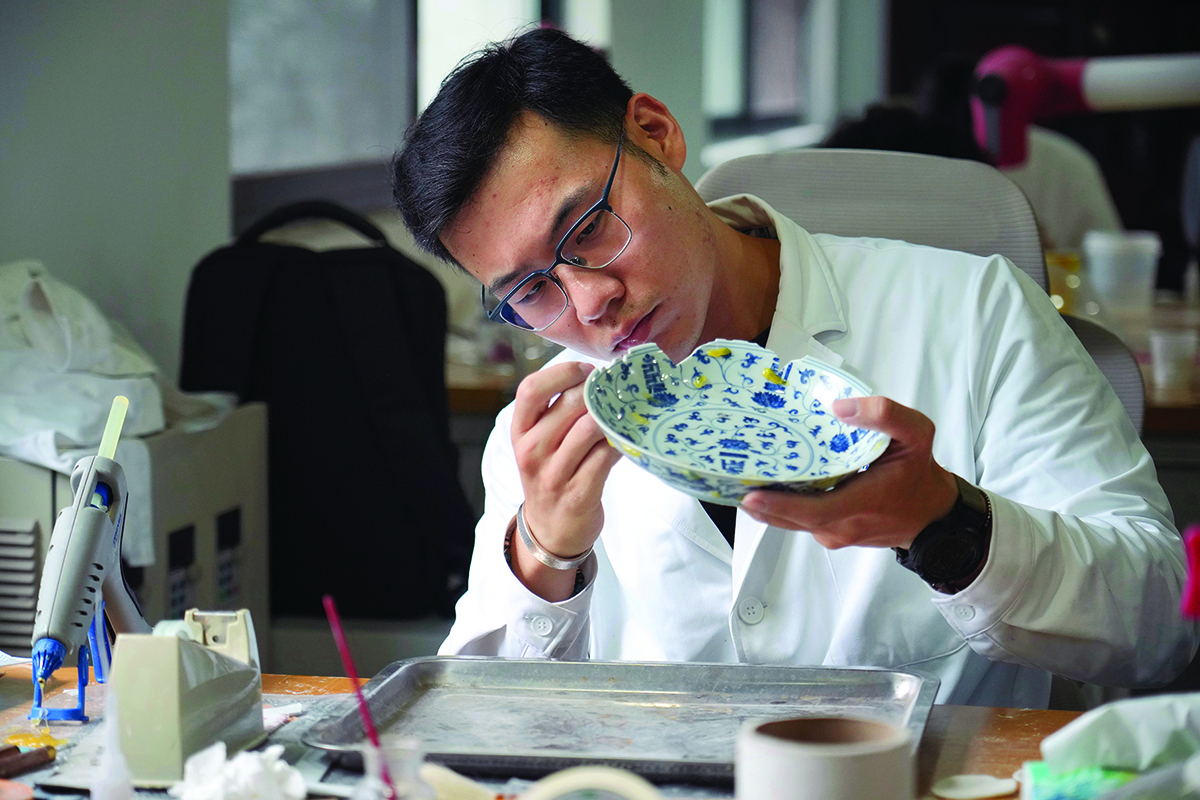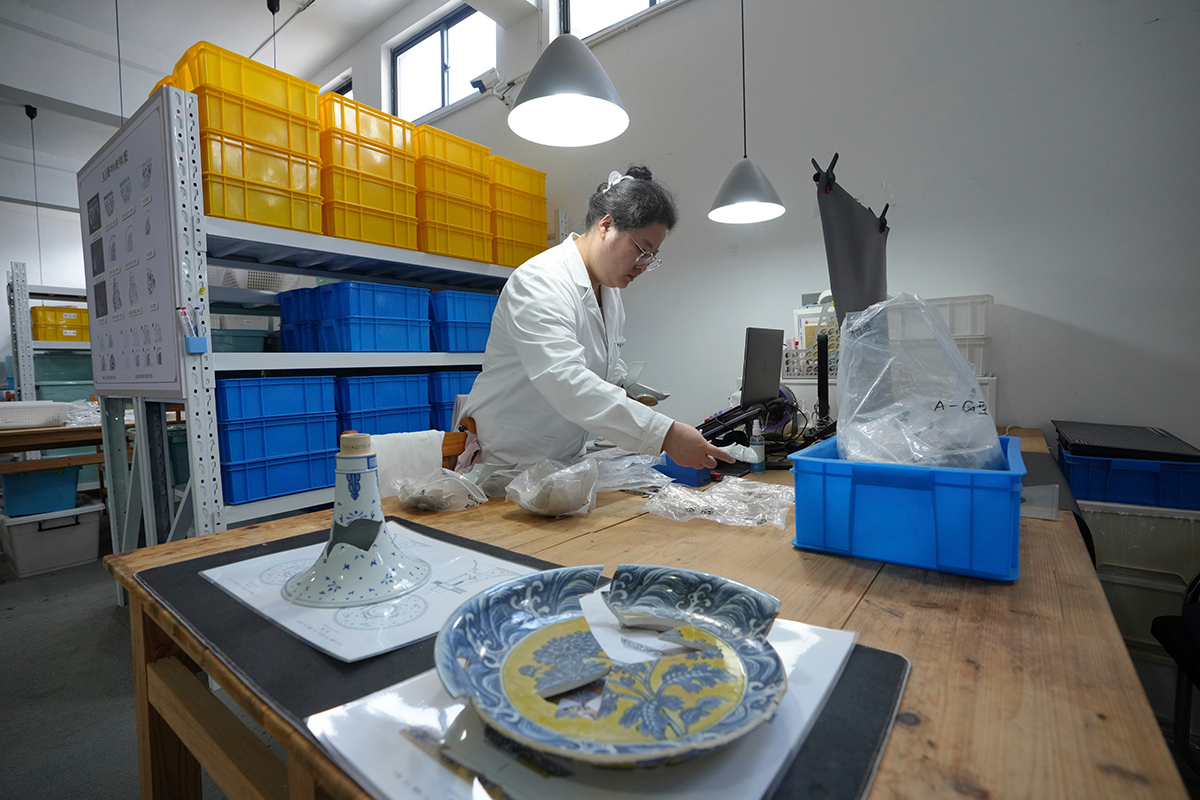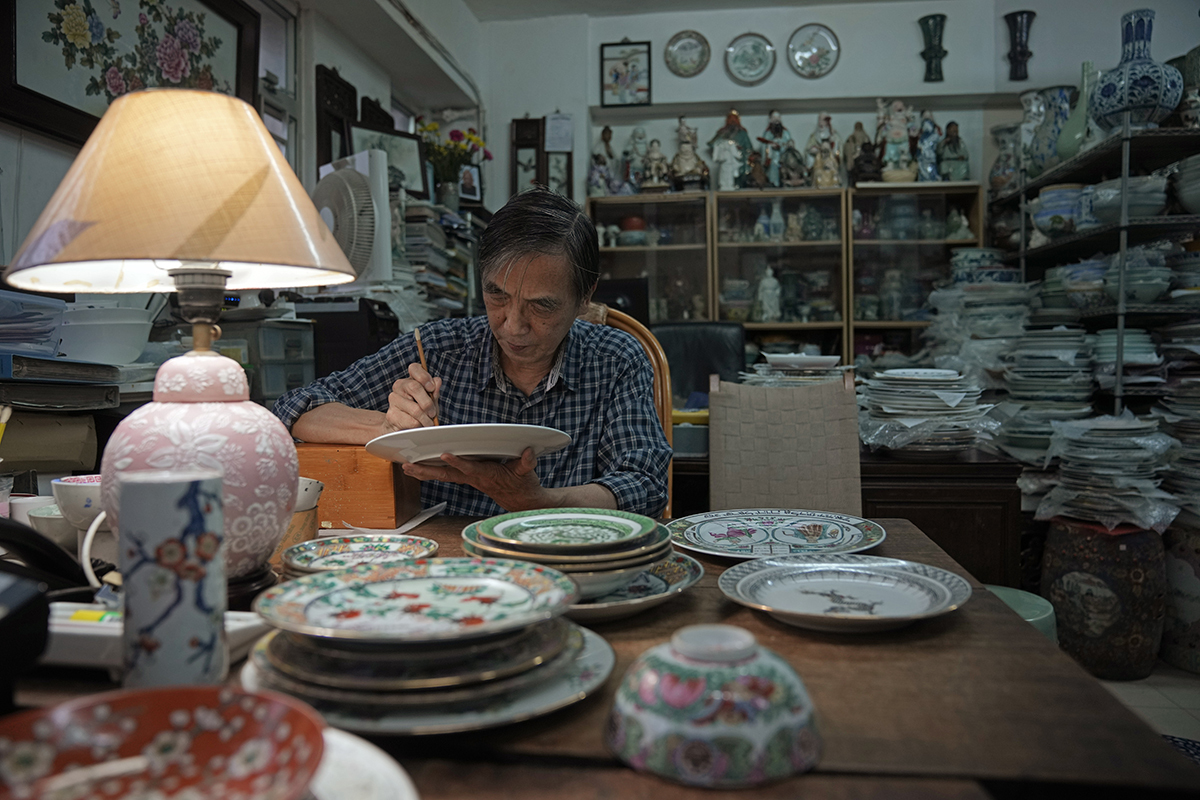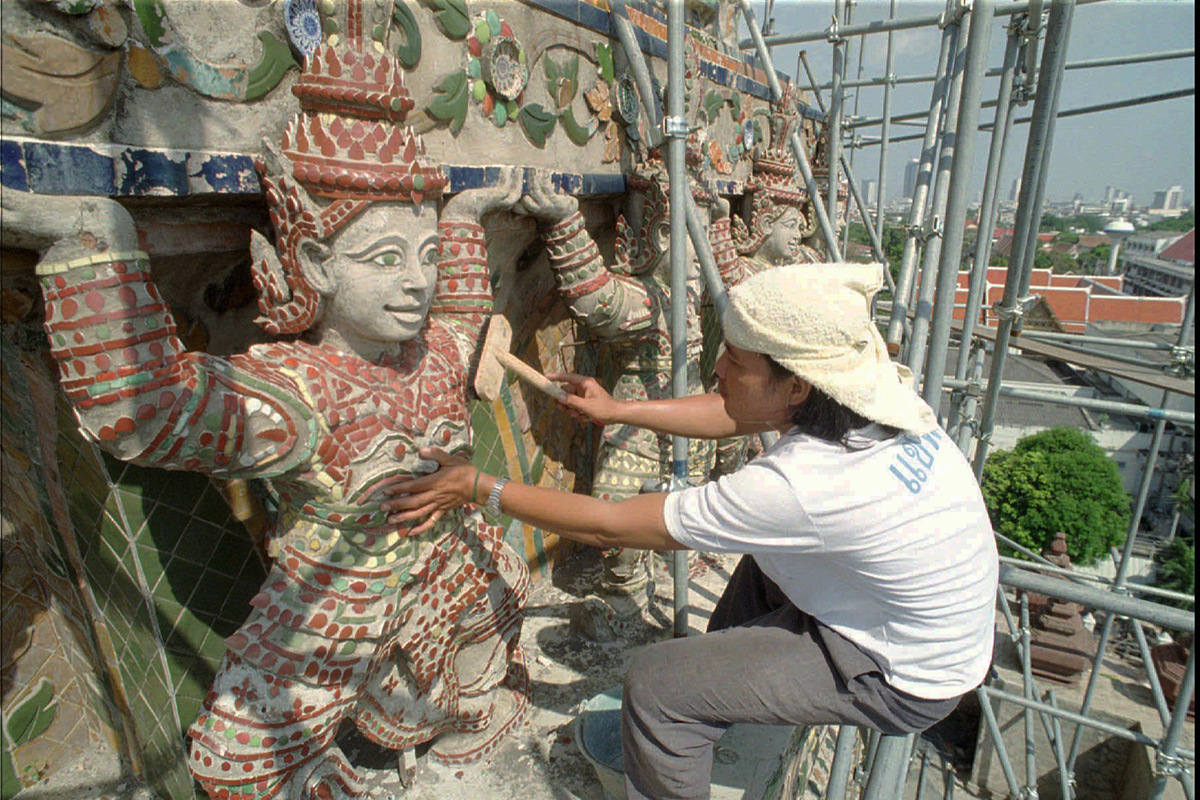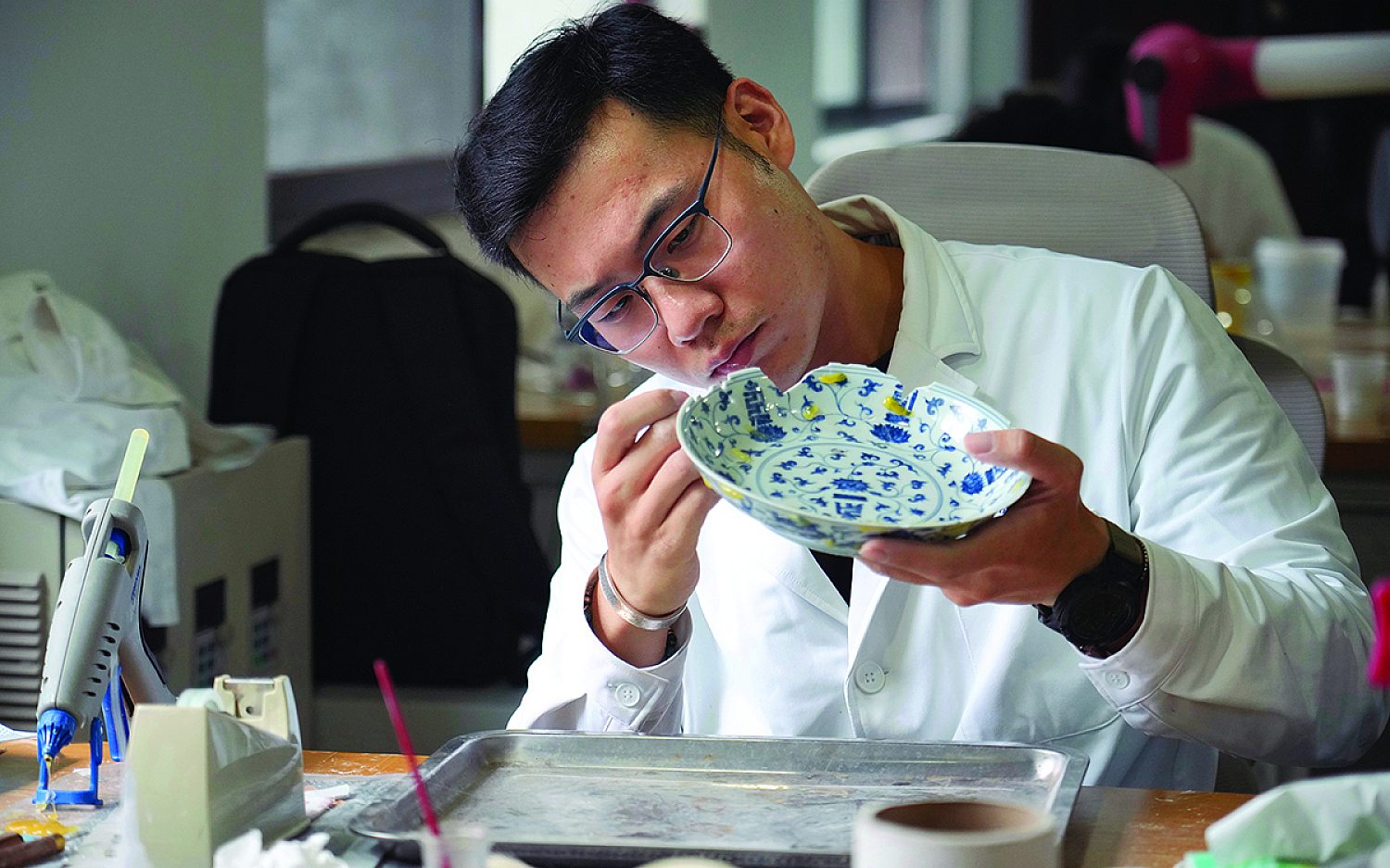
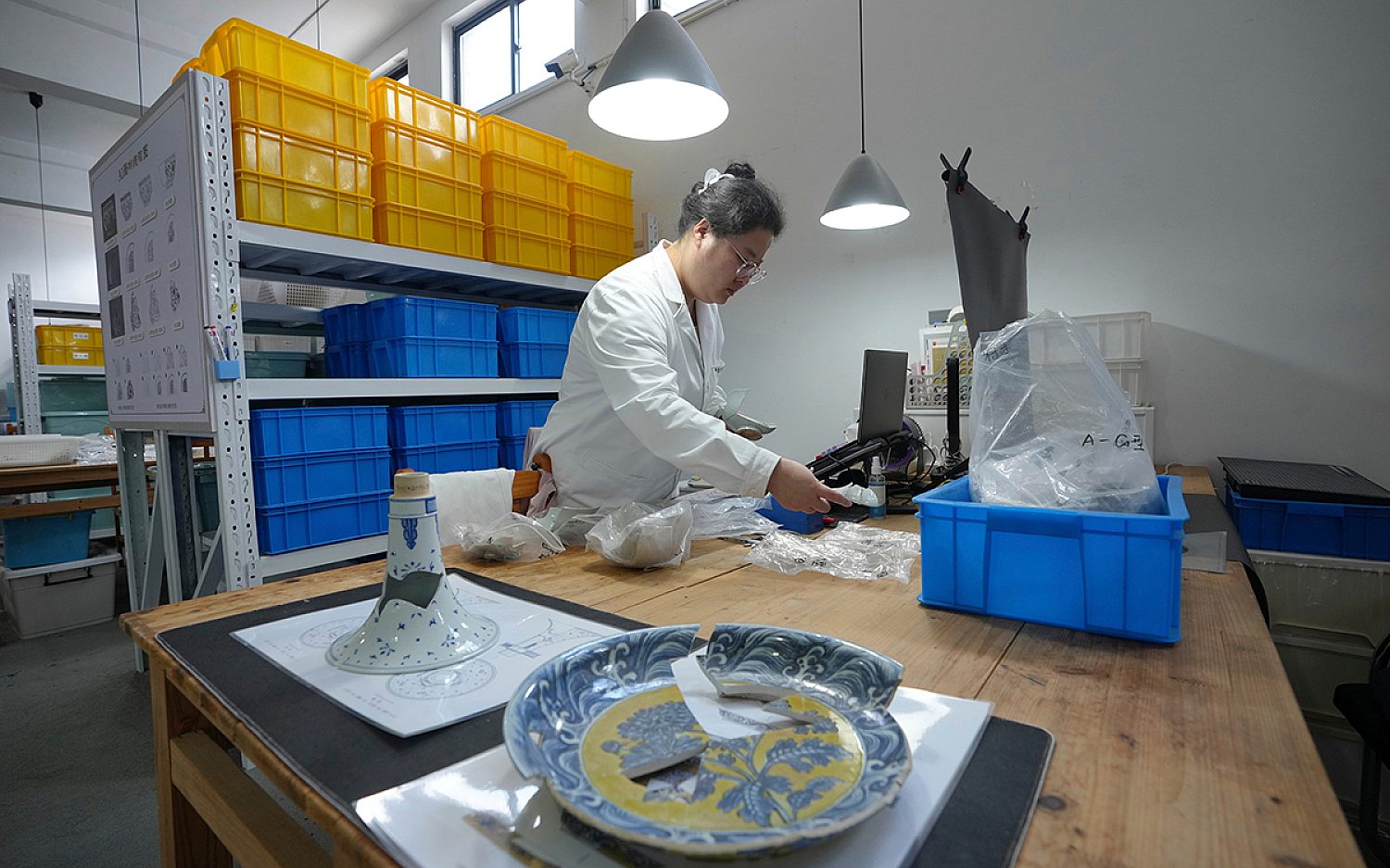
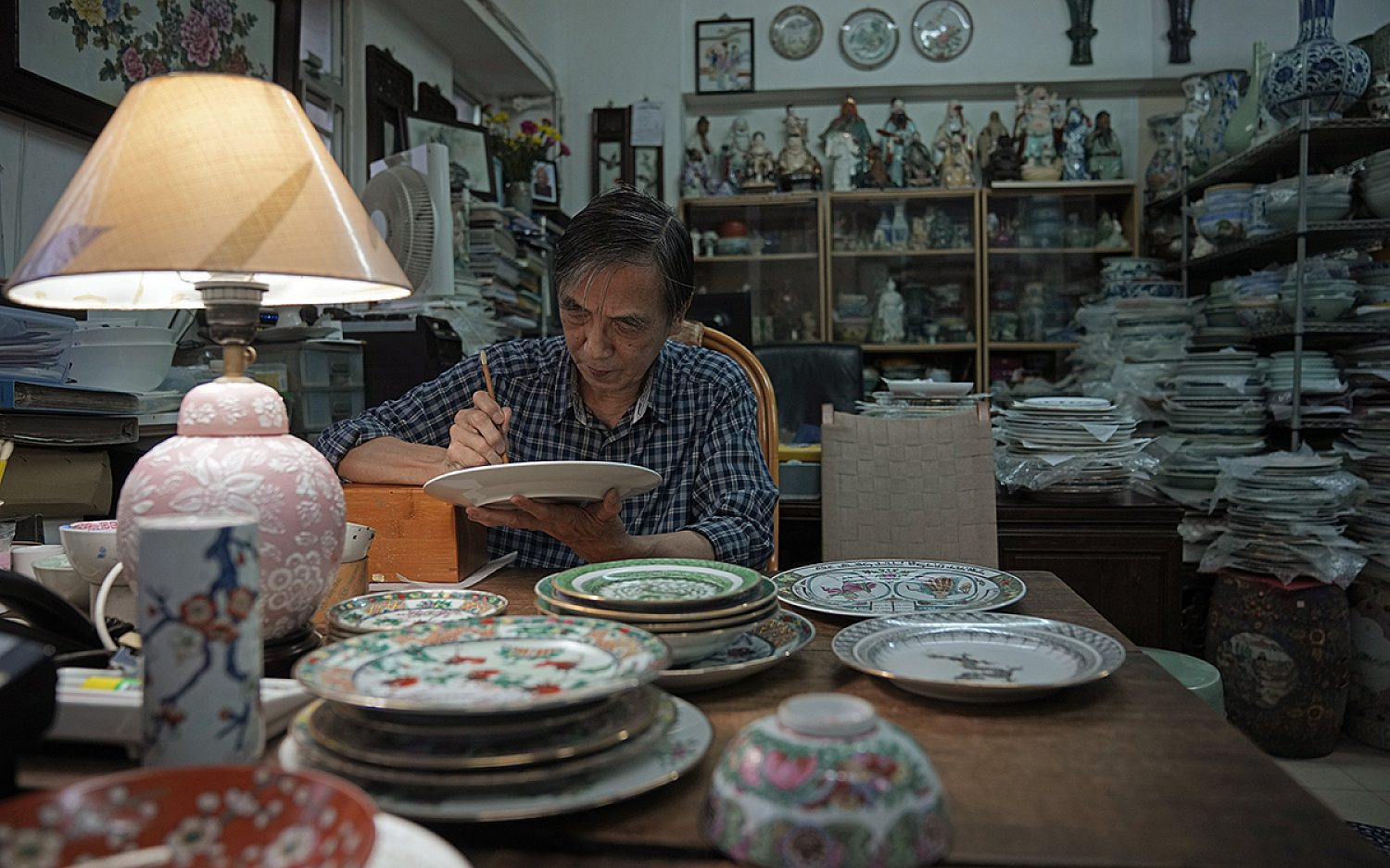
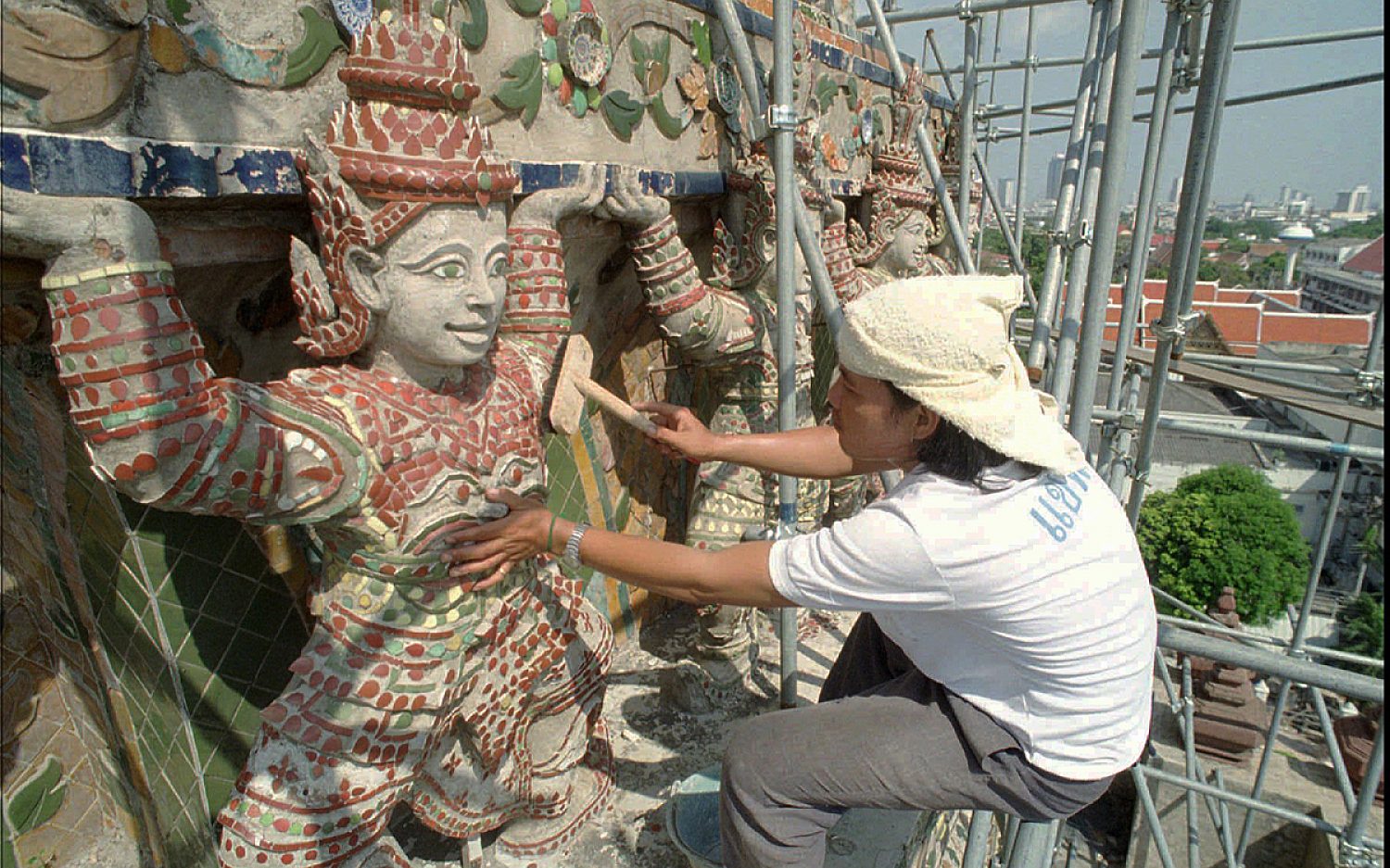

Artists like Ms. Chen don’t just work on new porcelain. They also help archaeologists and museums sleuth out porcelain history.
Archaeologists dig up ancient porcelain bits. Sometimes they can even see the kilns (ovens) where the pieces were fired long ago. Folks at the Imperial Kiln Institute study and restore the pottery. They use artificial intelligence to match and rebuild ancient pieces. It’s like a puzzle.
And this puzzle gives clues to another puzzle: Who made this porcelain? Why did they make it? What did they believe?
Some of the pottery comes from the Bao’en Pagoda—part of a Buddhist temple. Its outside walls were covered with porcelain tiles. Each bore an image of the Buddha, a wandering teacher who lived about 2,400 years ago.
But the porcelain tells other stories about various faiths too. “Islam, Buddhism, Taoism and, later on, European Catholic Christianity harmoniously blend into the porcelain decorations,” claims Weng Yanjun. He is the president of the Imperial Kiln Institute.
Near the ancient kiln stands a shrine for Tong Bin, “the protective spirit of ceramics.” People worshipped this made-up “Kiln God” during the Qing dynasty.
“In ancient times, the technology was not as advanced as it is today,” says Mr. Weng. “So, in many cases, people had to rely on their beliefs—their gods—to help bring good luck and better results.” Some porcelain artists still keep Buddha figures in their workshops for “luck.”
Are you an artist? If so, remember: God cares about your art. He designed you to make beauty like He does. He still helps His people work—not by giving them “luck” but by offering His presence.
No matter our medium, the materials we use belong to the one true God. How can you use those materials to tell the best story there is—His?