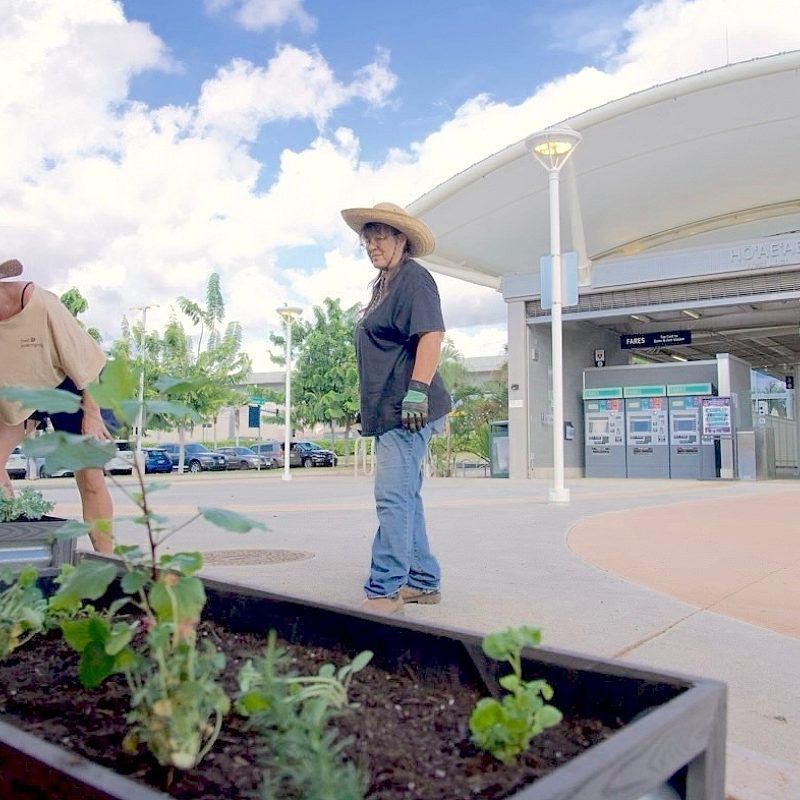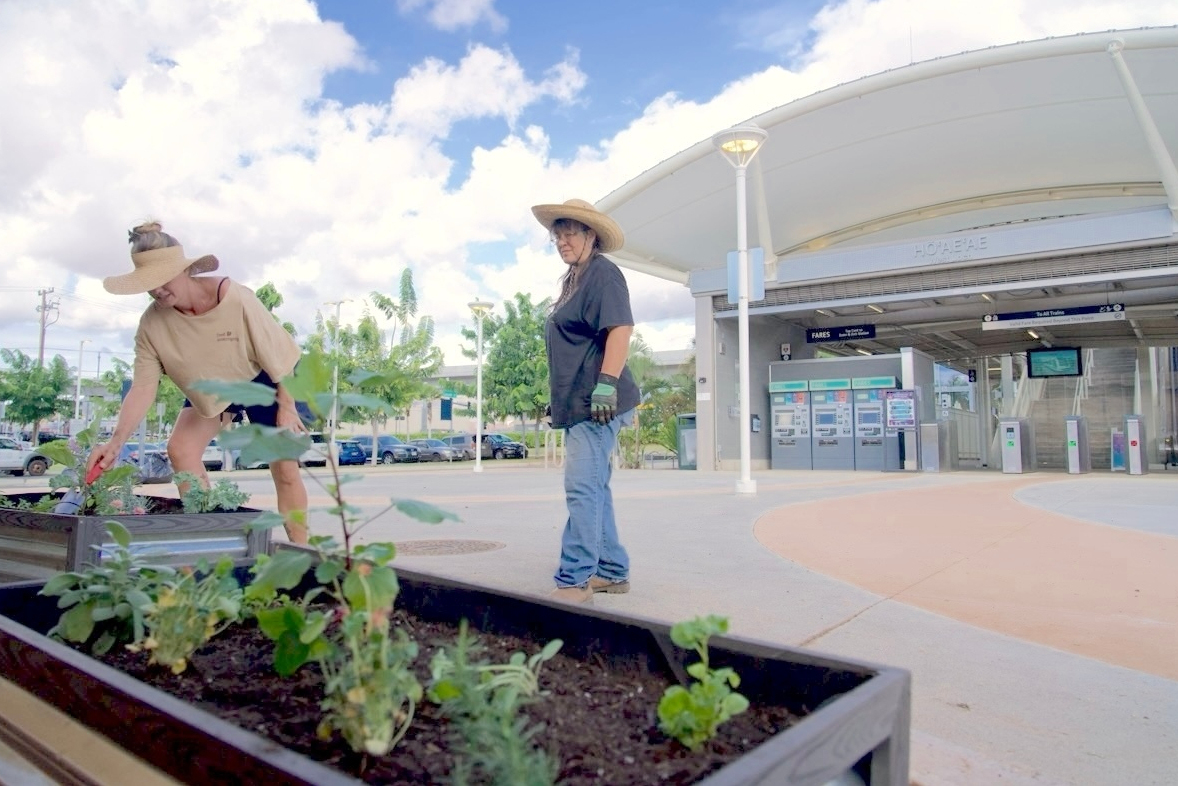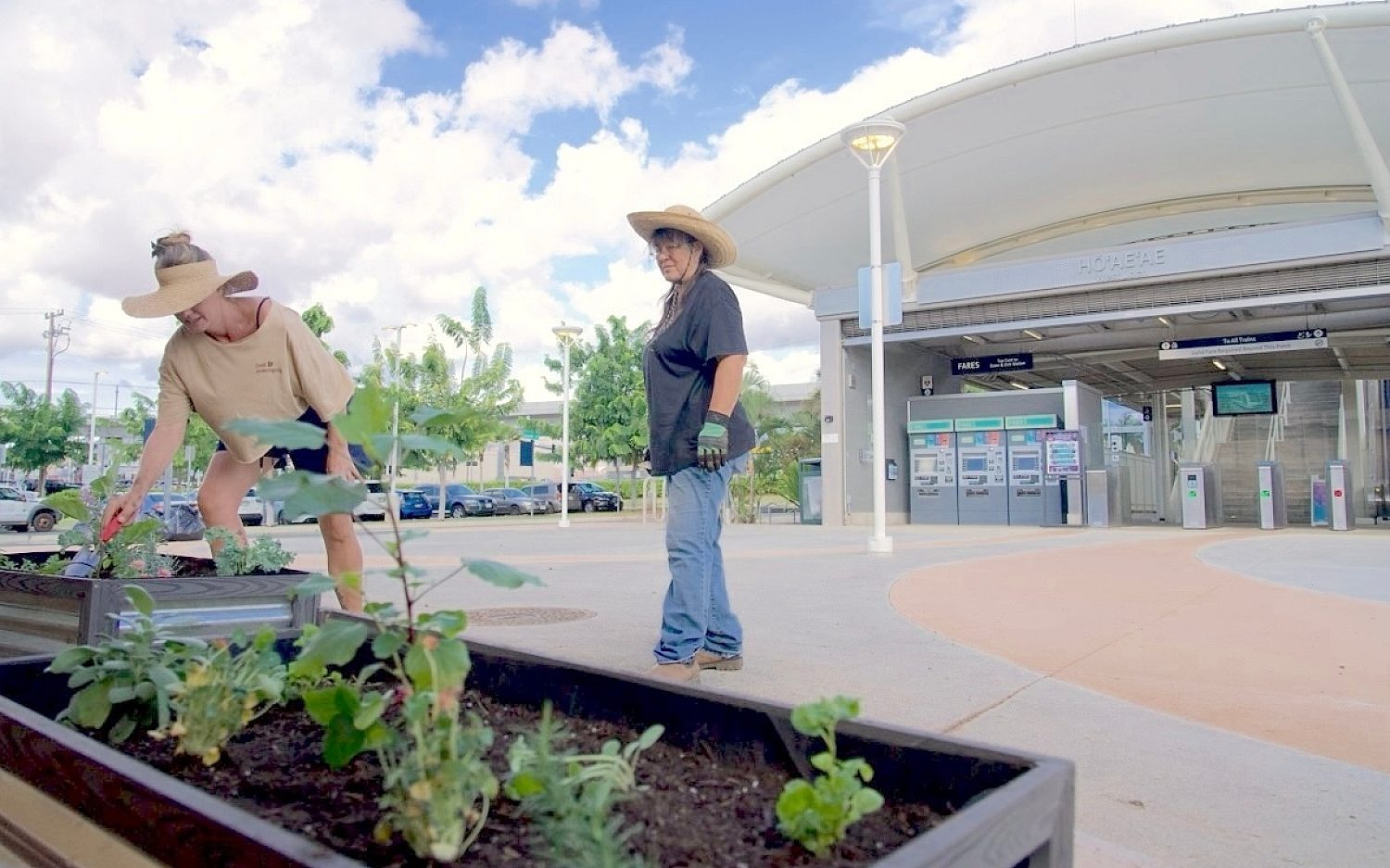
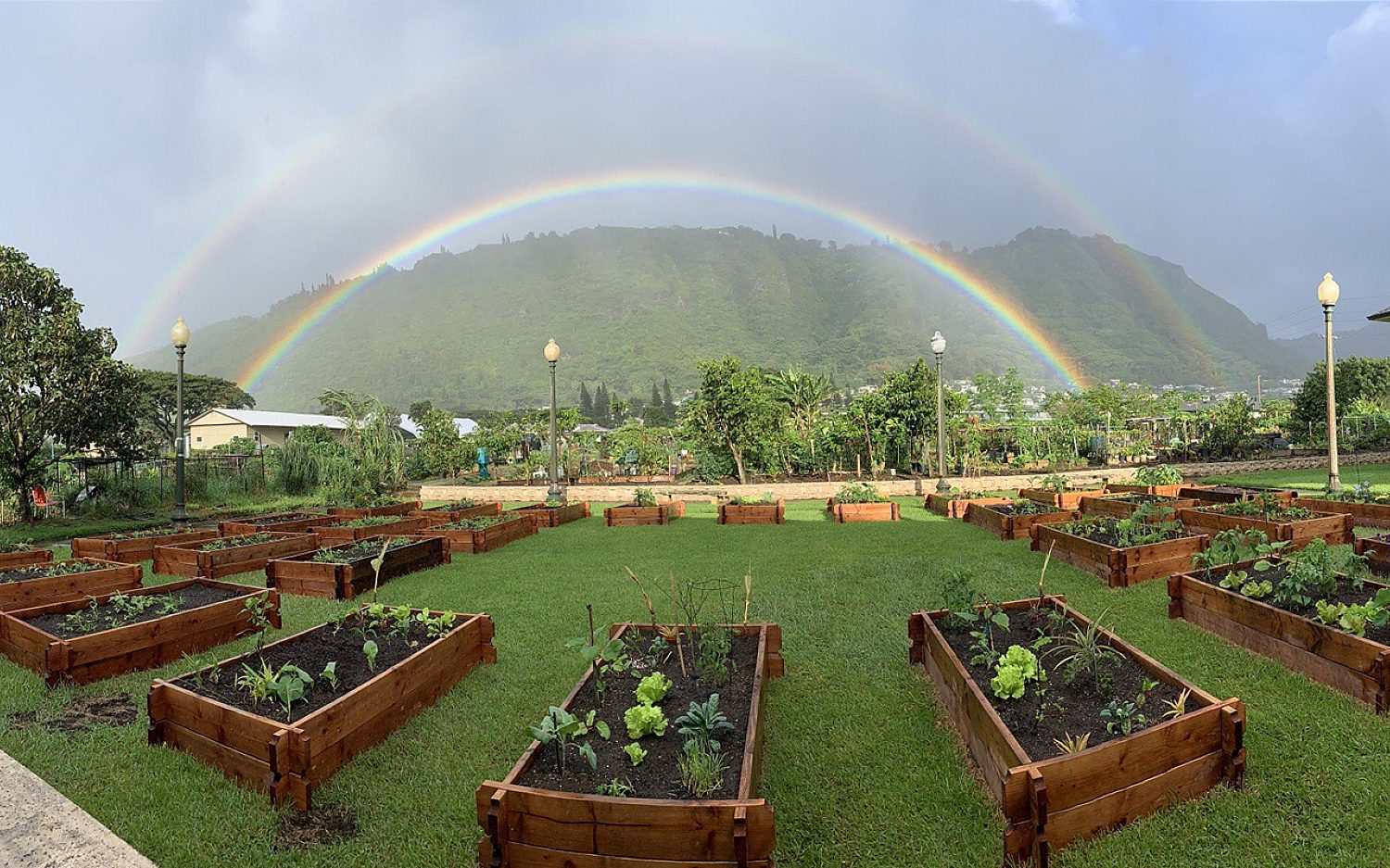
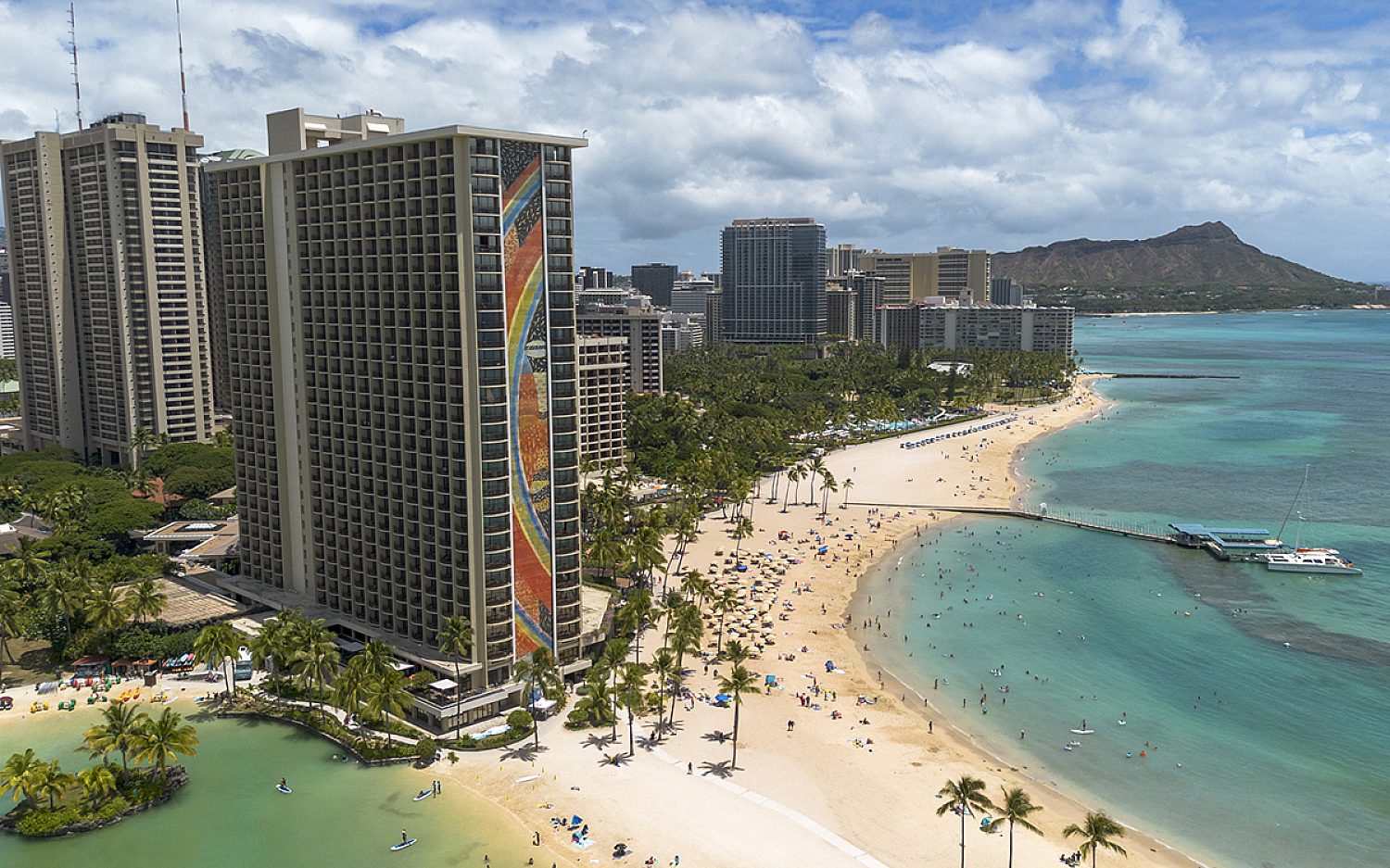

In Honolulu, Hawaii, trains zip by. People onboard spot something out the windows. Planter boxes overflow with growing tomatoes, eggplants, onions, and sweet potatoes.
Why? Because local leaders want free food to grow in public spaces.
That’s a big change. Before now, authorities said no to edible plants in public. They even arrested people for planting food trees! They didn’t want liability (responsibility) if a coconut fell on somebody’s head or someone slipped on a squishy mango. Plus, who would tend the plants? Who would oversee the projects? Who would get to eat the food?
But now Honolulu could win $1 million from Bloomberg Philanthropies for growing city food. That organization calls on cities to creatively provide for citizens.
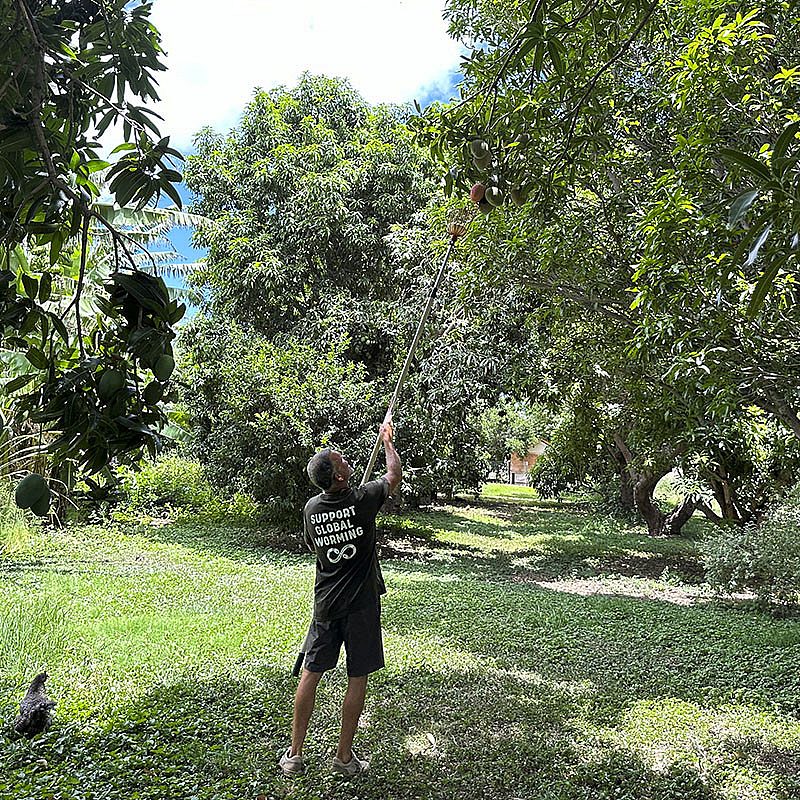
In Honolulu, train stations will become “food hubs.” Train riders may take a native ʻulu (breadfruit) or other fruits and vegetables for dinner. Then they might worry less about the price of groceries. Also, food won’t have to come only from faraway fields.
Patches of grass and shrubs get pulled out. Native plants take their place. Native plants don’t need much care—because they’re right at home, ready for Hawaii’s dry weather. That means fewer weeds to whack and fewer leaves to blow. It may also mean more food harvesting and more neighbors spending time together.
Meanwhile, a farmers market will run during peak commute times. Just getting off the train? No problem. Grab some veggies on your way home.
Behold, I have given you every plant yielding seed that is on the face of all the Earth, and every tree with seed in its fruit. You shall have them for food. — Genesis 1:29
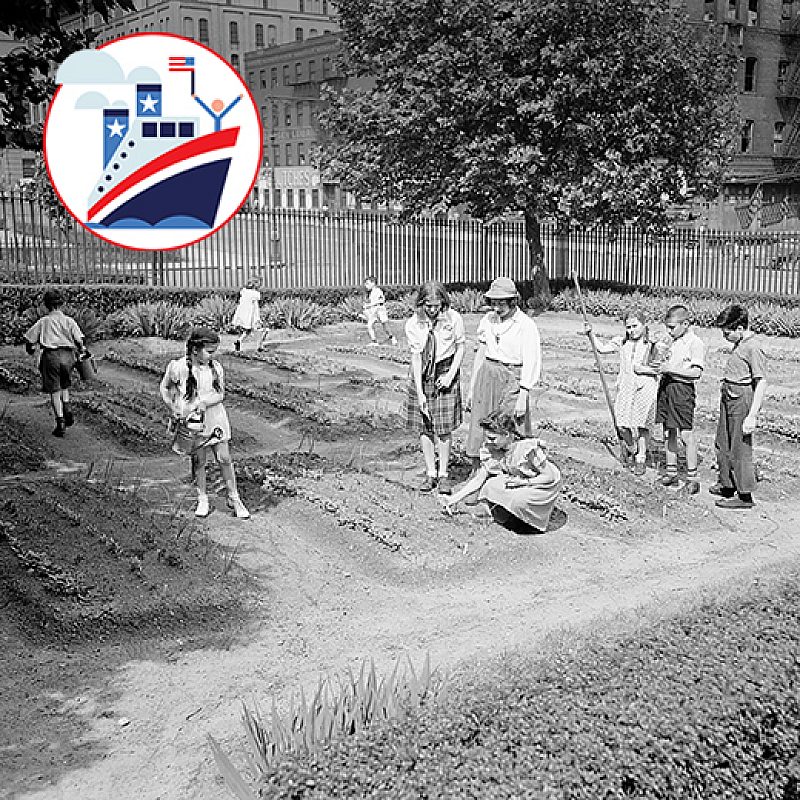
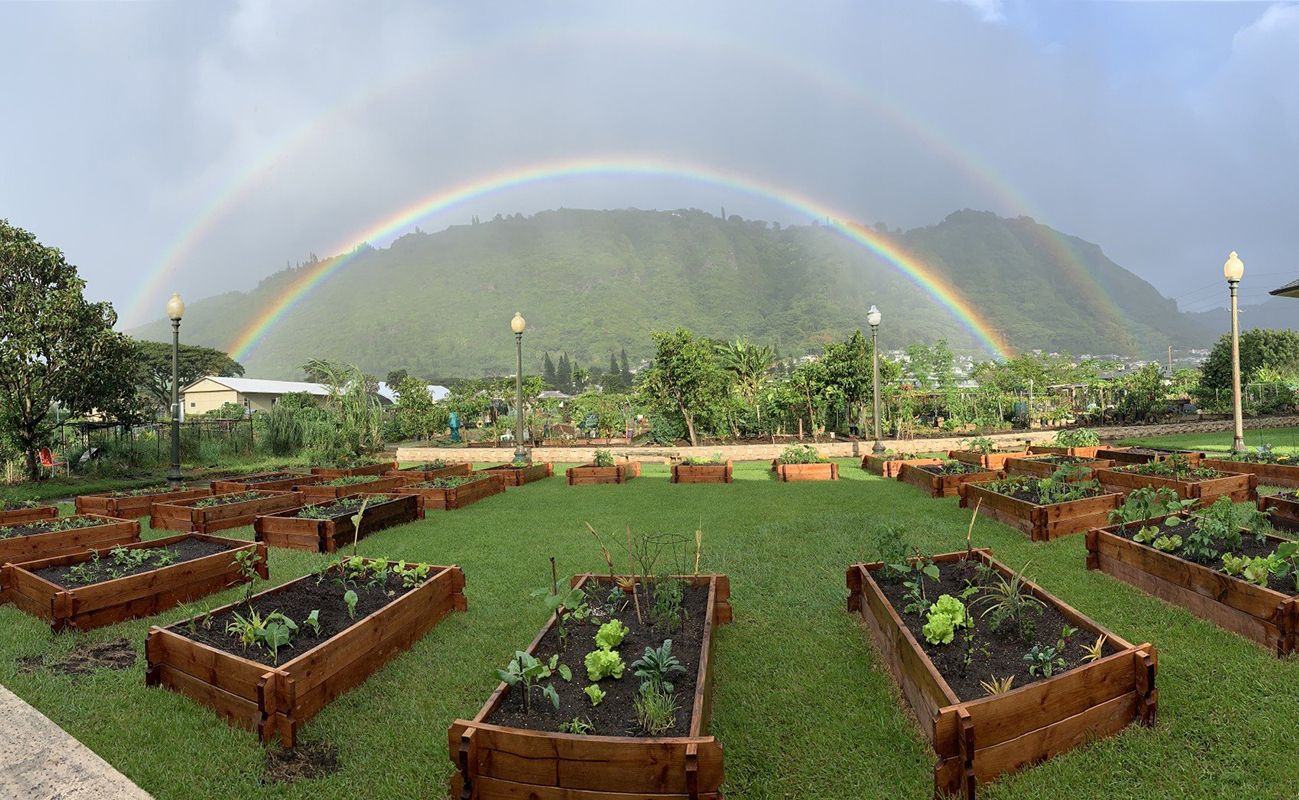
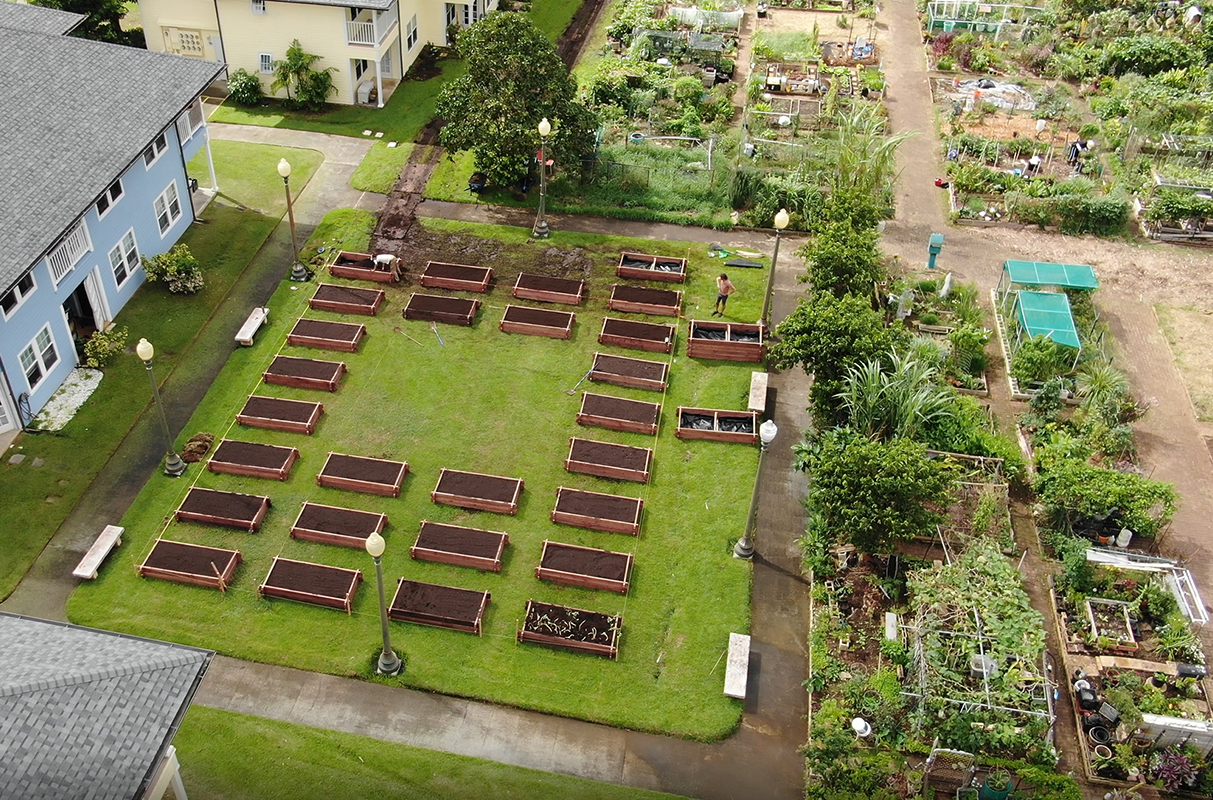
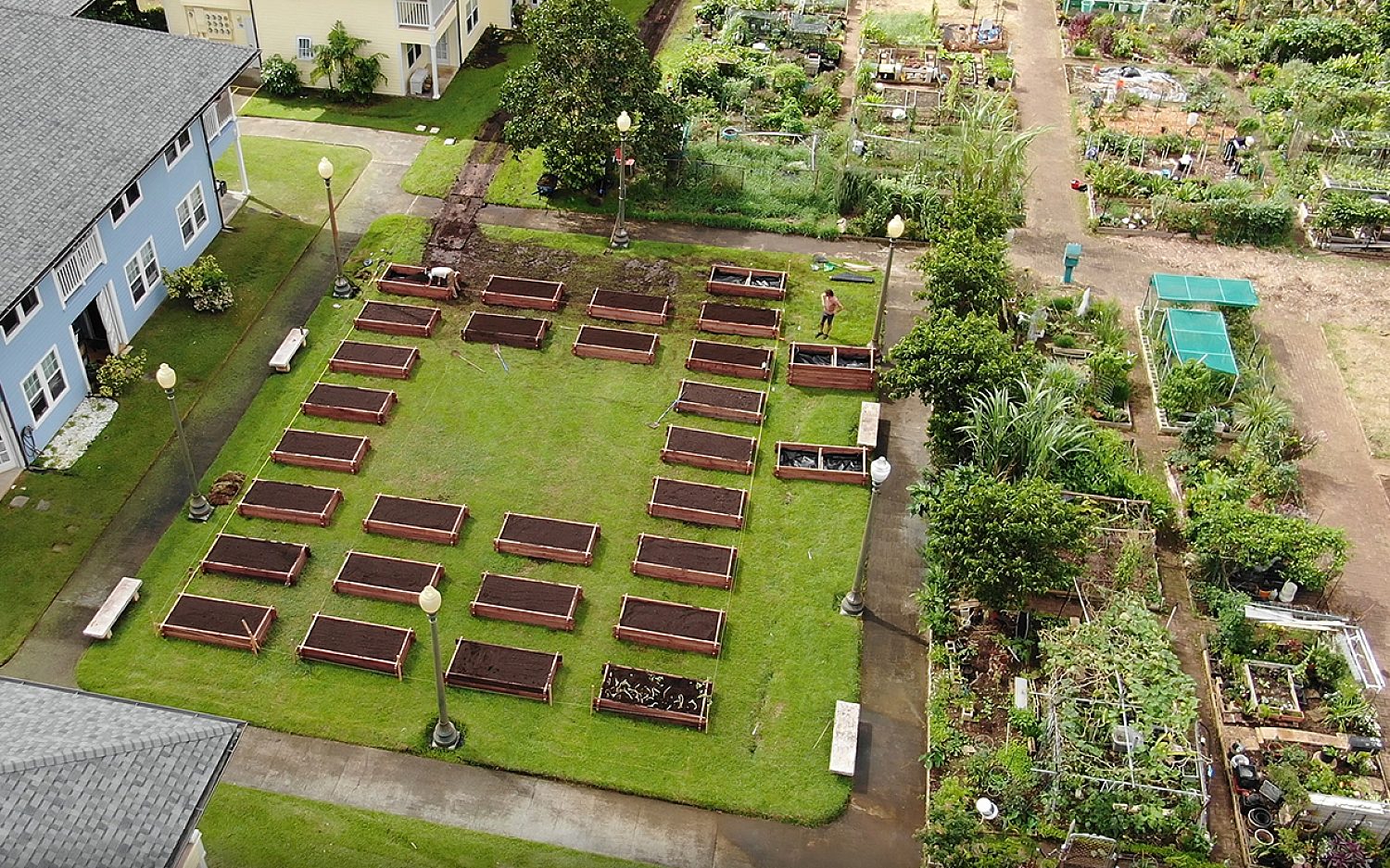
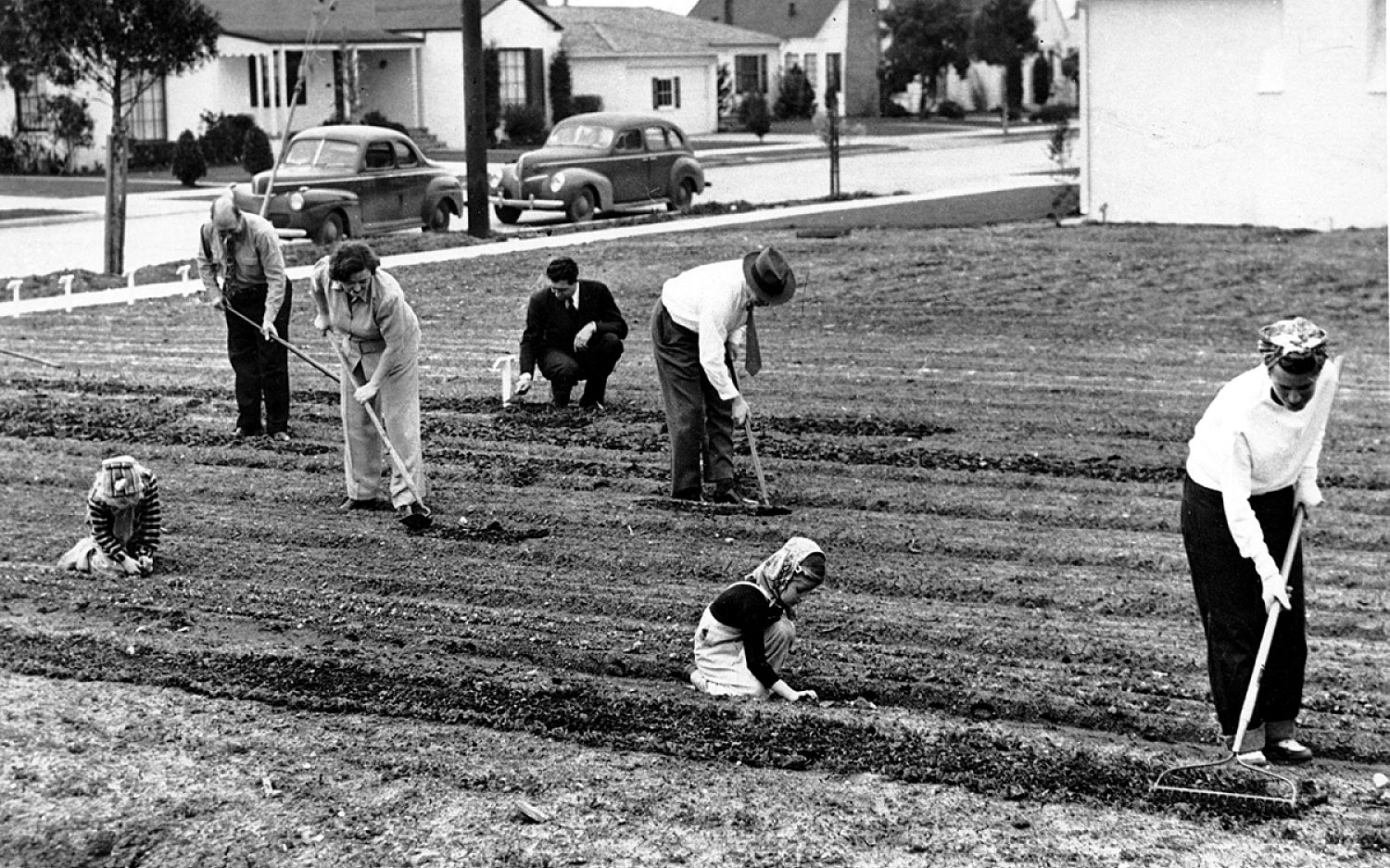
Why? Urban gardens can unite neighbors, use land efficiently, and help feed people who may have difficulty buying enough groceries.