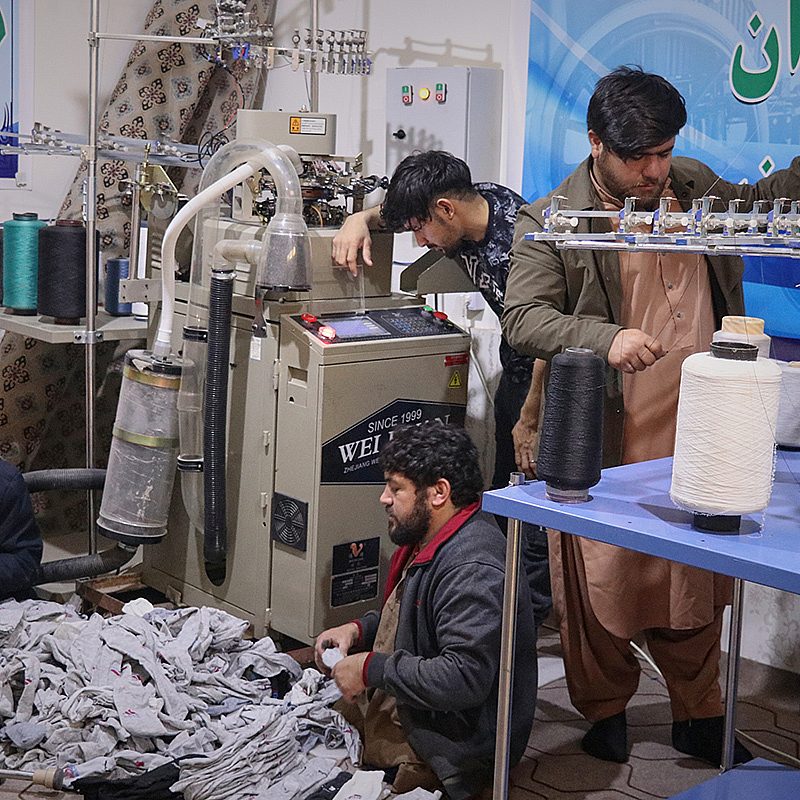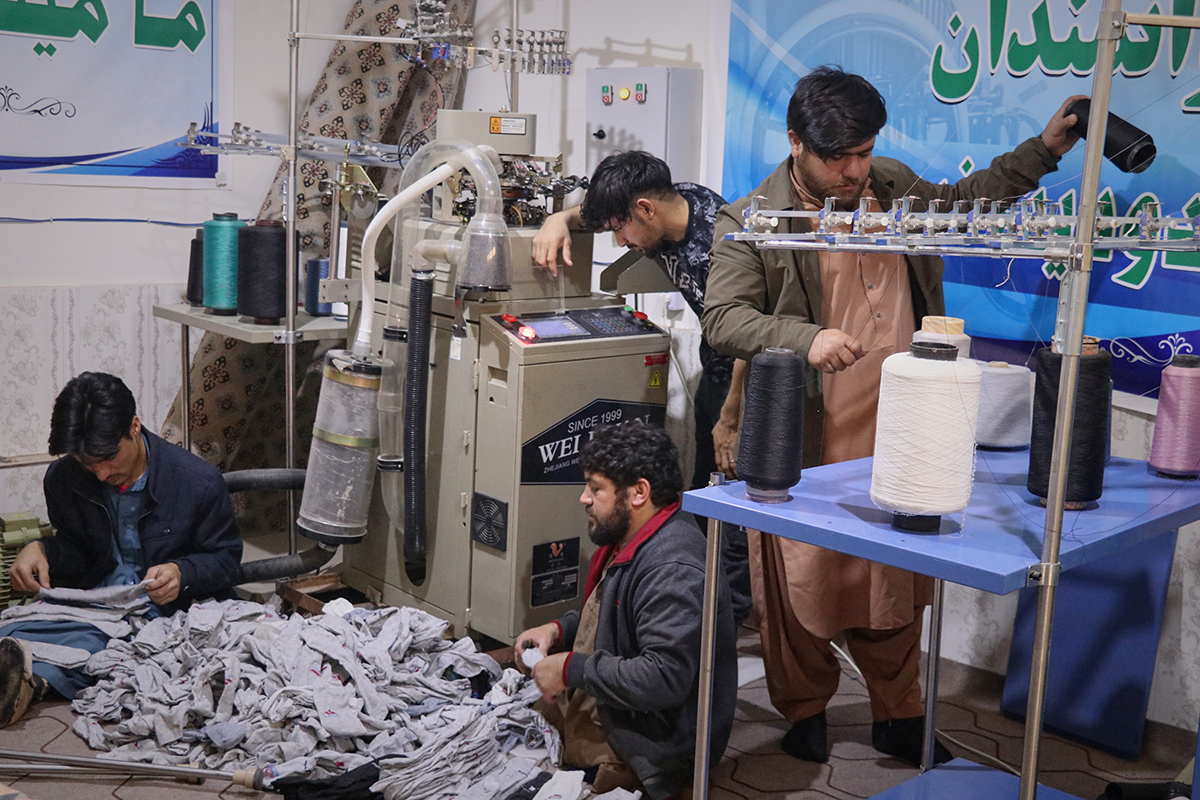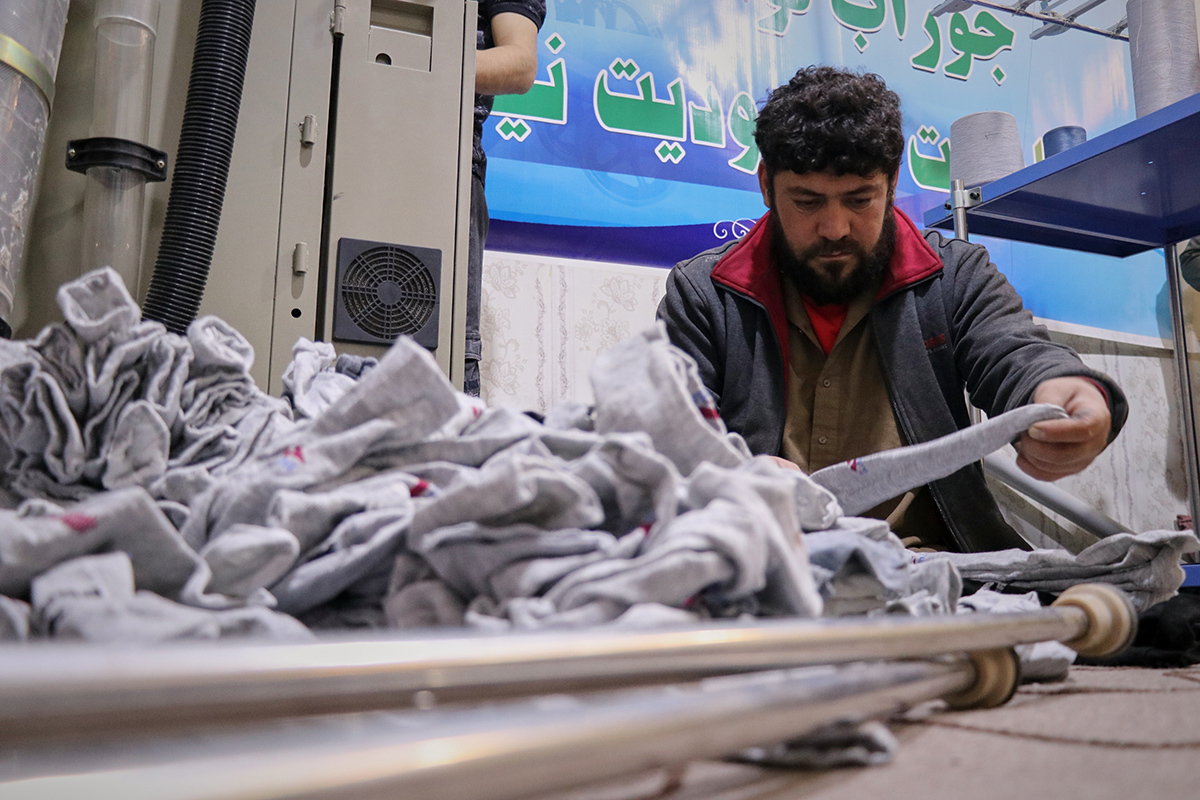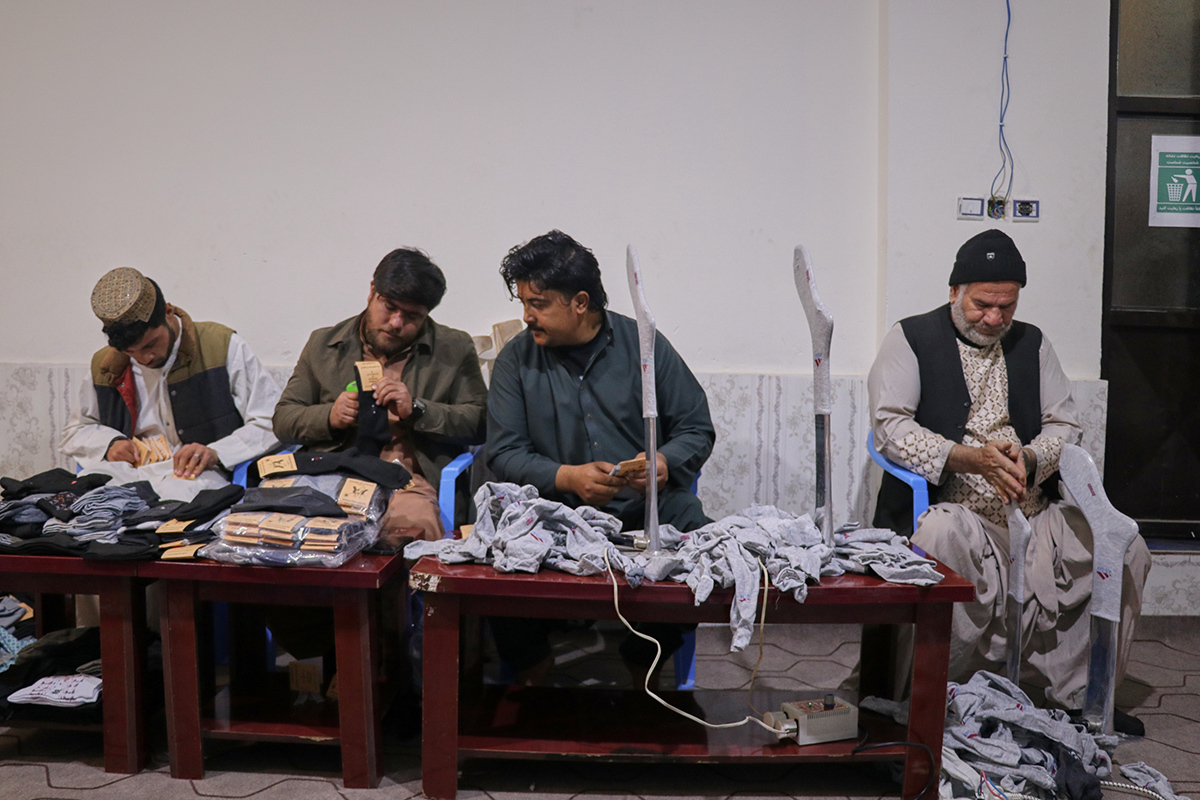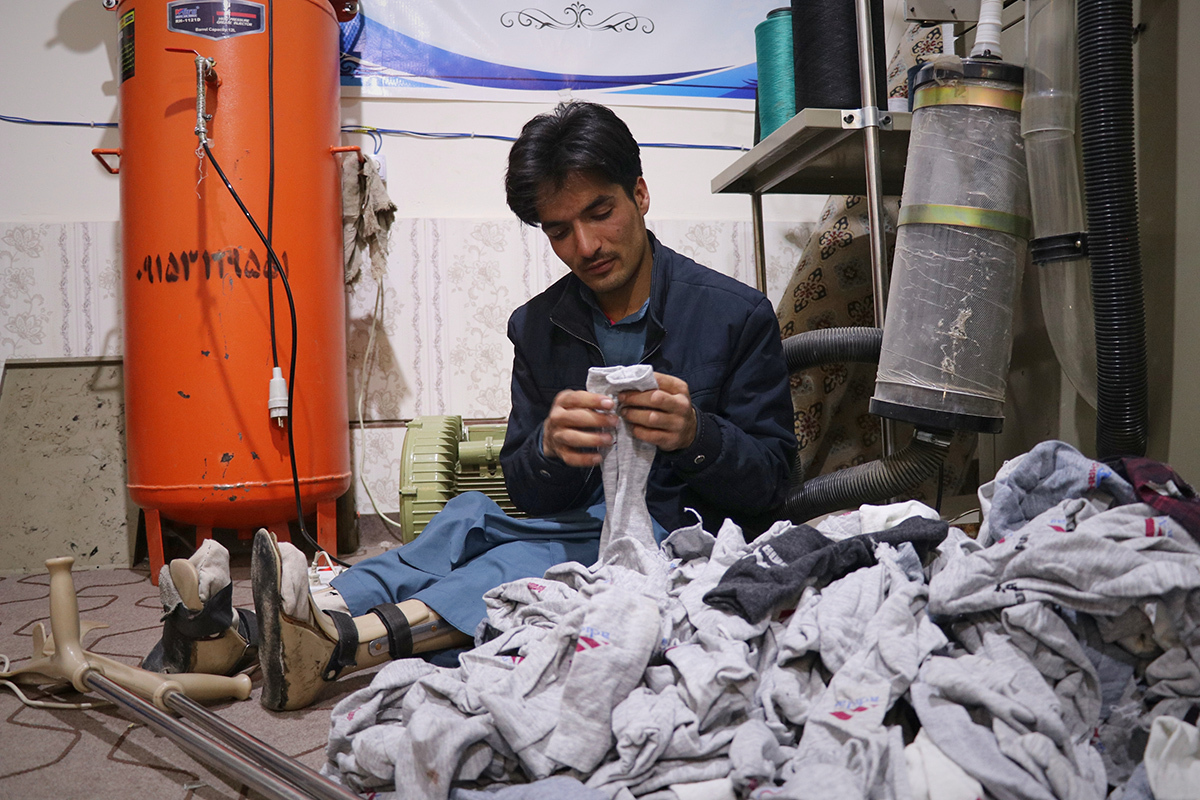
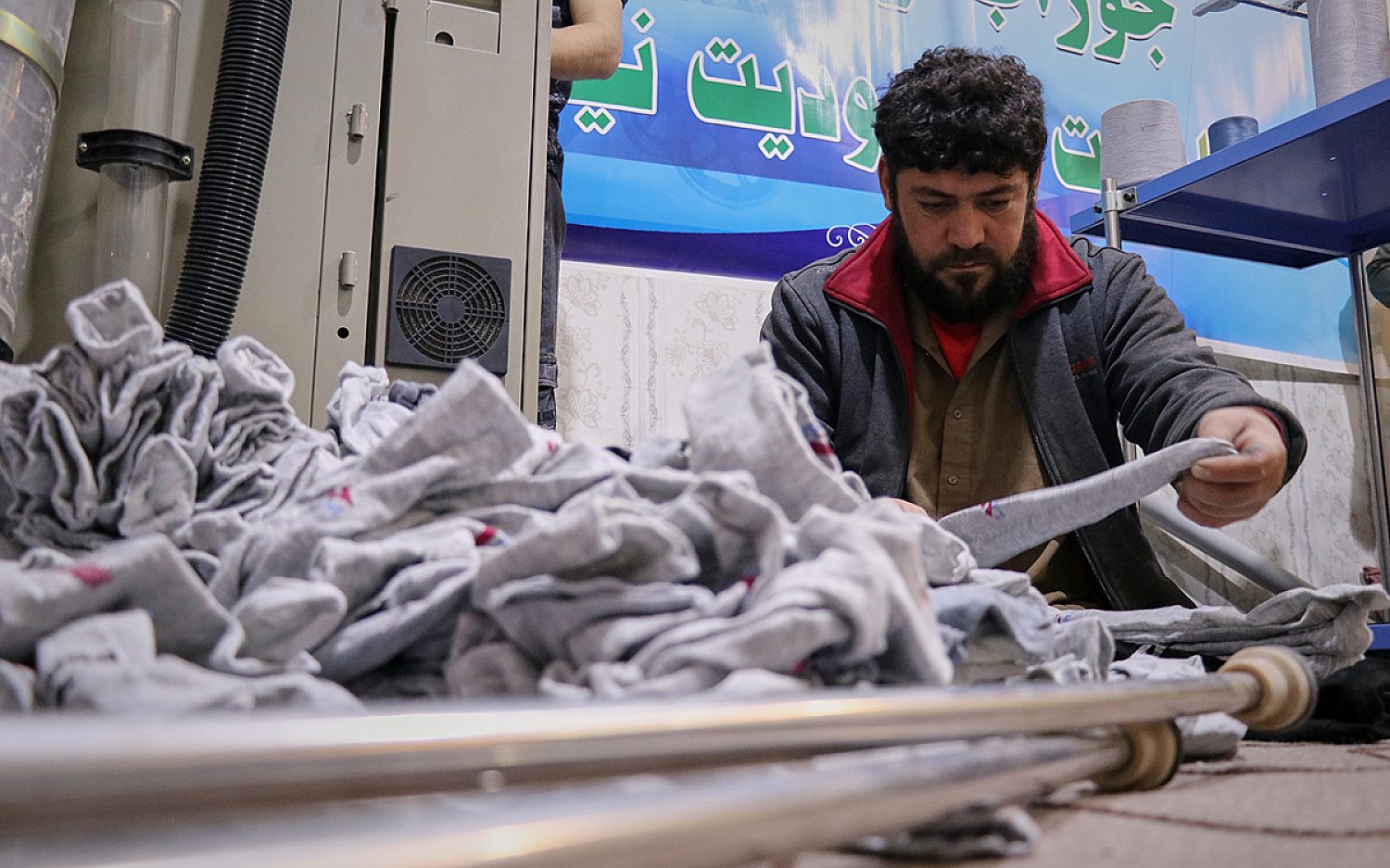
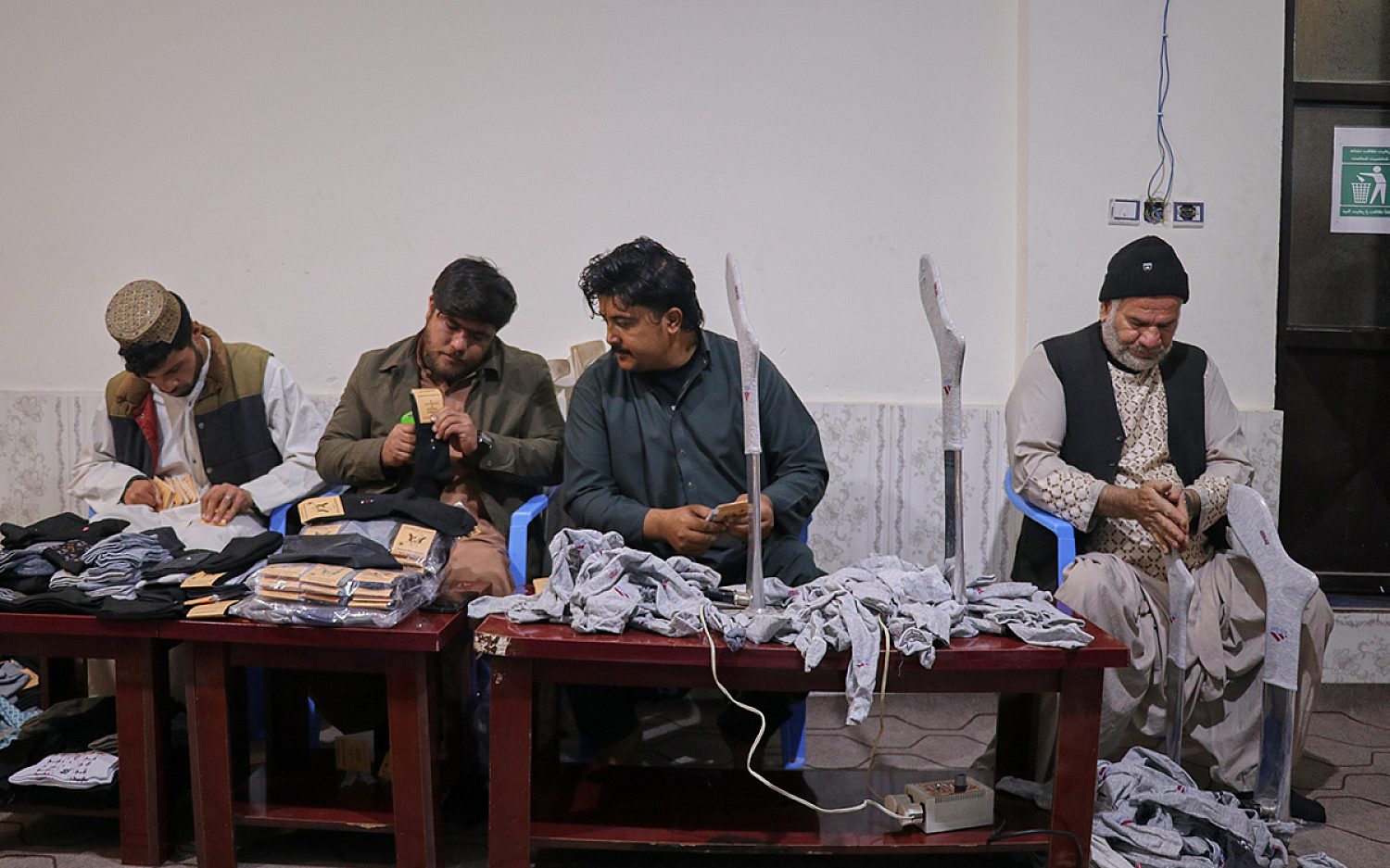
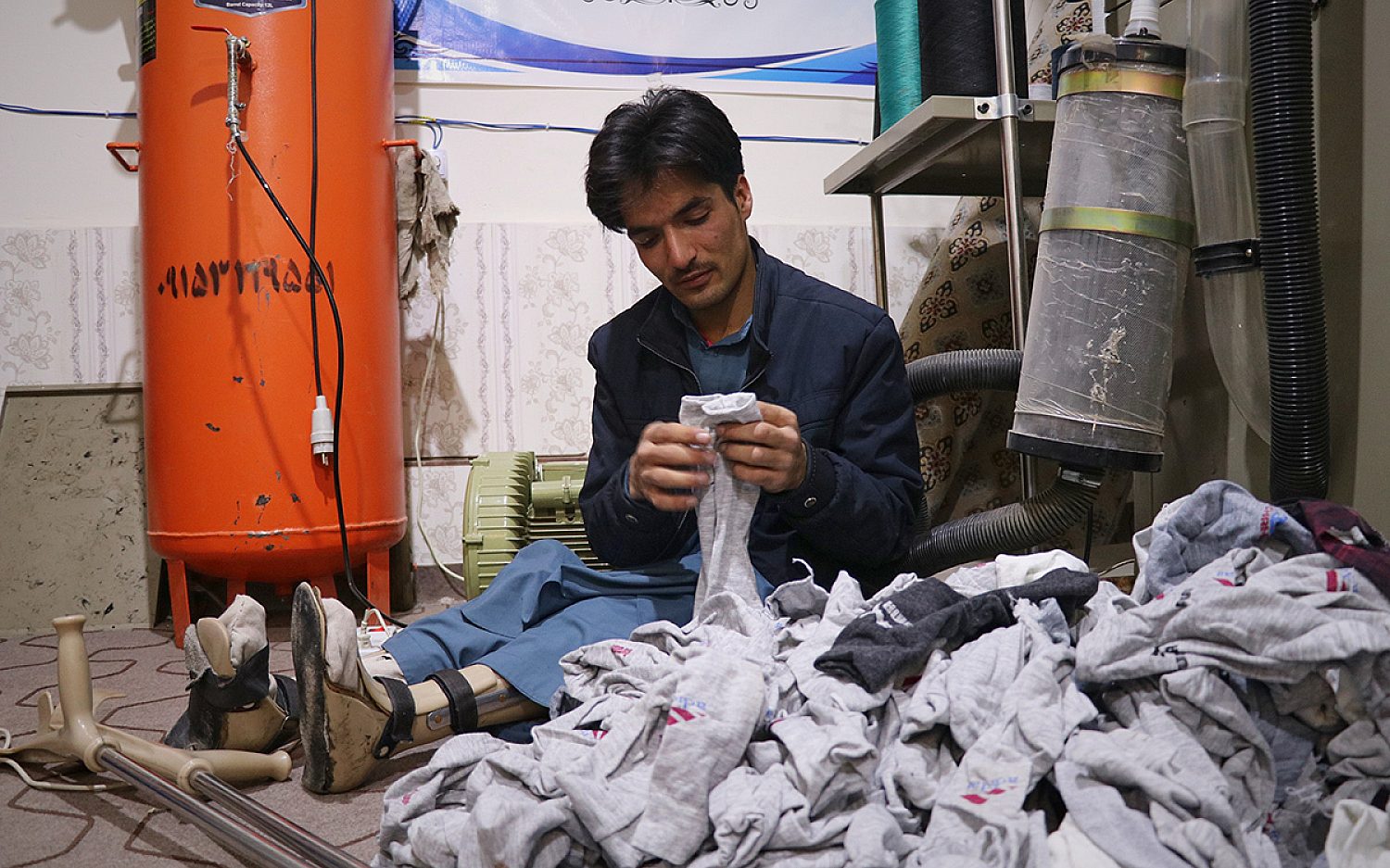

Shahabuddin has no legs. He uses his hands to push himself along the floor in a tiny room. Where is he headed? To a pile of freshly made socks. The socks wait to be sorted and packaged.
Like many Afghans, Shahabuddin goes by just one name. He works in the center of Herat, Afghanistan. A roadside bomb took his legs a decade ago during wartime. Since then, finding work has been a challenge. Shahabuddin is also a dad. He has had to rely on relatives to help his family survive.
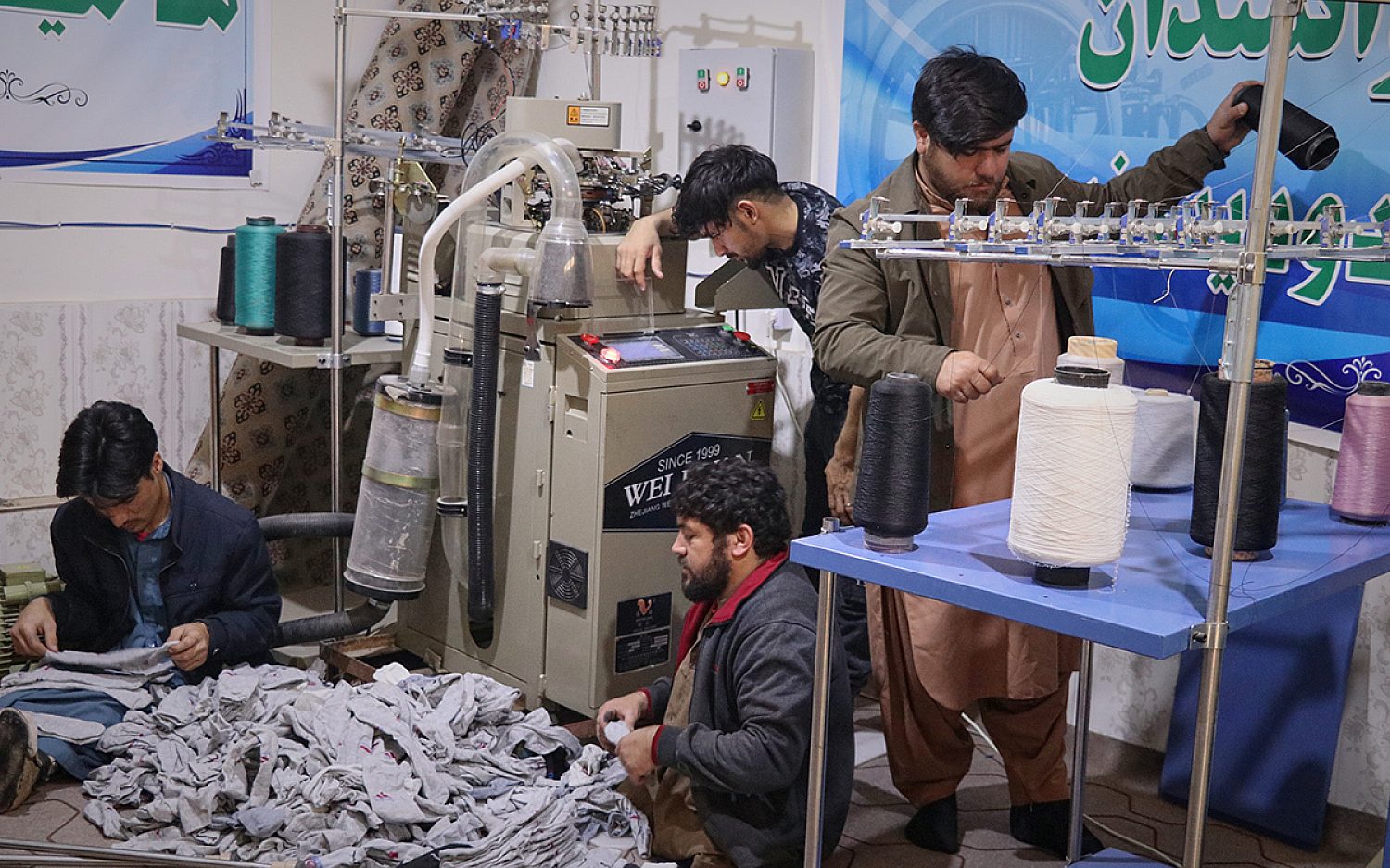
That is, until now. A new sock-making workshop in Herat employs only disabled workers. This gives Shahabuddin and others like him new hope.
“I became disabled due to the explosion,” he says. “Both my legs were amputated. Now I work here in a sock factory. And I am very happy that I have been given a job here.”
Mohammad Amiri started the business. Mr. Amiri has a disability too. As a child, he had a disease called polio. (A person with polio can get flu-like symptoms, stomach pain, and inflammation in the brain. In severe cases, a person can become paralyzed or even die. Now a vaccine can prevent polio. Only two countries still have a polio problem. One is Pakistan. The other is Afghanistan.)
Grown-up Mr. Amiri sees a huge need. Many people got hurt in conflict. They have disabilities and no jobs. Poor healthcare and poverty just make matters worse. Mr. Amiri teamed up with another polio survivor to start the sock factory.
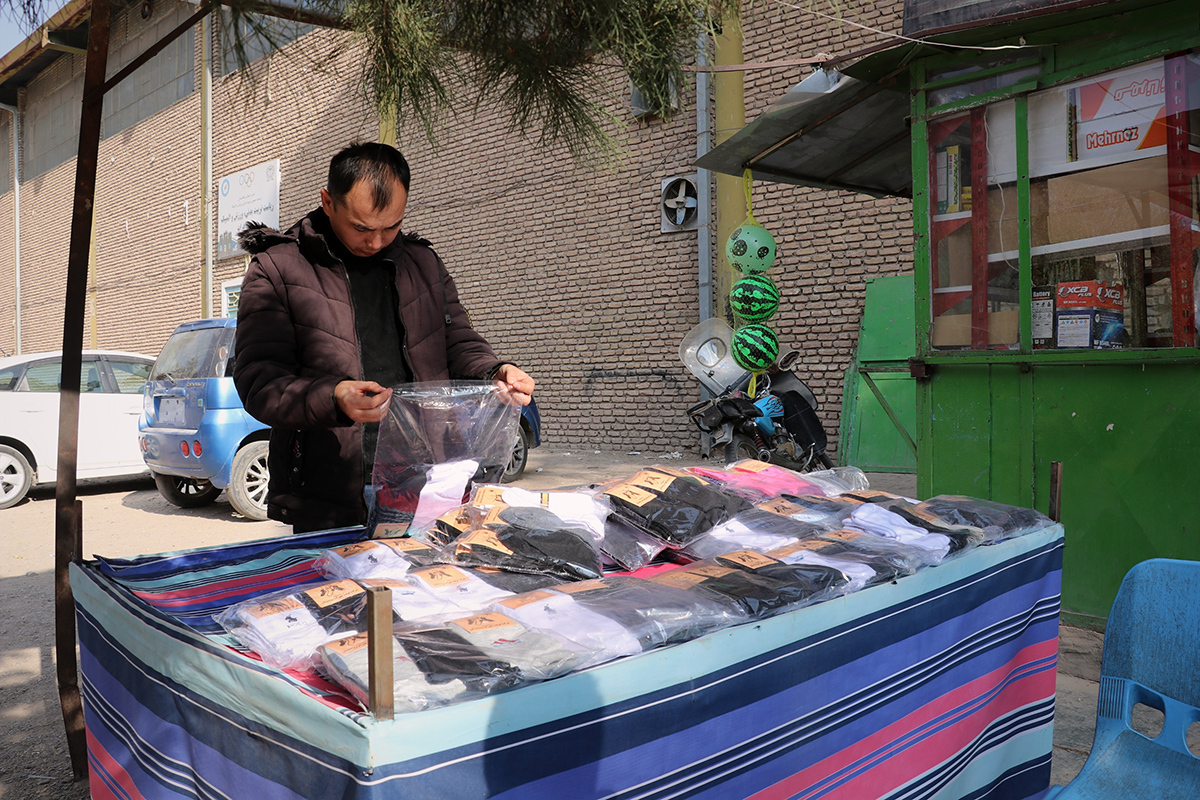
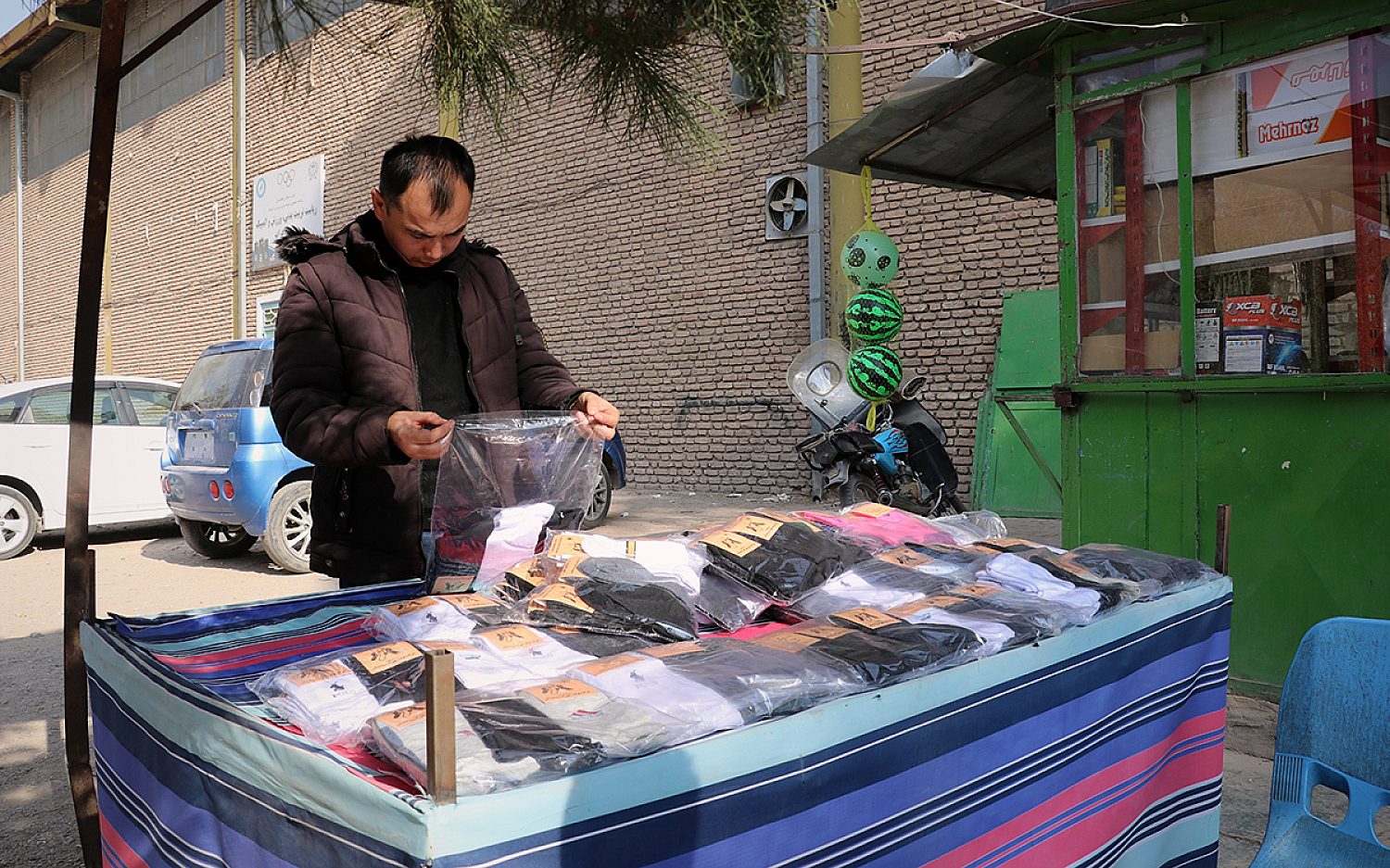
The factory employs around 50 people with disabilities. The workers make long socks, short socks, winter socks, and summer socks. Mr. Amiri says, “They are busy in the production, packaging, and sale of socks in the city.”
Mr. Amiri says his business faces serious competition. Afghanistan gets cheap cloth products from other countries. Mr. Amiri hopes the government will stop those imports. His big dream: employ 2,000 people one day and sell socks to the Afghan government.
Why? Jesus loves people with and without disabilities. We act in His image when we help provide all people with opportunities to live well.