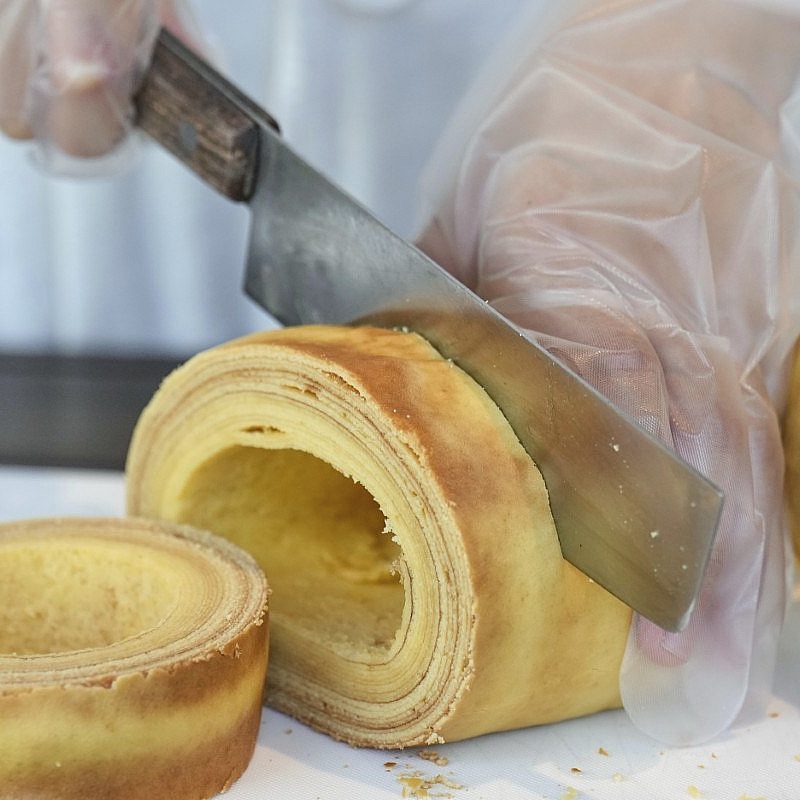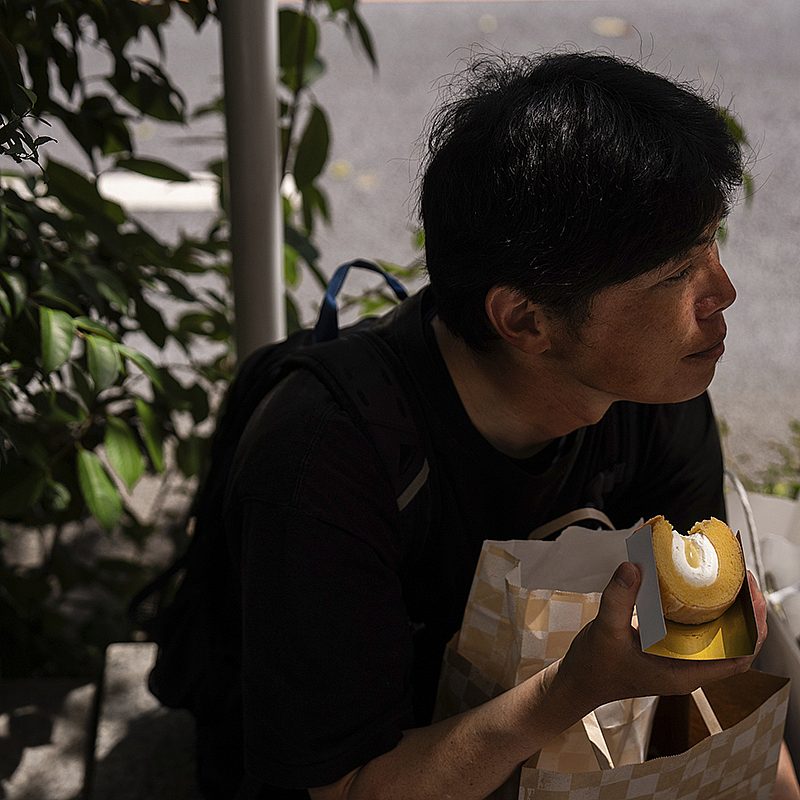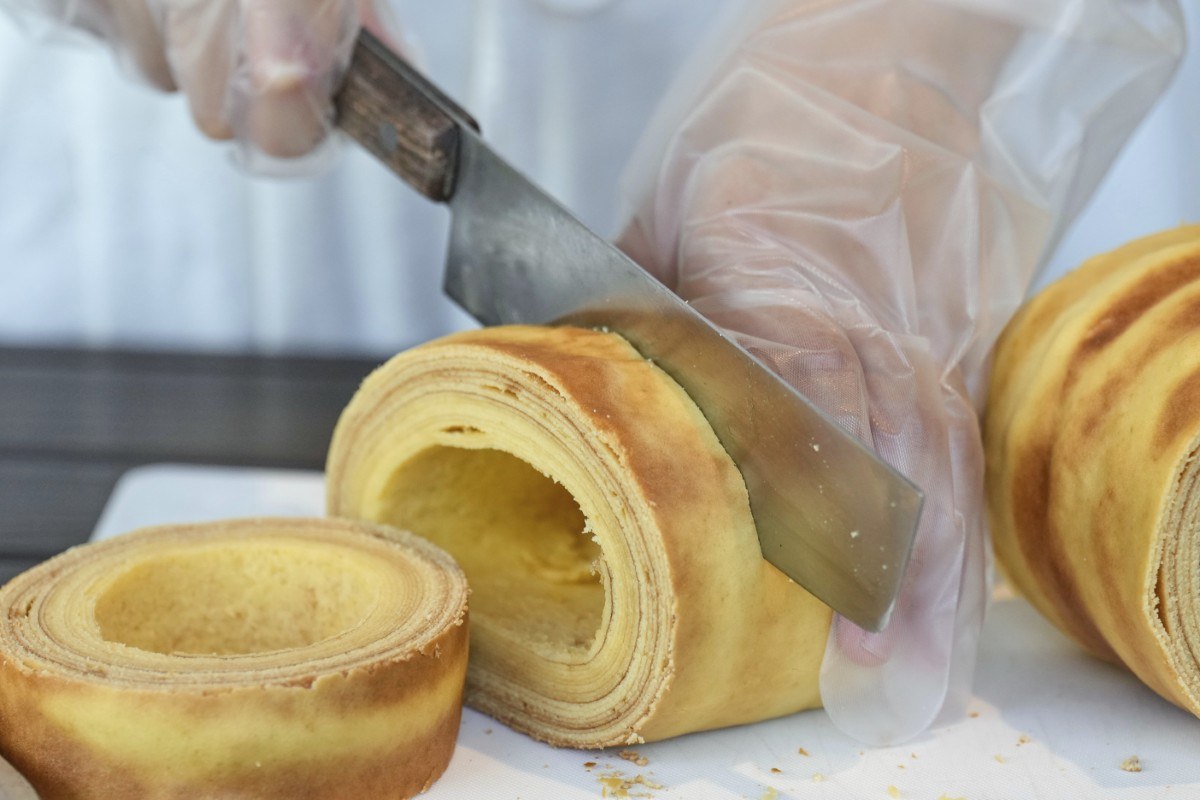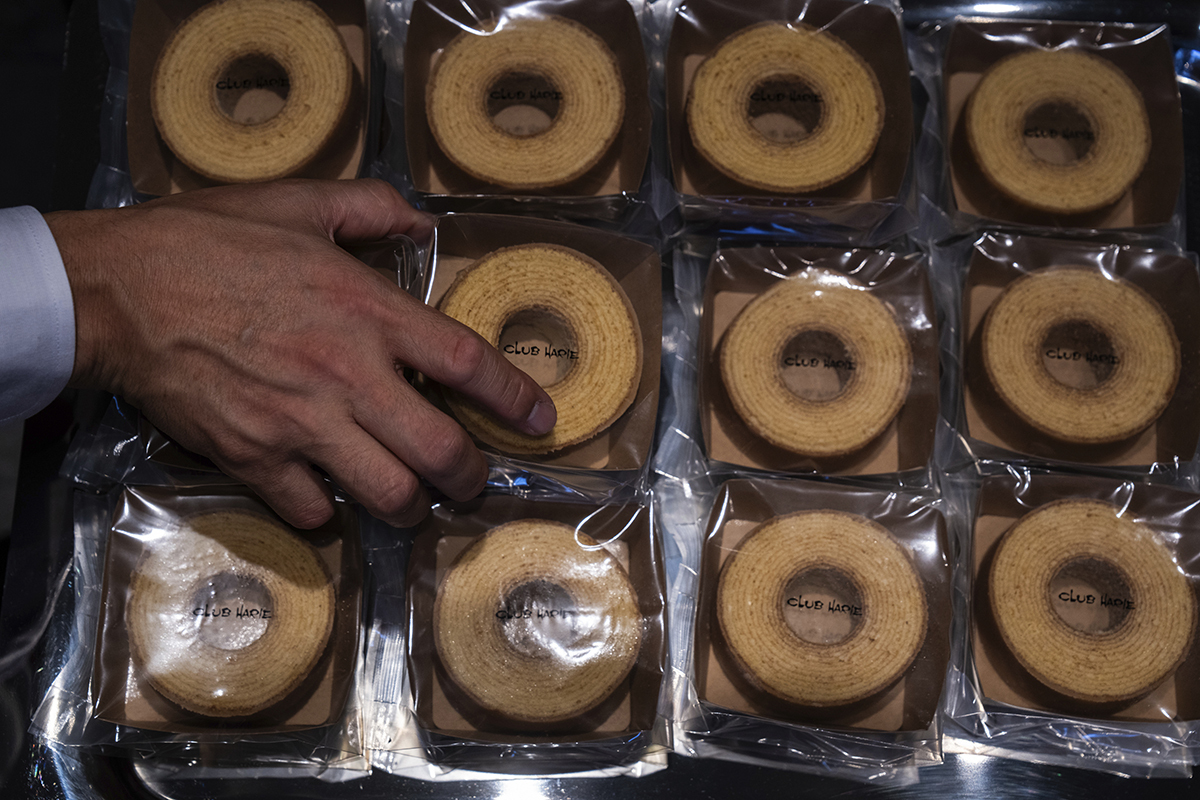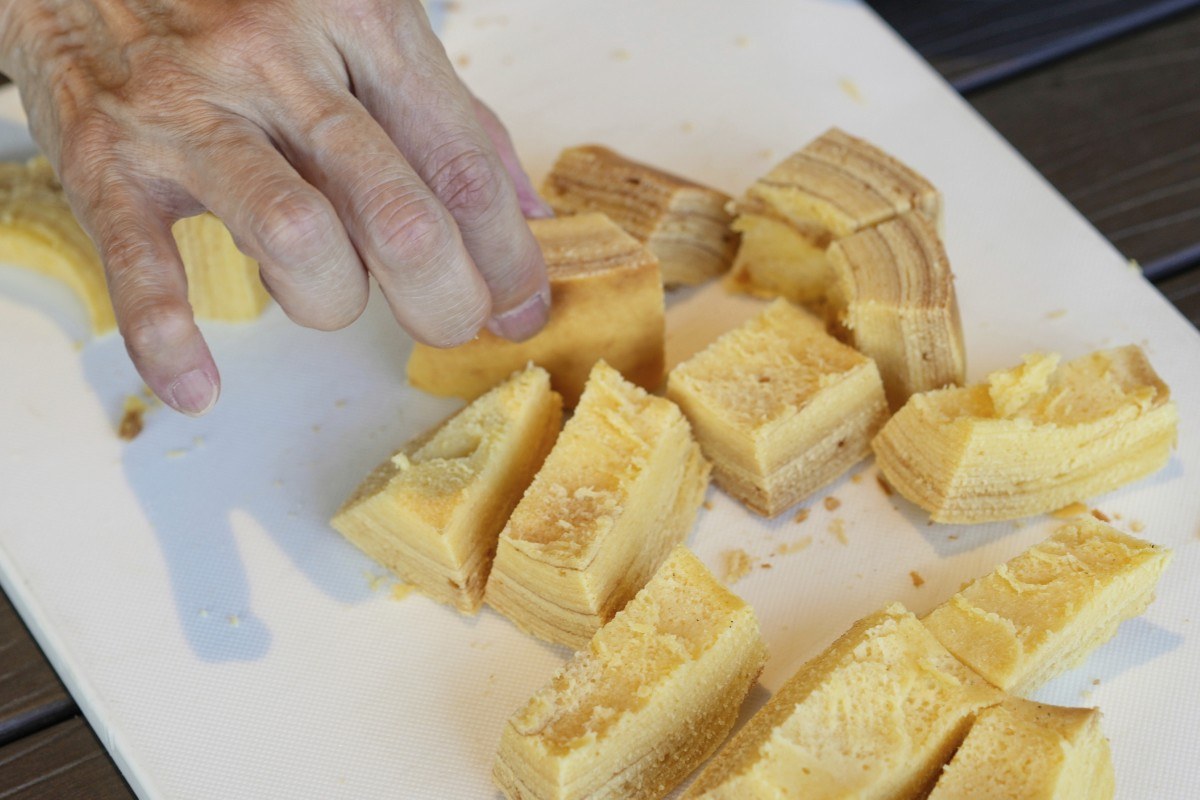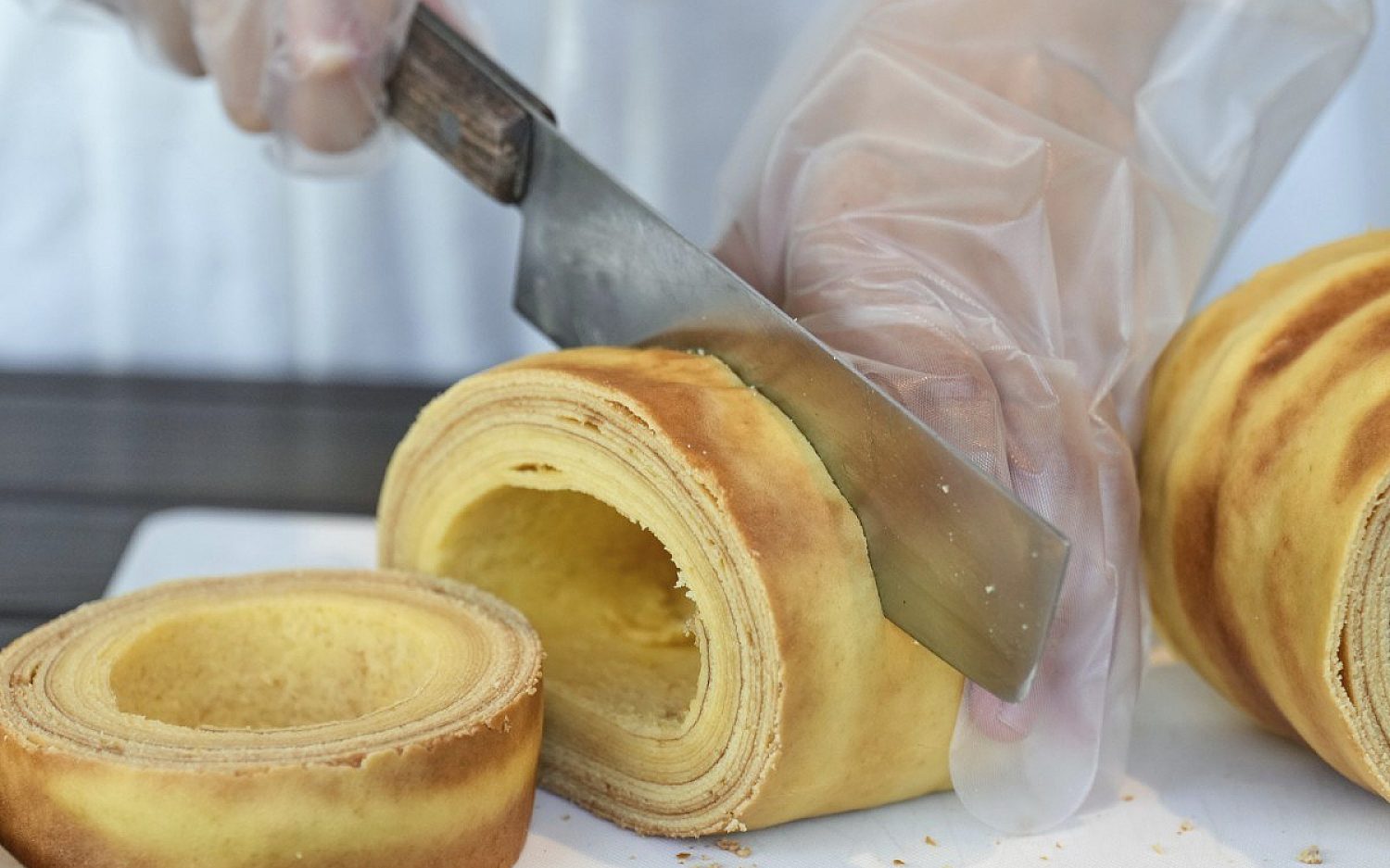
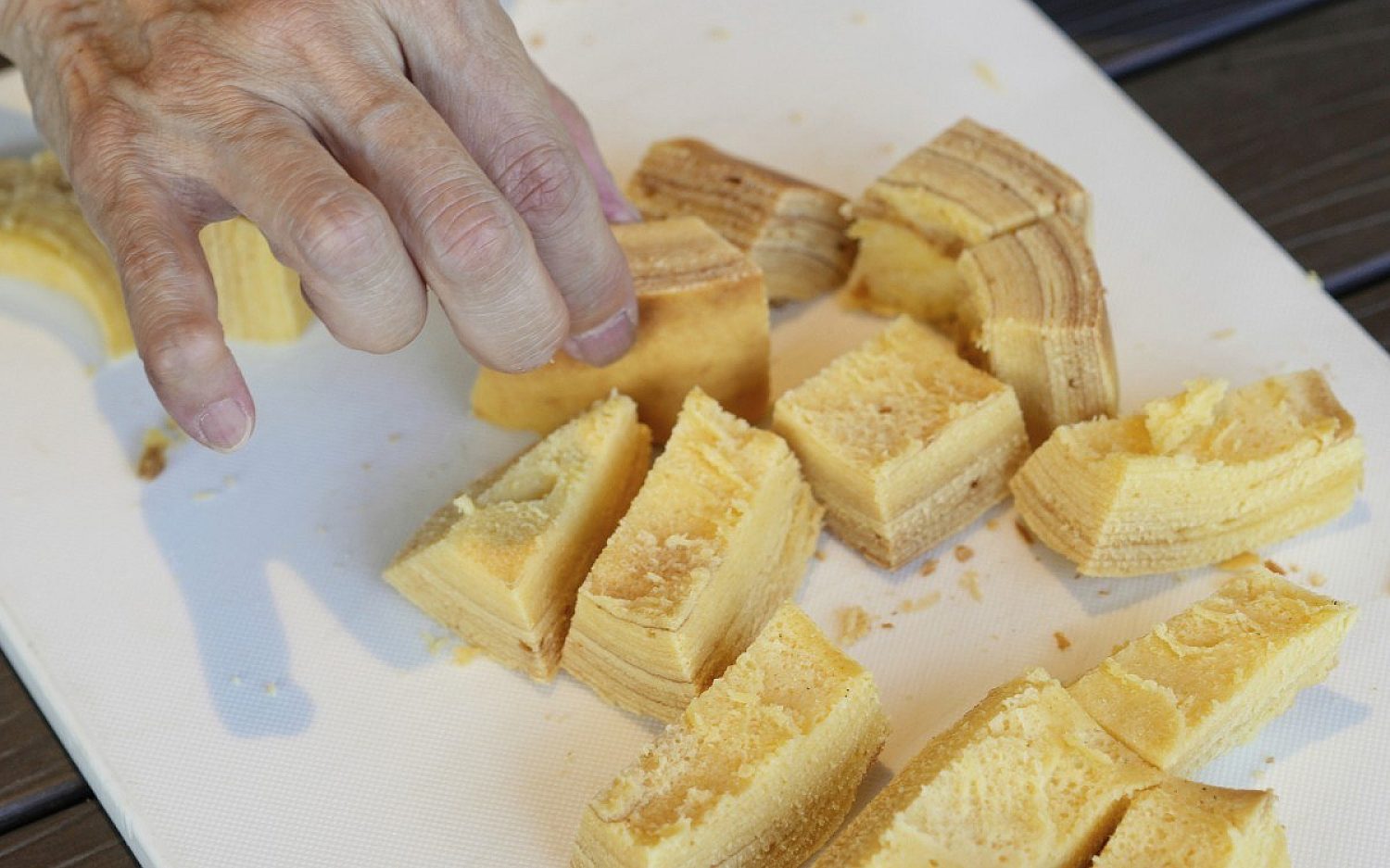

Have a bite of Baumkuchen. Now pronounce its name . . . BAHM-kuh-chin. If that’s too hard to remember, you can also call it tree cake. It looks like a tree trunk with rings. Thankfully, it doesn’t taste like one.
The confectionery was first made in Germany.
But people in Japan really love it.
The beginning of the sweet in Japan, however, wasn’t so sweet. Baumkuchen started with a world war . . . and then an earthquake . . . and then another world war.
Visitors enjoy Baumkuchen on visits to the Japanese island of Ninoshima. But they also learn the history behind the tasty cake. Years ago, a prisoner of war (POW) camp stood here.
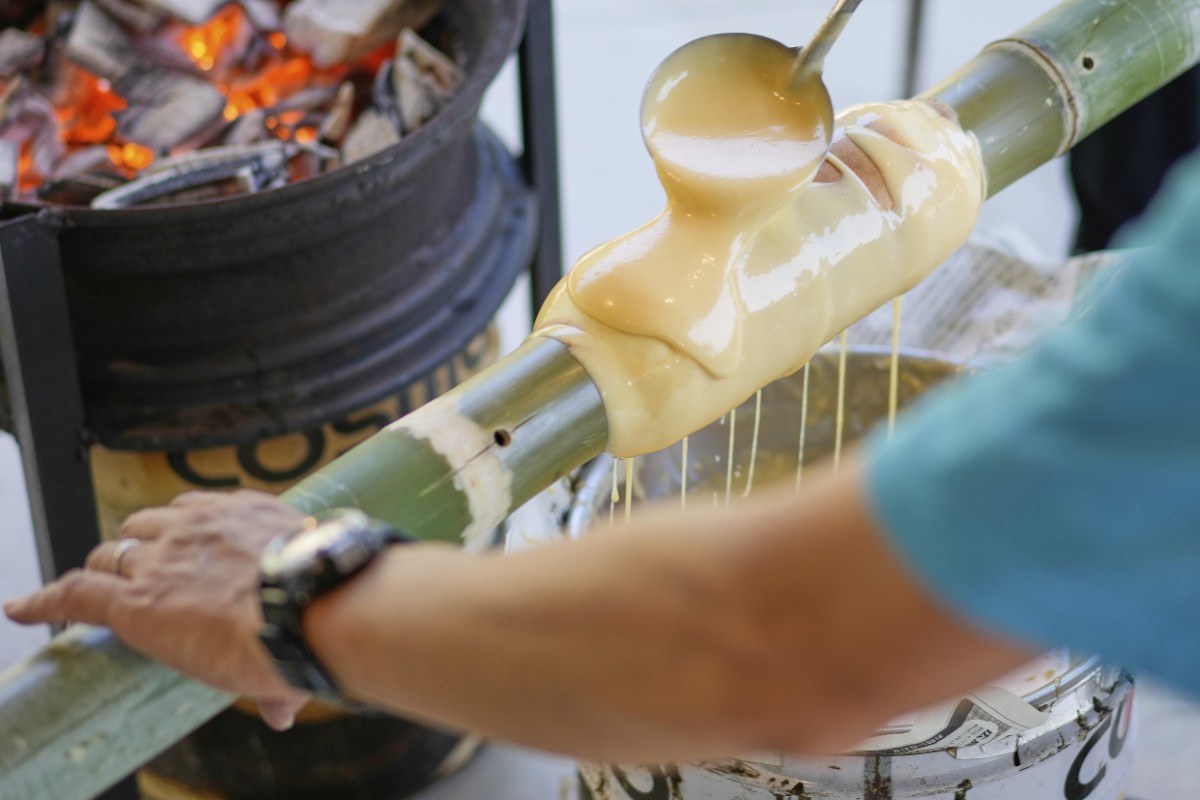
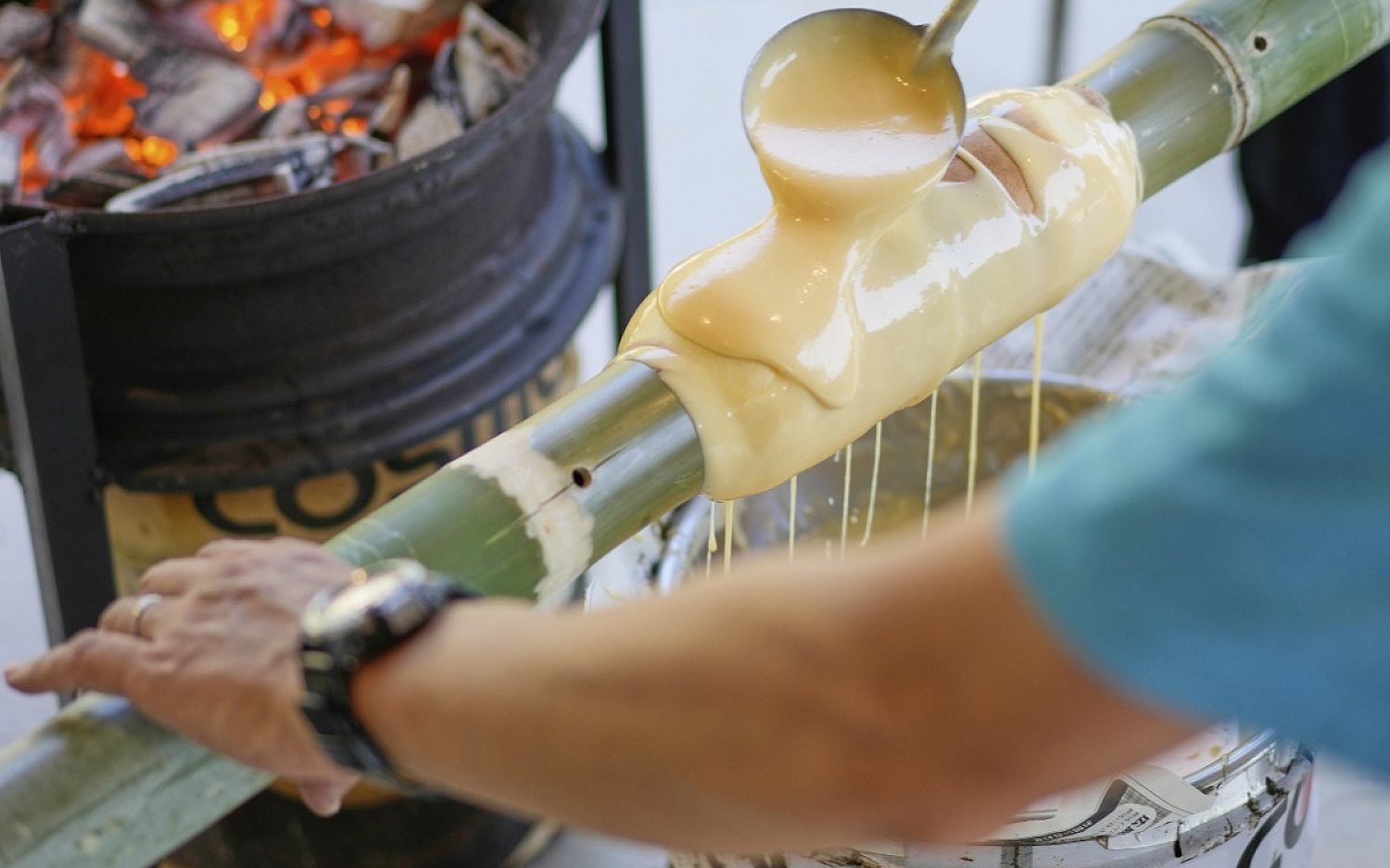
Today, amateur bakers in that area pour batter onto a bamboo pole. Next, they roast the mixture over a charcoal fire. The dough’s surface turns light brown. The bakers pour a new layer. With each new layer, the cake grows thicker. A sweet smell wafts by.
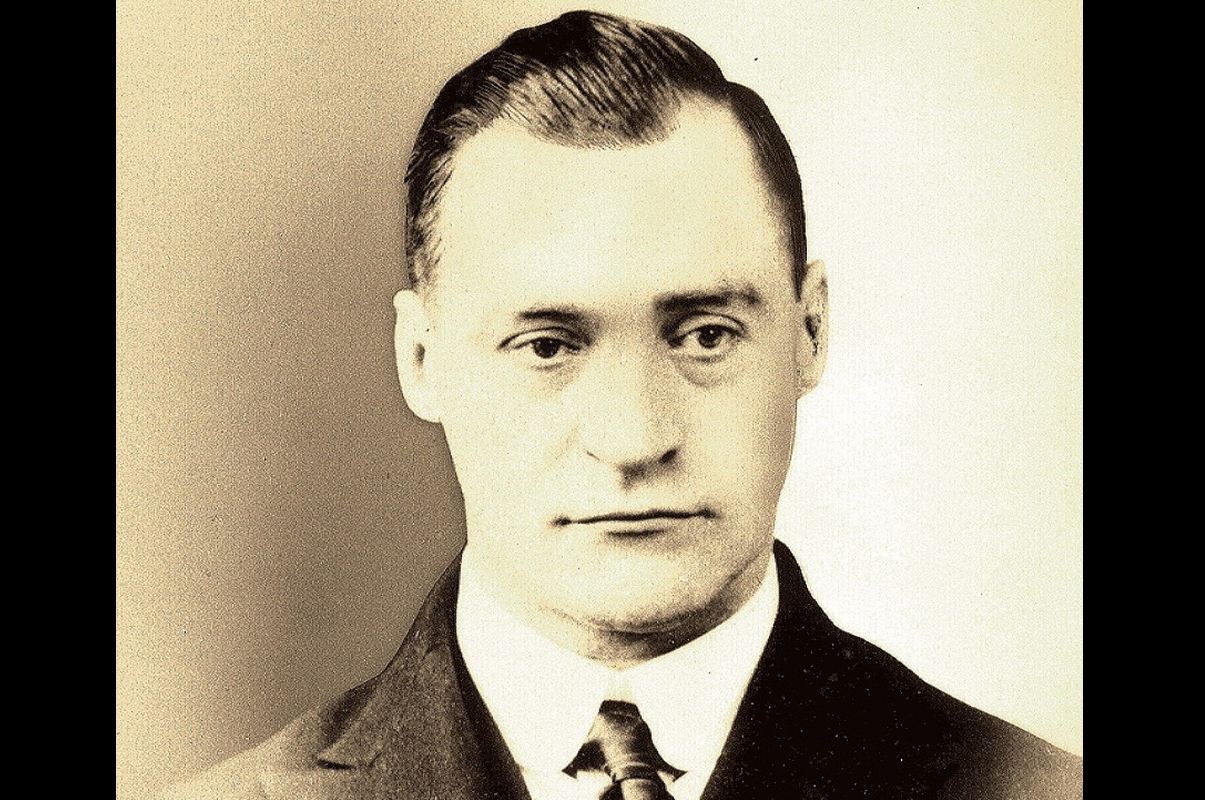
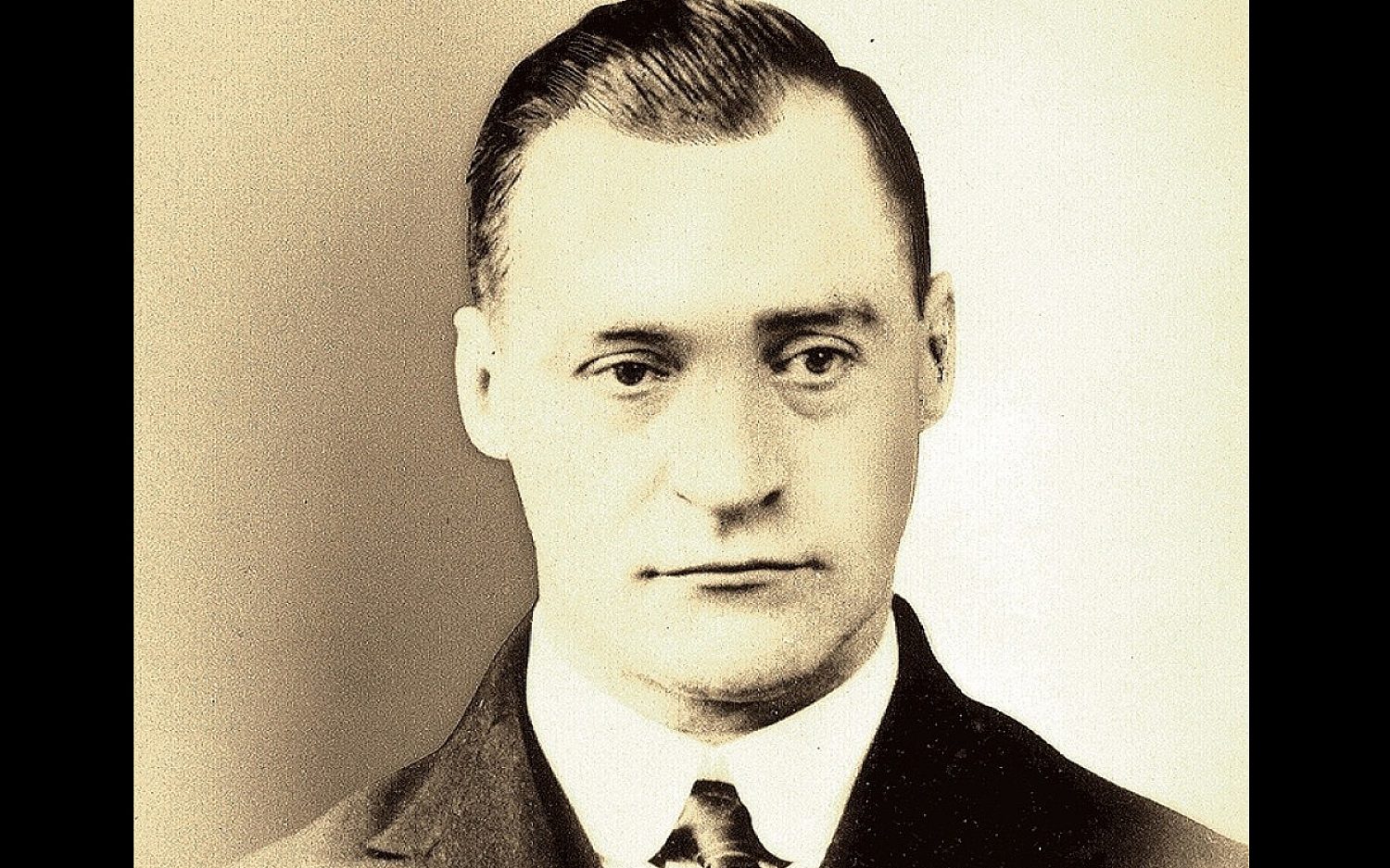
This is how a German confectioner named Karl Juchheim baked Baumkuchen more than 100 years ago. He wasn’t hanging around on Ninoshima because he wanted to. He was a prisoner of war.
Germany and Japan were enemies during World War I. Back then, about 4,700 mostly German soldiers were held as prisoners across Japan.
Mr. Juchheim was captured by the Japanese in 1915. He arrived on Ninoshima in 1917 with some 500 other German POWs. It seems he tested his own Baumkuchen recipe there.
After the war, Mr. Juchheim stayed in Japan. His handmade cake was hugely popular. More trouble lay ahead though. He opened a pastry shop. An earthquake destroyed it. He opened a coffee shop that served Baumkuchen. That shop was ruined by U.S. bombings during World War II.
Did he give up?
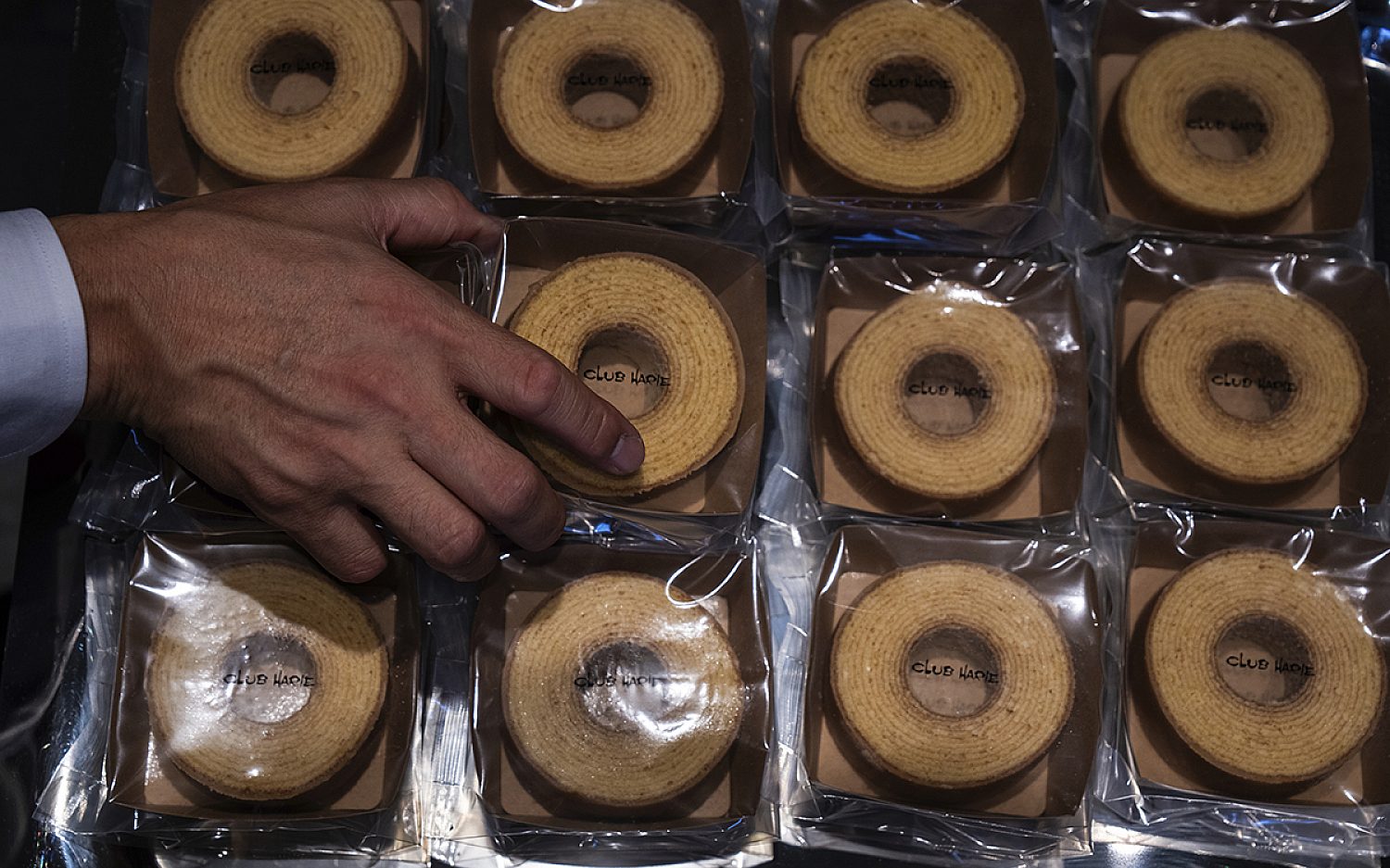
No. He remained and grew his business in Kobe, Japan. It still operates—as one of the top confectioners in the country.
Why? When people travel, food traditions travel with them. We learn about others when we experience the products of their cultures.