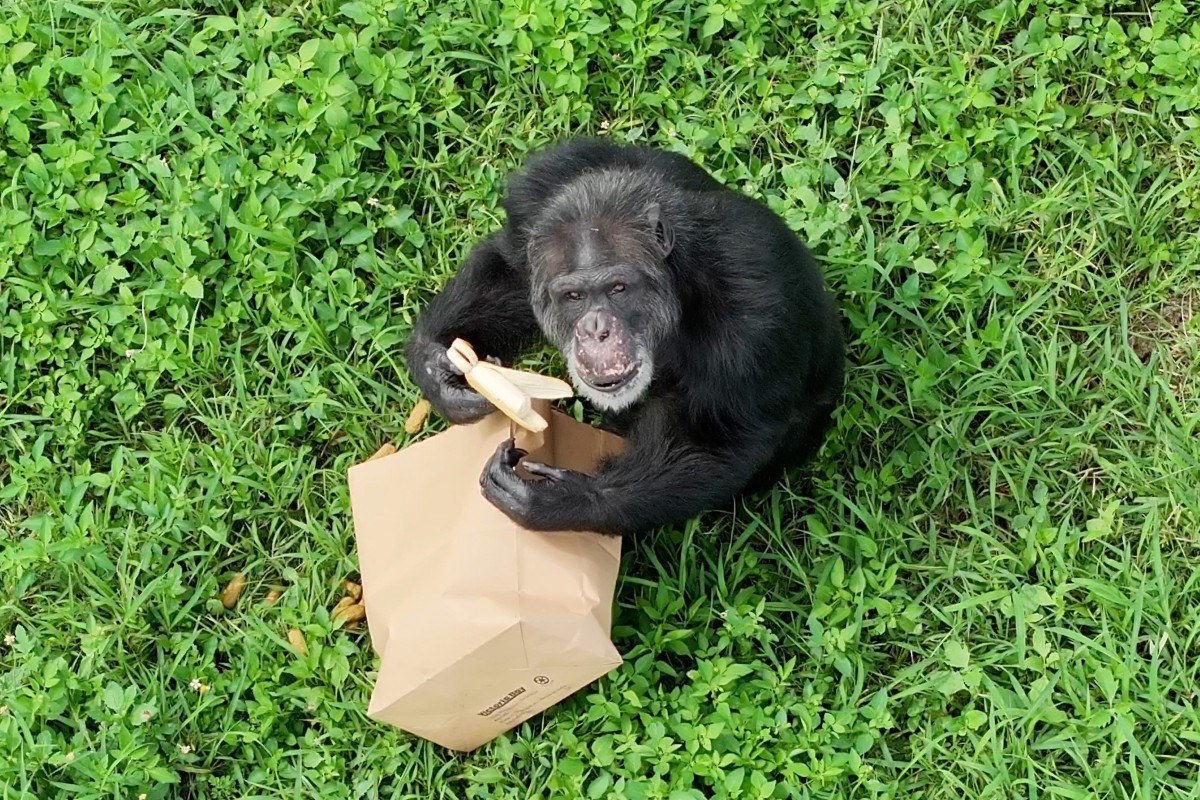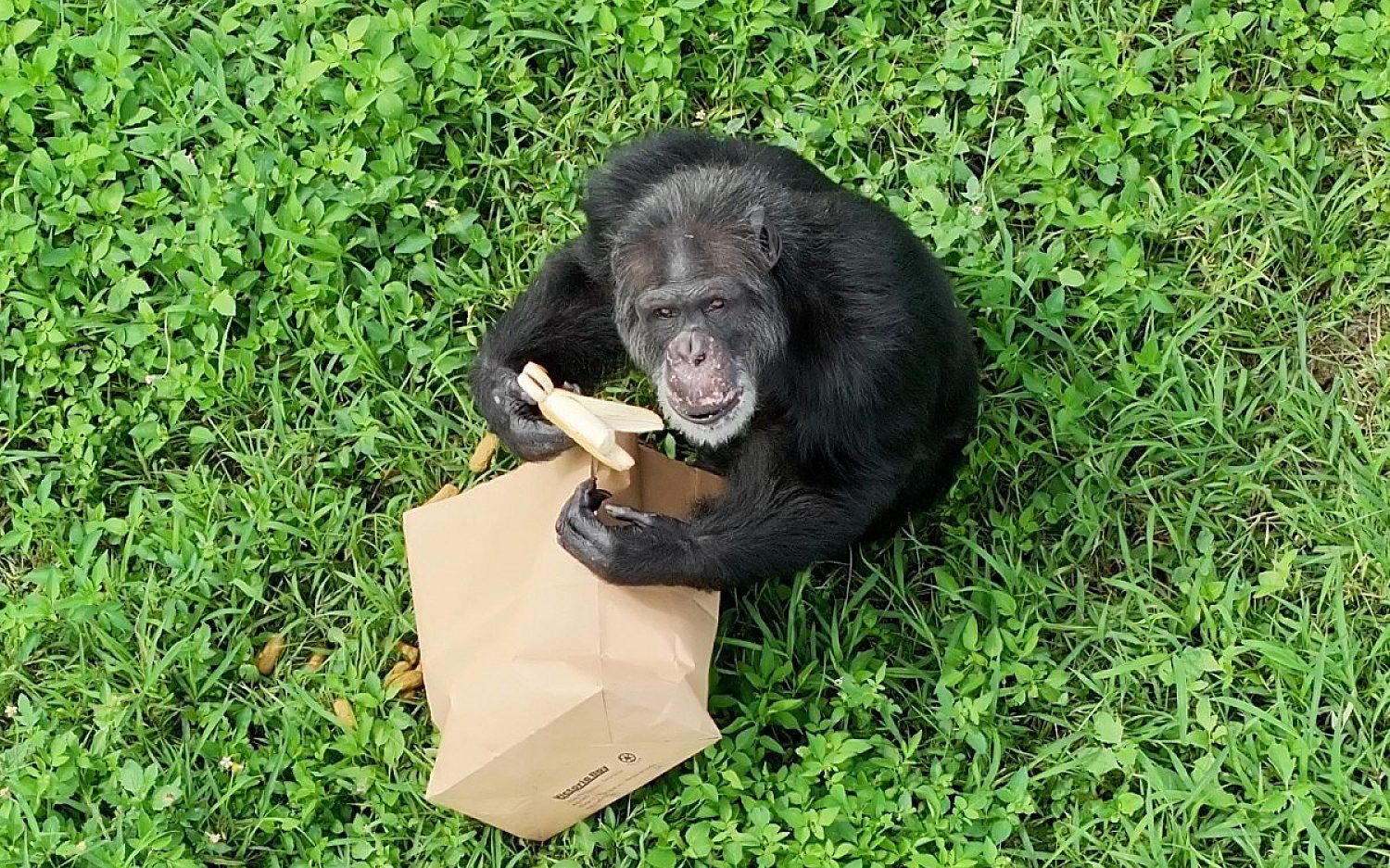
What happens when a flood comes to the chimpanzee sanctuary? People feed Kaleb the chimp using drones.
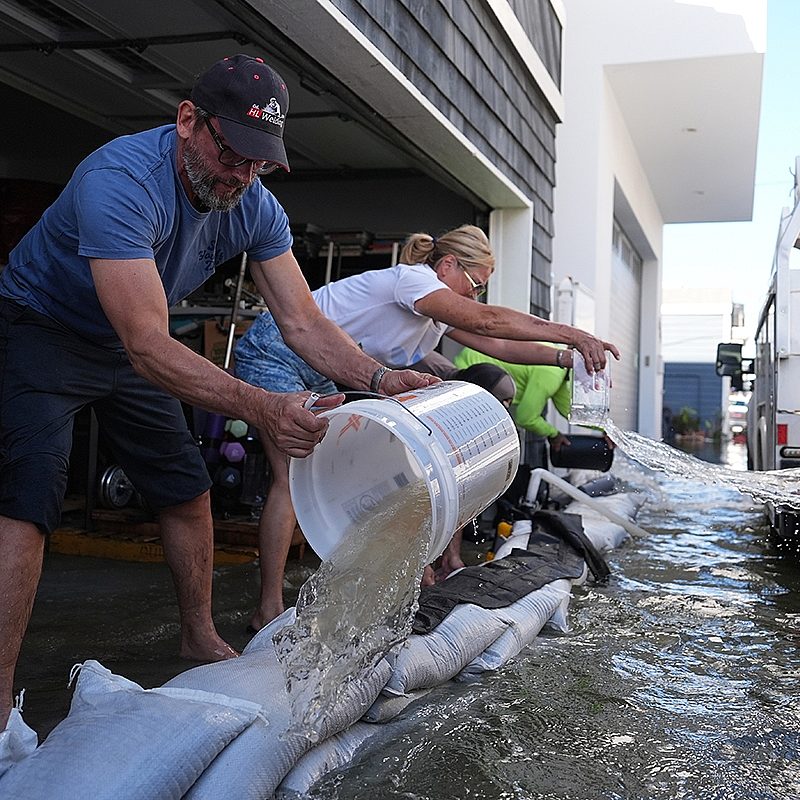
Last week, rainstorms soaked Florida. Save the Chimps cares for 200 apes near Fort Piece. Its buildings sit on high ground. Still, the flooding made some spots harder to reach.
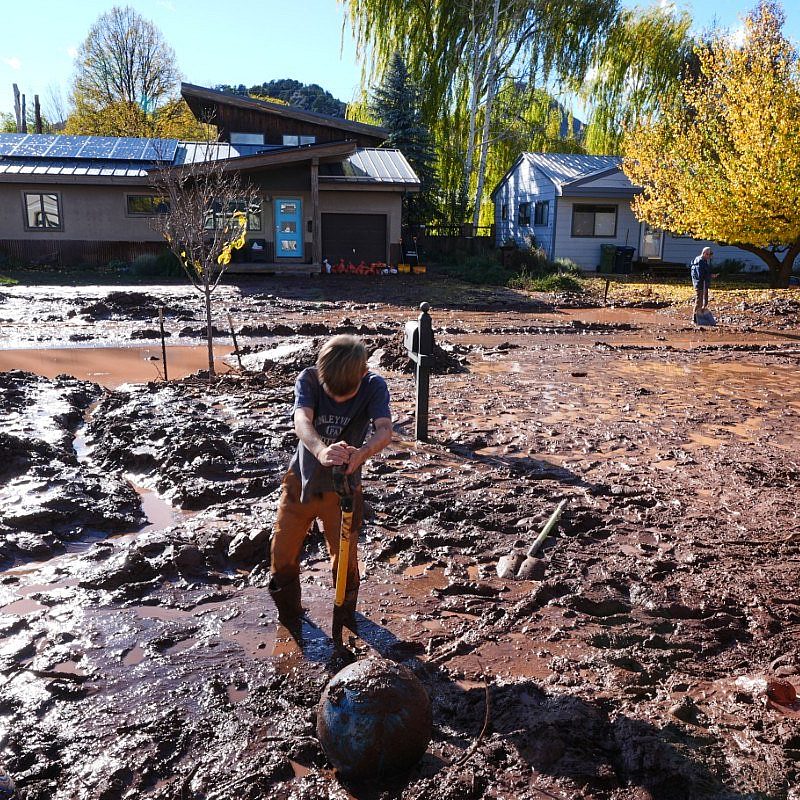
Canals overflowed. Roads got swamped. Normally, golf cart drivers use those roads to deliver 3,000 pounds of chimp food every day. At first, a high-clearance swamp buggy helped. Then it broke down. One chimp, a 38-year-old named Kaleb, was stuck in an outdoor area. Water blocked the way to him.
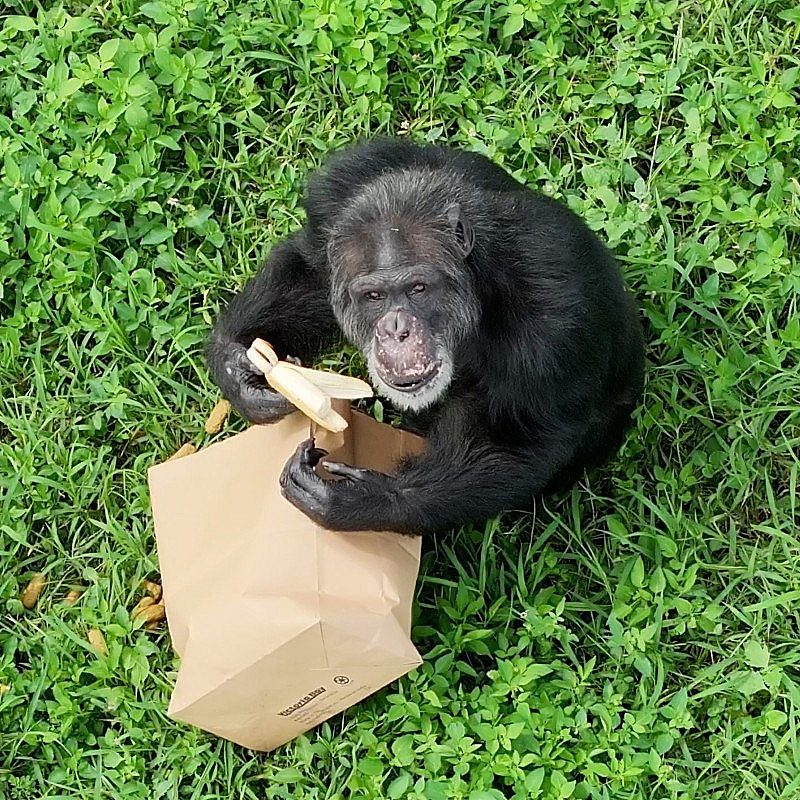
Good thing the staff members at Save the Chimps were prepared. They had a delivery drone for just such an emergency. Staffers used the device to bring Kaleb food and blankets. Kaleb plucked a banana from the dropped bag. Finally, he decided on his own to move to a more accessible spot. He picked his way across a rope over water.
How did the rest of the apes get food and medicine? By truck and tractor.
“Chimps are getting all their food, bananas, and oranges on time,” says facilities director Mark Yohannan. “They’re good. They haven’t missed a beat.”
Employees struggle to get to work in the floods. Meanwhile, an unusual guest comes to Save the Chimps: an alligator! A small one turned up by the sanctuary’s kitchen Friday. It may have ridden the floodwaters to the spot, where such creatures don’t usually go.
Floods damaged buildings. Save the Chimps officials ask for donations to help fix them. Over almost 30 years, the organization has cared for nearly 350 chimps. The animals come from research labs, the pet trade, and the movie industry.
What do you think? If a man has a hundred sheep, and one of them has gone astray, does he not leave the ninety-nine on the mountains and go in search of the one that went astray? — Matthew 18:12