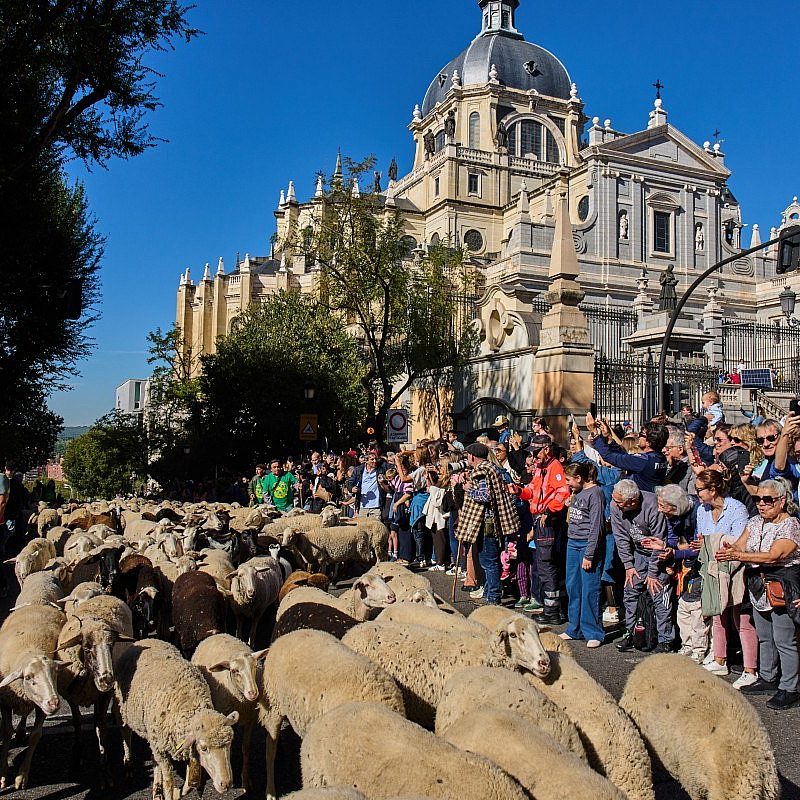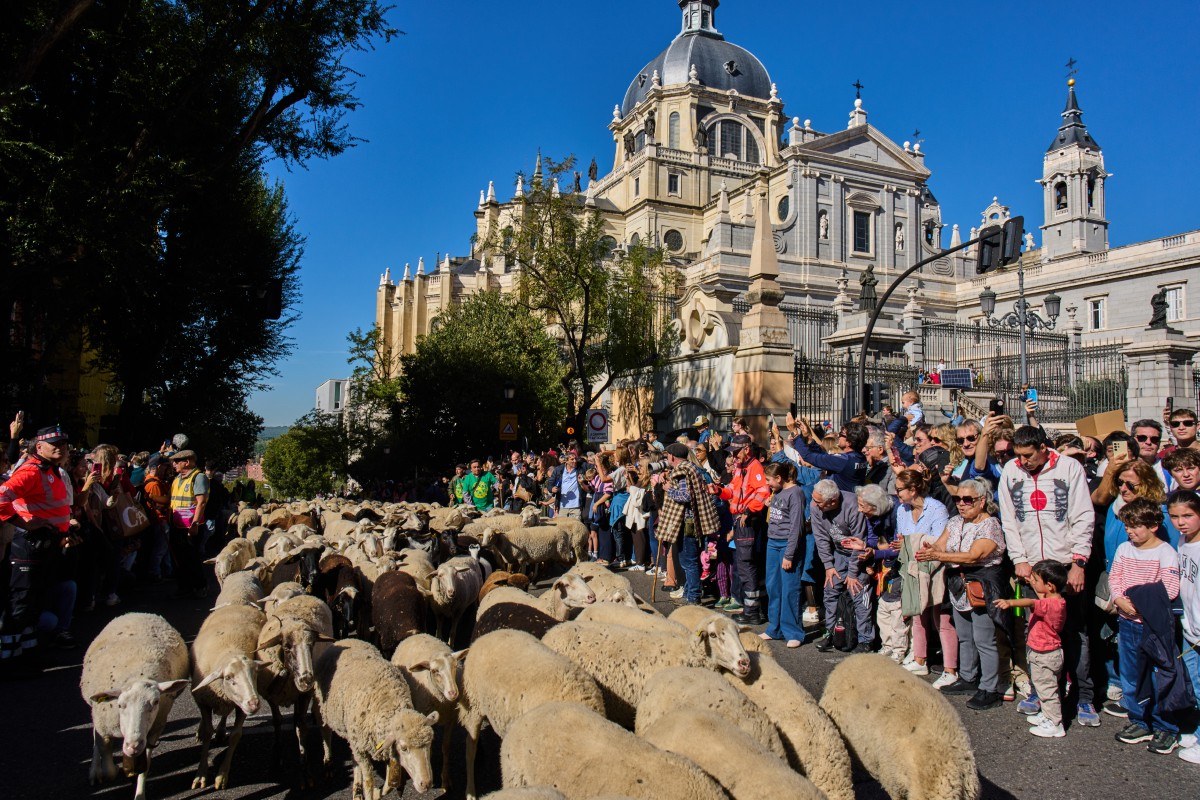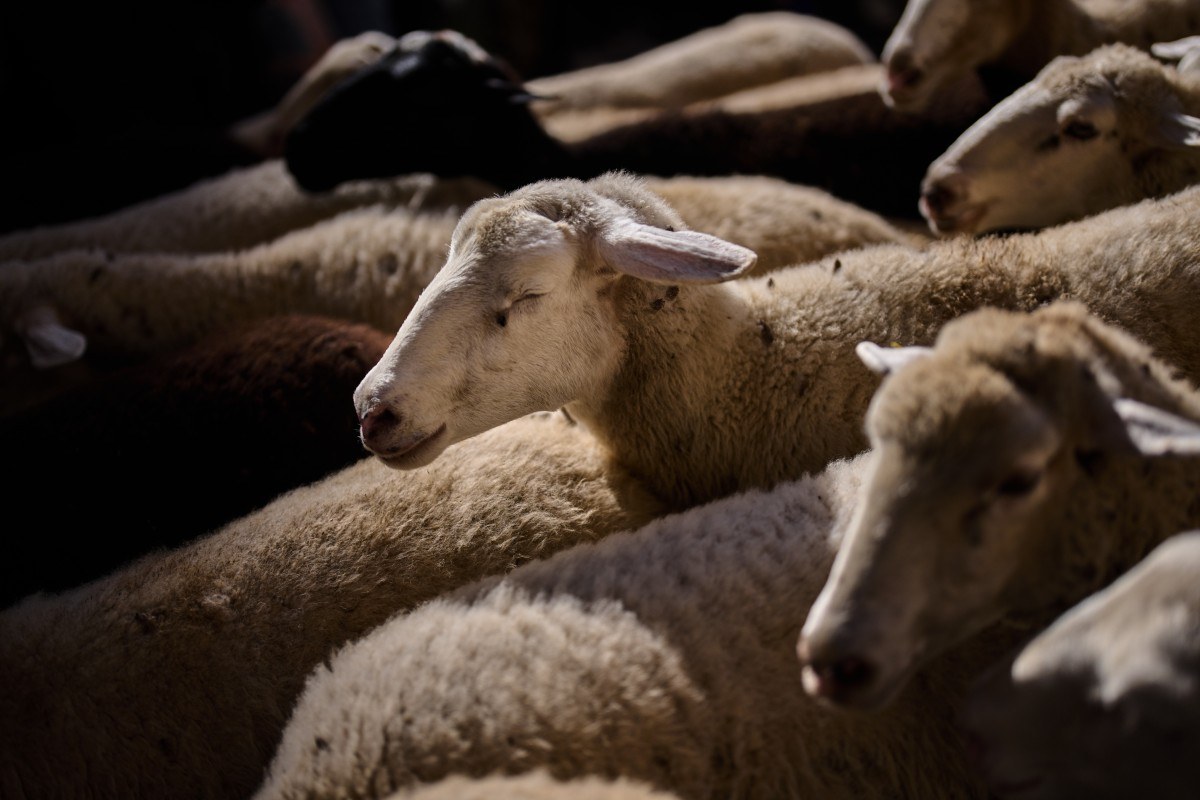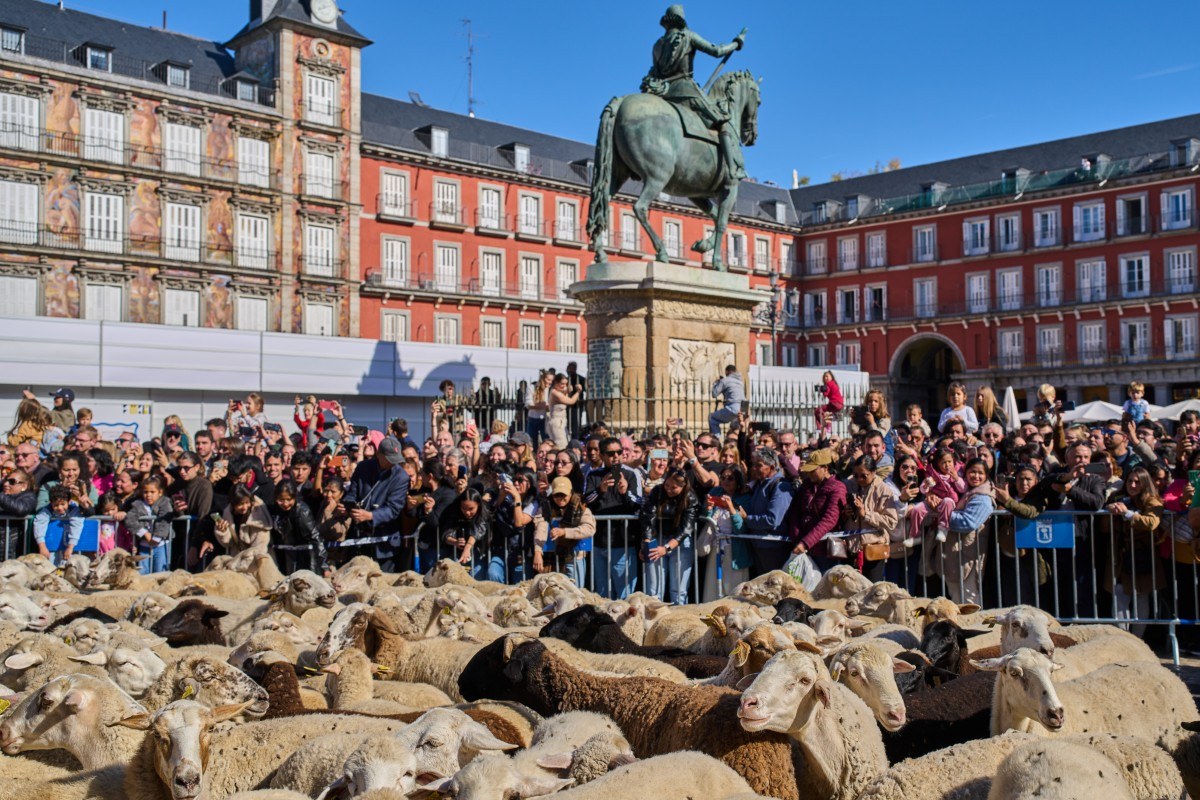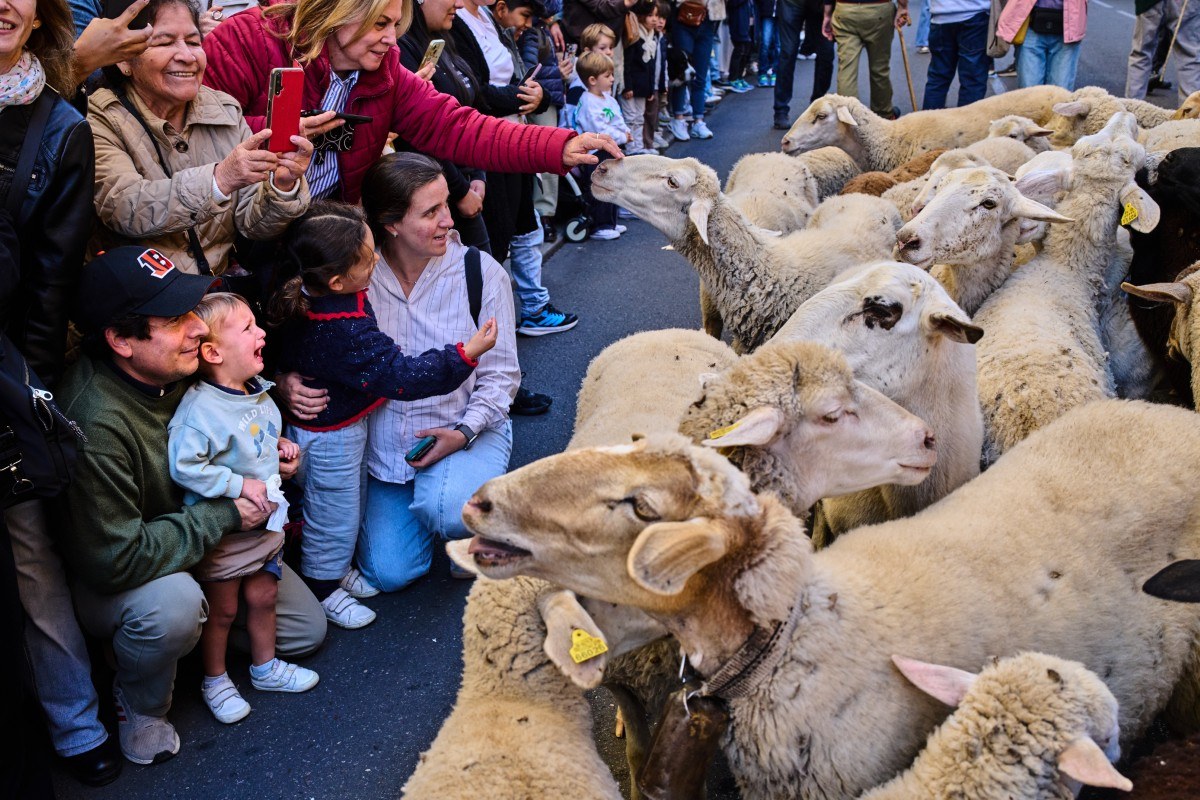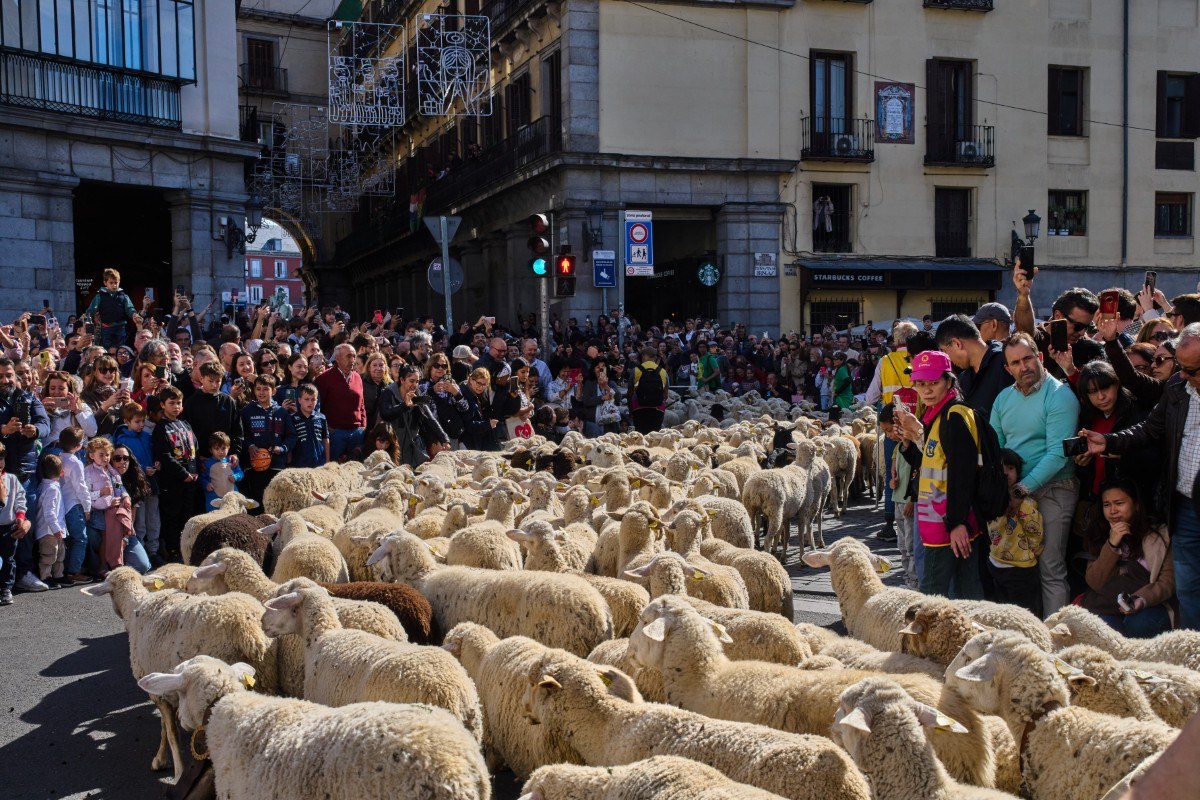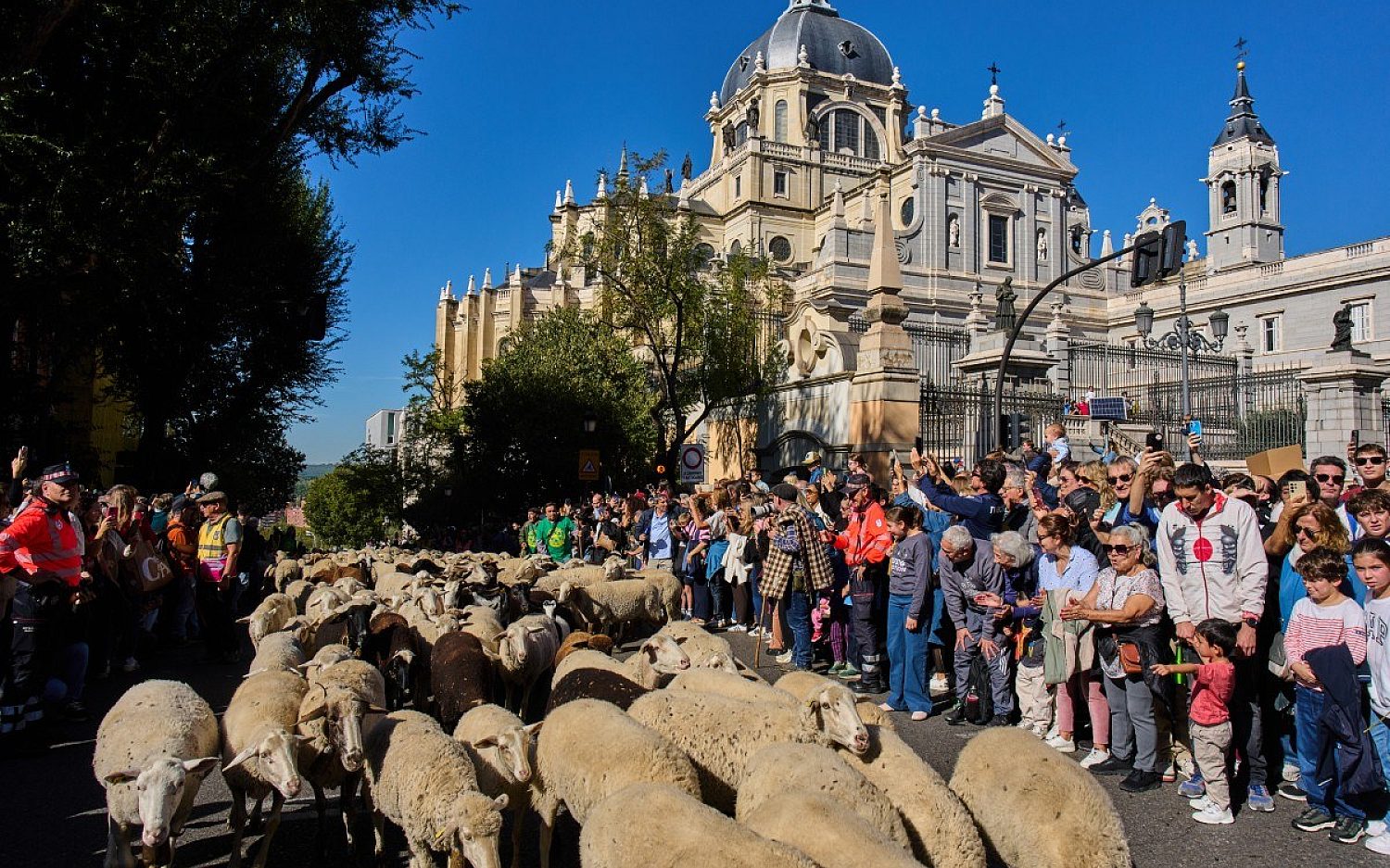
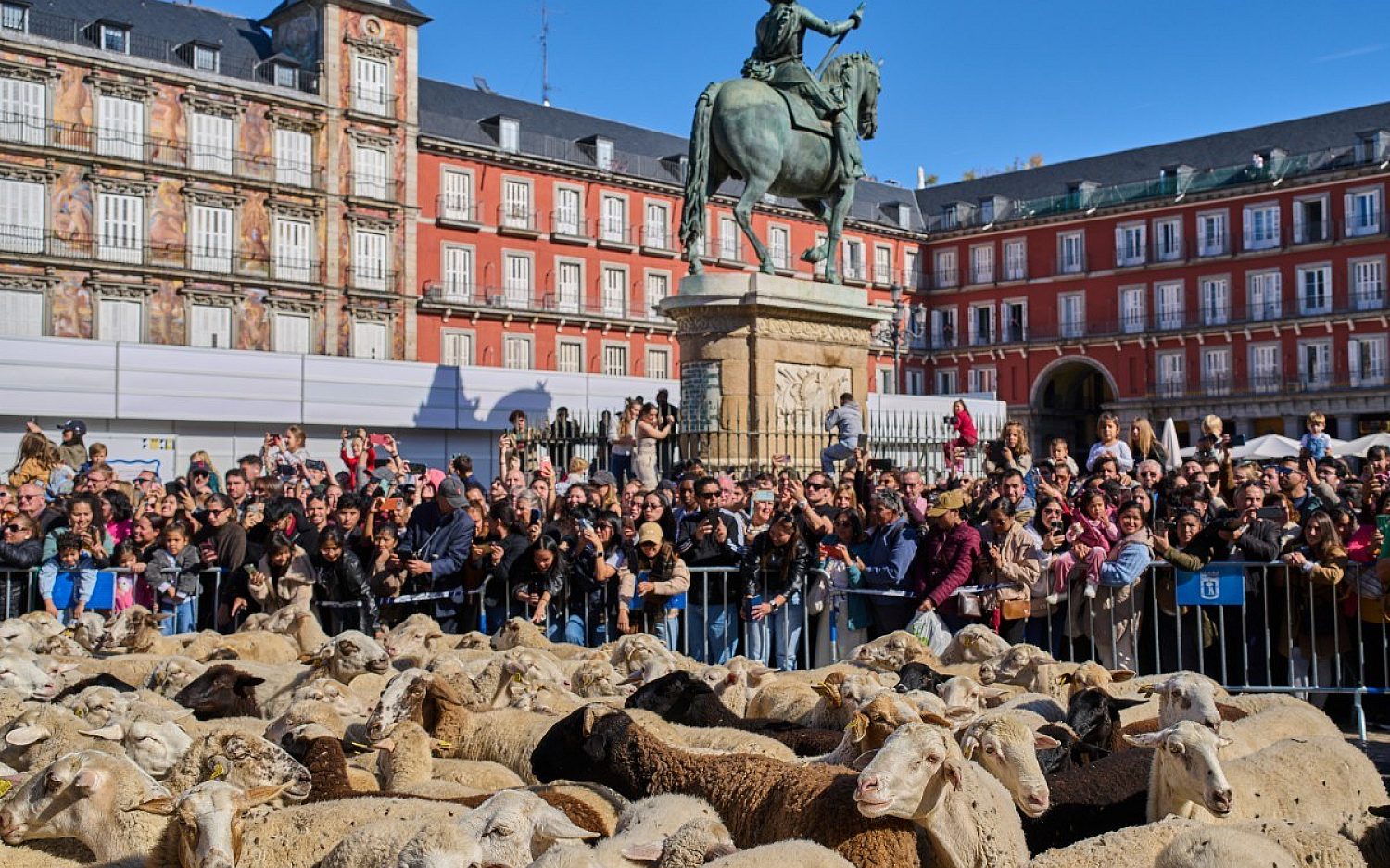
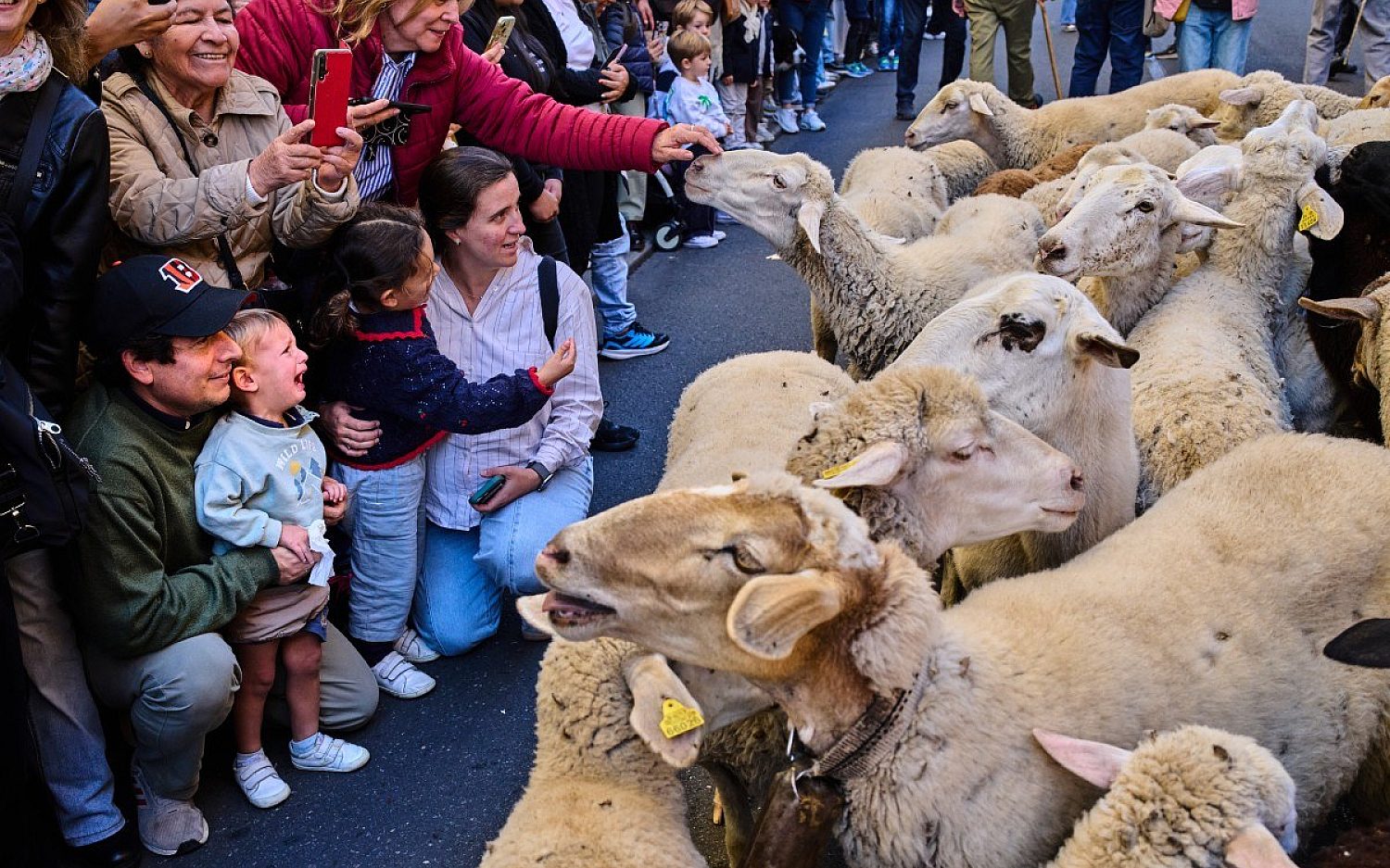
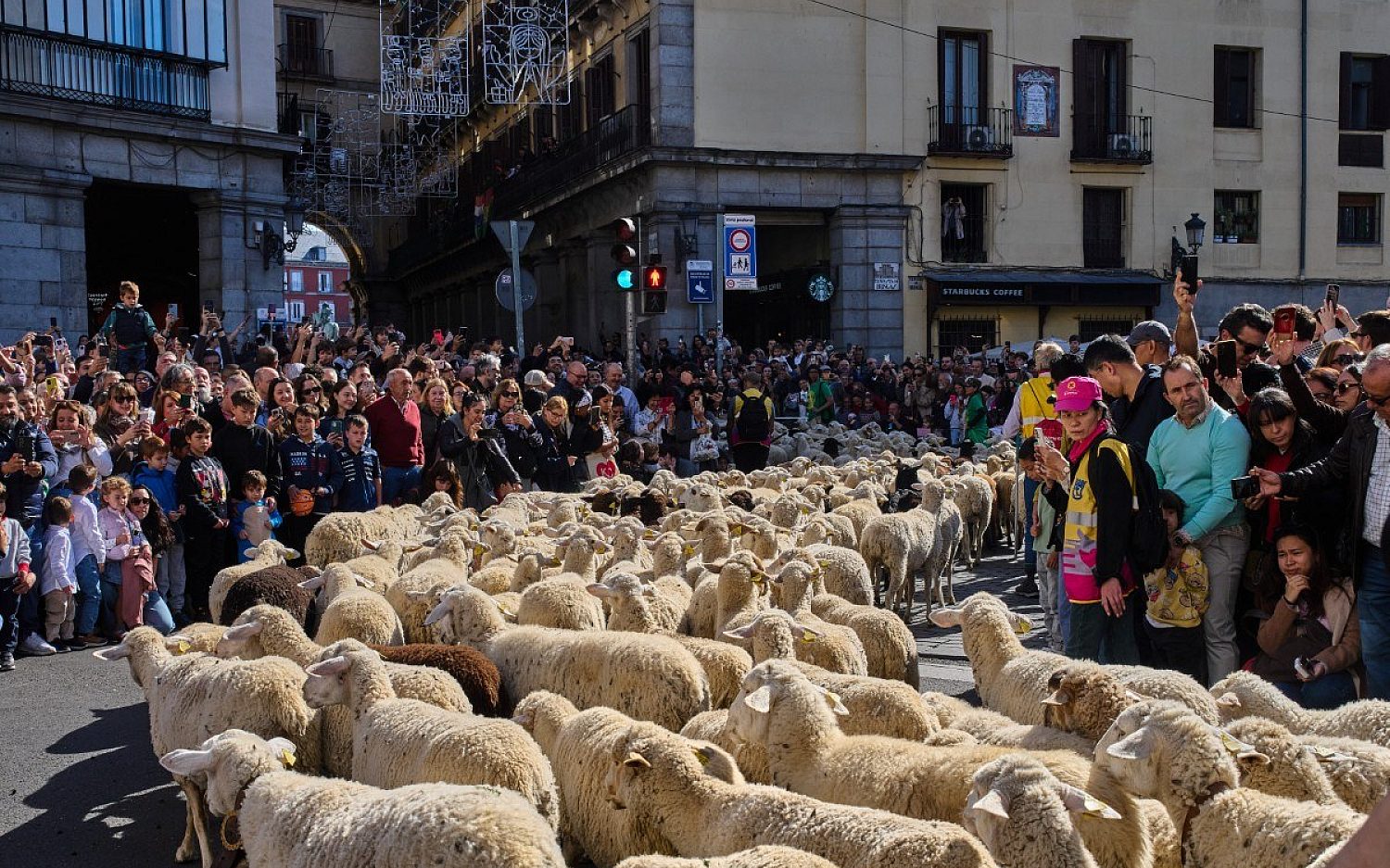
What do you hear in Madrid, the capital city of Spain? A baa baa here and a baa baa there. More than 1,000 sheep and more than 100 goats travel through the city every year on their way to new grazing grounds.
The sheep move along ancient farming paths. Once, those paths cut across open fields and woods. Now a city stands in the way. But that doesn’t stop the sheep. They trot through the streets. This year herders did change their route a bit, though. The animals can’t pass through Puerta de Sol, the city’s central square. A housing protest blocks the way.
The people in the streets protest the high cost of living in Spain. Their protest started last month when a housing company evicted an 87-year-old woman from her apartment. She had lived there for seven decades.
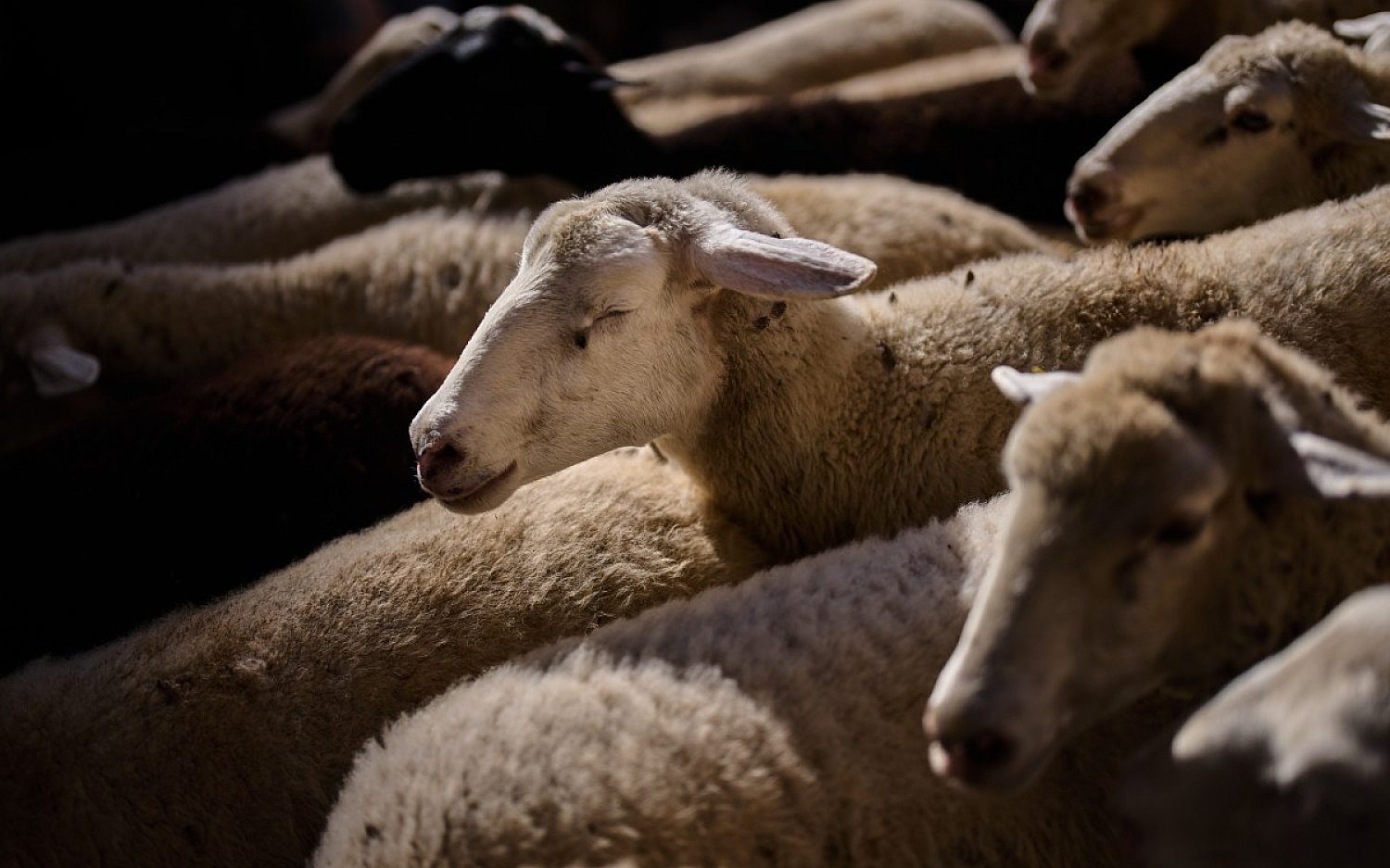
For the sheep, life goes on. Shepherds drive them through the streets of central Madrid. The woolly creatures bleat. Bells on their collars ring. Folks watch. They celebrate the good sheep do for their country. The animals nourish soil. They clear brush, which helps stop wildfires from spreading.
There’s a word for animals moving from pasture to pasture: transhumance. This comes from two Latin words. Trans means across. Humus means soil. The practice has grown less common in Spain. Young people leave the countryside. Instead of becoming farmers, they move to cities to find other work.
Does transhumance happen near you? Towns and smaller cities in Italy, France, and California also hold celebrations like this one, marking the animals’ movements.
Know that the Lord, He is God! It is He who made us, and we are His; we are His people, and the sheep of His pasture. — Psalm 100:3