
Each year, the Nobel Foundation gives out prizes for science, medicine, literature, and more. These are some of the most respected awards in the world. The 2026 Nobel Prize in Physics went to—drumroll please—ghosts from outer space?
Don’t worry. These aren’t actually ghosts. They’re ghost particles. Or as scientists call them, “neutrinos.” But they act as strangely as ghosts in spooky stories!
Dr. Francis Halzen won the Nobel for studying neutrinos. He traveled to Antarctica for this work.
What’s the tiniest thing you can think of? An atom? Think smaller. Part of an atom, like an electron? Think even smaller. An electron has about a million times more mass than a neutrino. (Mass is the amount of matter or “stuff” that makes up something.) Neutrinos come from stars like our Sun. They’re everywhere. But they’re so small, you can’t see them—even with a microscope!
To study something that small, scientists needed to build something big to work as a detector. Scientists can detect when neutrinos bump into an atom’s center. But there’s still a problem. Those collisions almost never happen. Neutrinos are so small that they float through most objects. In fact, trillions of neutrinos float through our bodies every second. By building super-large neutrino detectors, scientists increase the chance of catching a collision.
But wait. If neutrinos are everywhere, why go to Antarctica? Why not study them somewhere cozier?
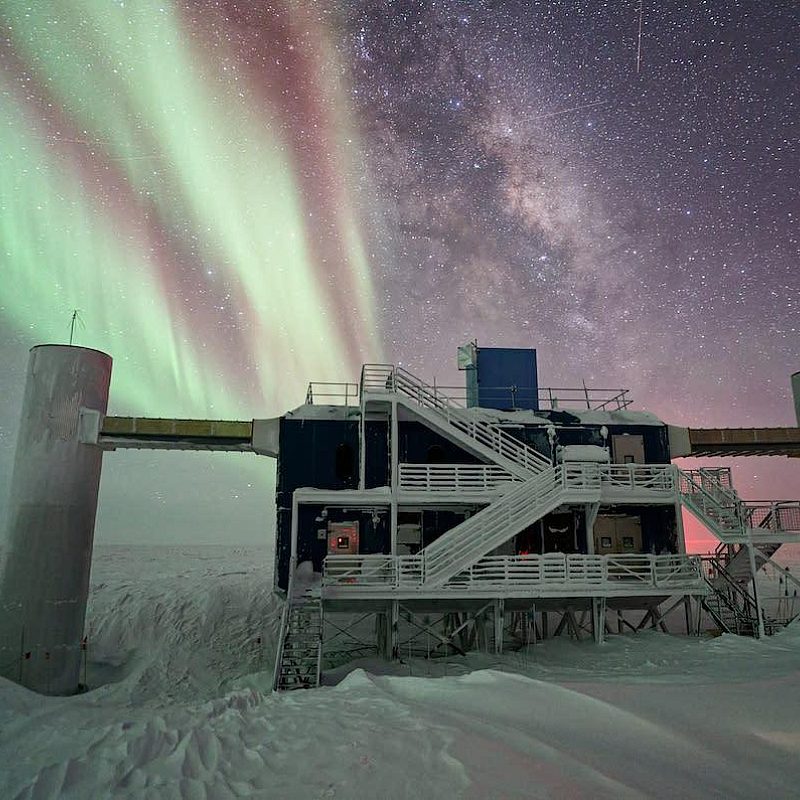
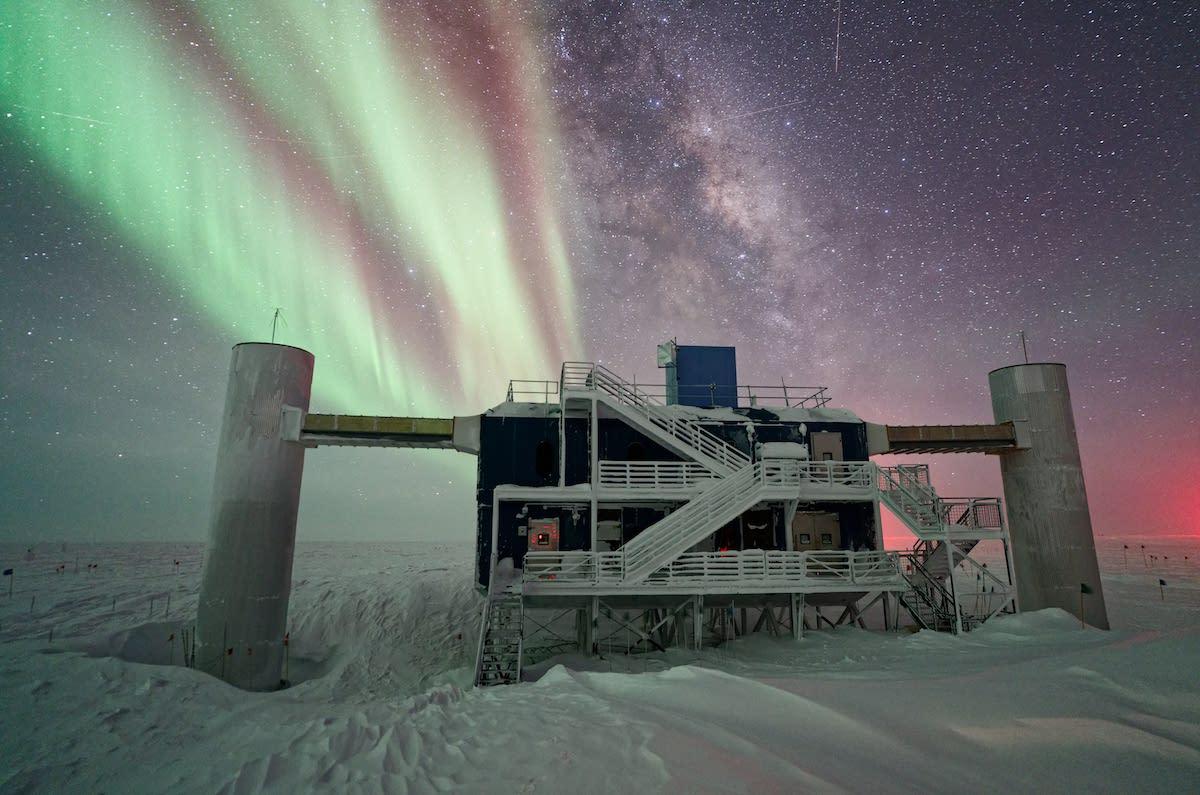
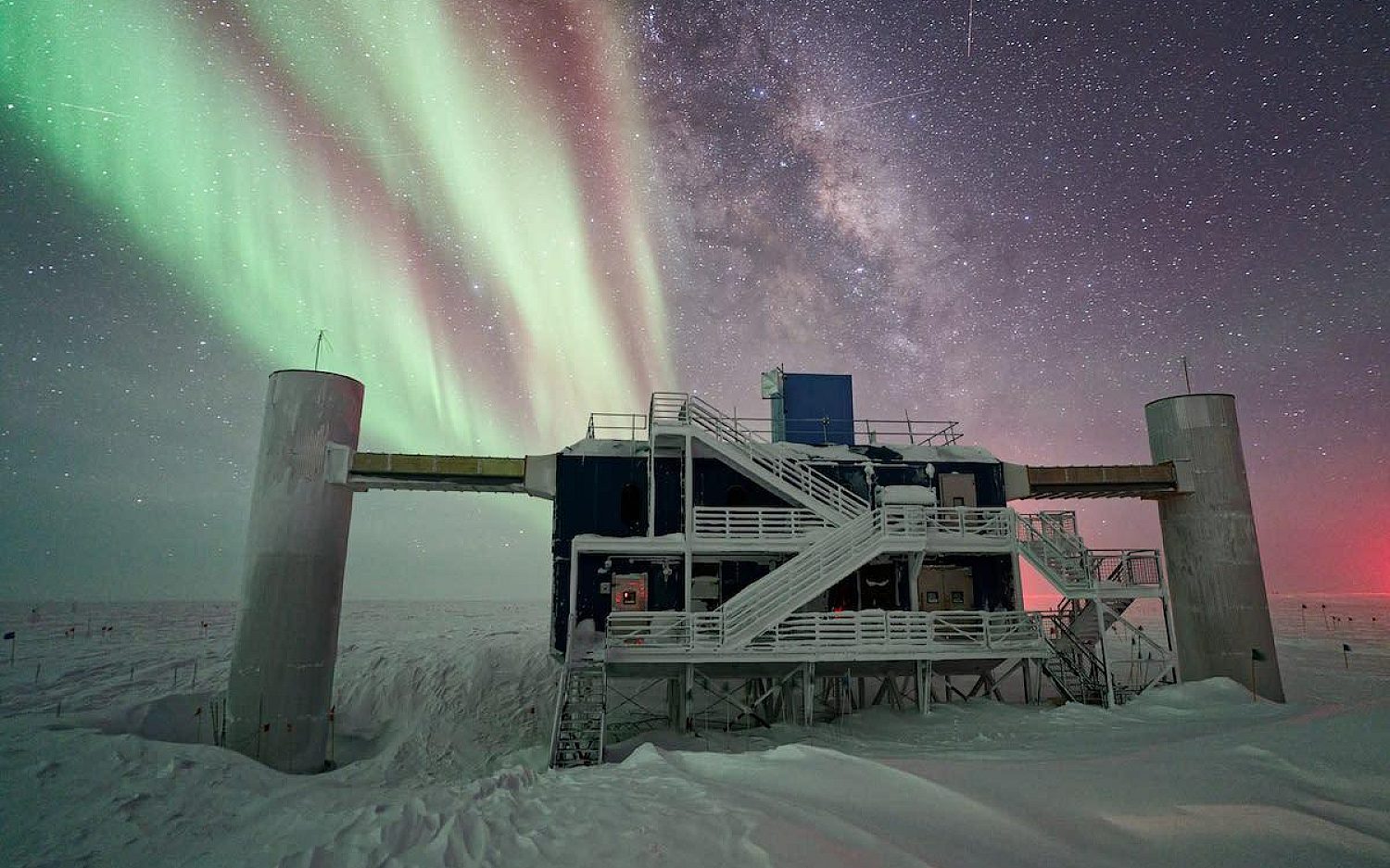
Dr. Halzen had a wild idea. He wanted to make a neutrino detector out of the ice. And what’s even wilder? He did it! His work helped create Antarctica’s IceCube Neutrino Observatory. Scientists put sensors deep in the ice. When a neutrino collides with the center of an atom, it makes a flash of light. The sensors track those flashes.
Using the observatory, Dr. Halzen’s team identified the first high-energy neutrinos from other galaxies!
“People always thought this was a cute idea, right, but it would never work,” says Dr. Halzen. “The greatest surprise is that we did make it work.”
By studying neutrinos, scientists learn more about how stars and galaxies work. These “ghost particles” remind us how many mysteries remain.
Have you ever solved a tough puzzle and thought, “Wow. Whoever made this was brilliant!” That’s how science can help us see the universe! The more mysteries we unravel, the more we can marvel at the brilliant God who made them.