Did you ever try to snap a photo of something moving fast?
It probably came out blurry. Maybe you missed the shot entirely.
But what about something moving really fast?
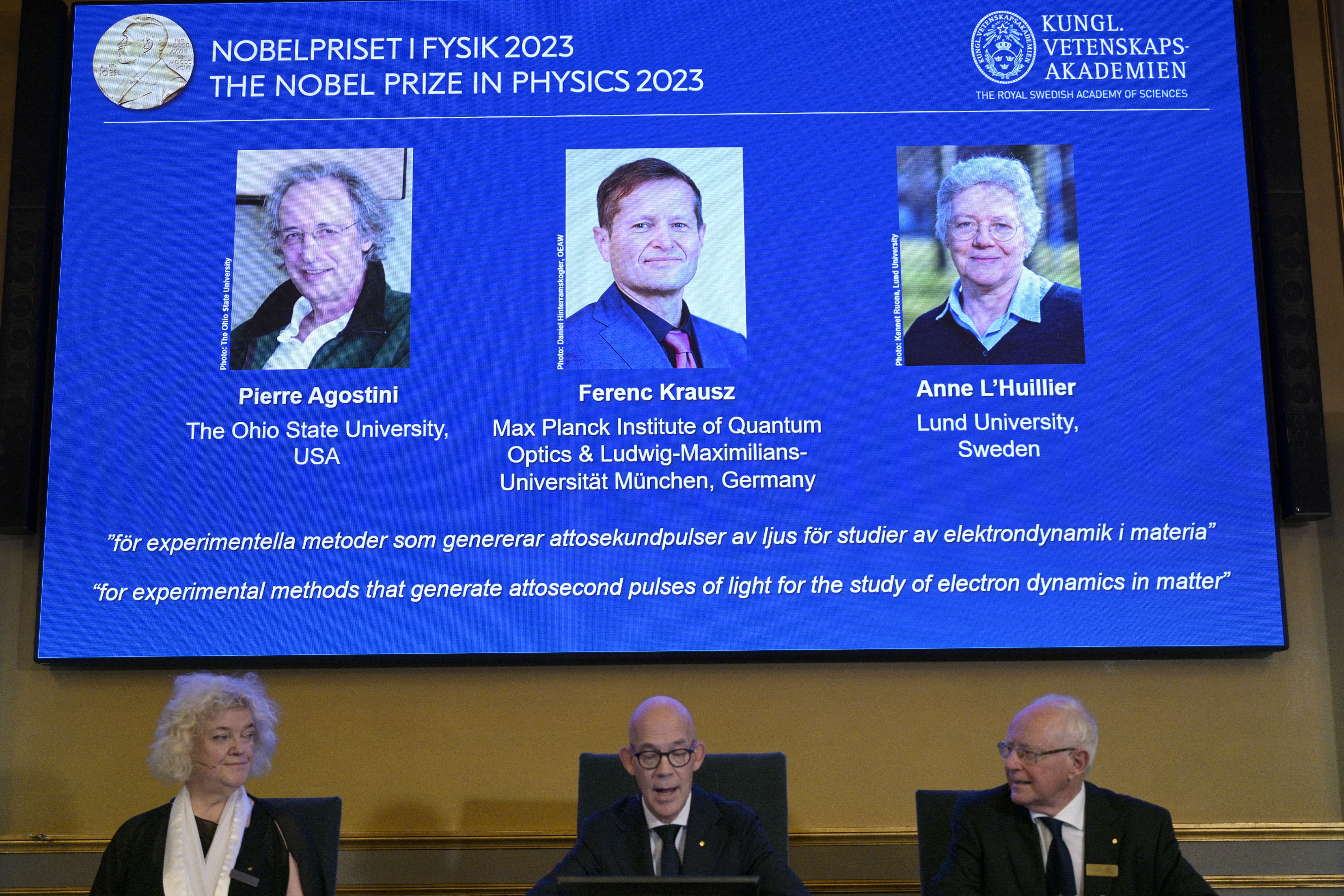
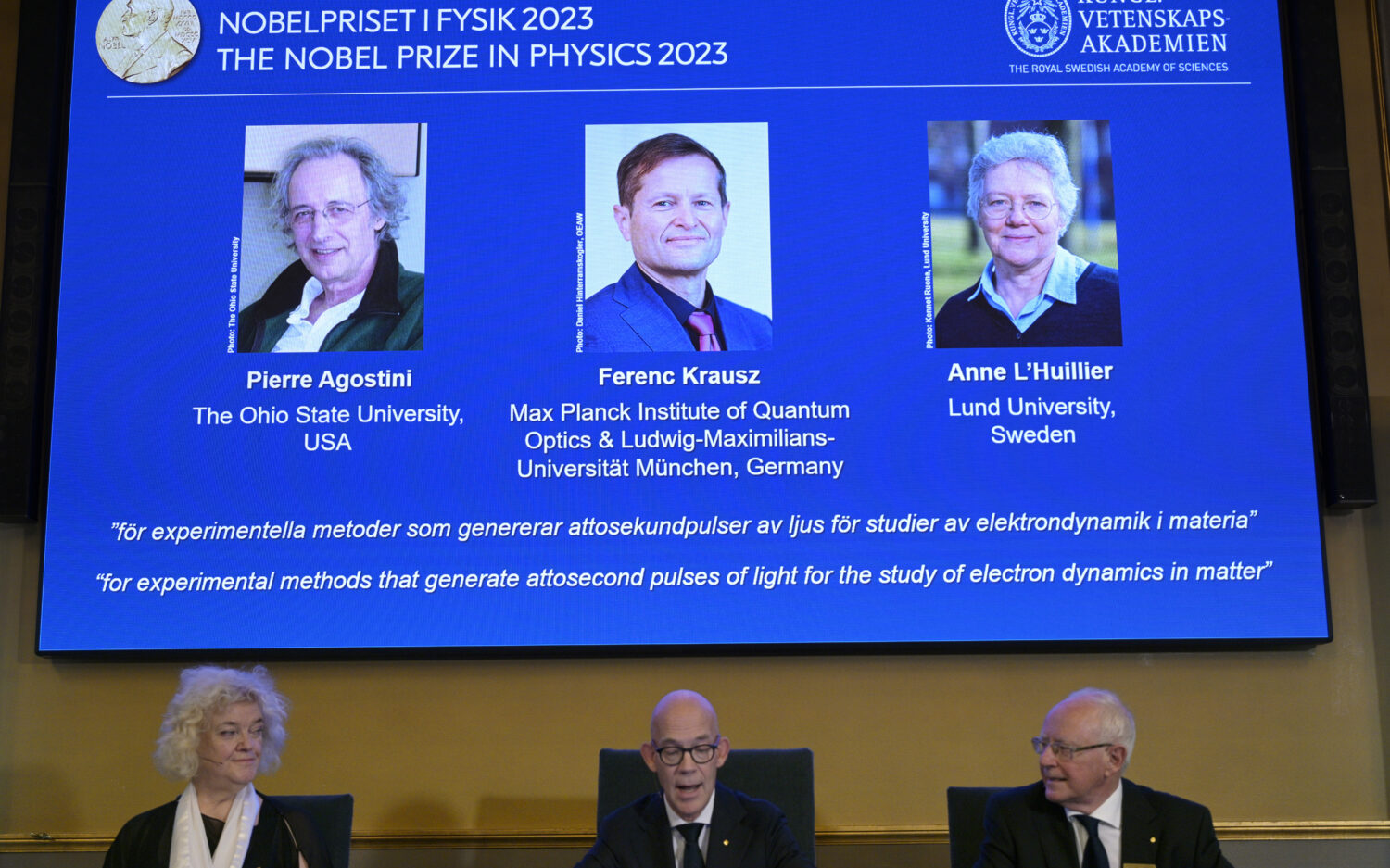
This year’s Nobel Prize in Physics went to scientists Anne L’Hullier, Pierre Agostini, and Ferenc Krausz. This is the most distinguished prize a physicist can win. It goes to scientists who make important discoveries.
How did the trio win the prize? They figured out how to look at electrons.
All matter is made of atoms. The device you’re reading this on? Atoms. Your dog? Atoms. You? Atoms. And atoms are made of smaller parts. Those are protons, neutrons, and electrons. Electrons spin around the atom’s center, called a nucleus. The electrons determine how atoms bind together to form different materials.
That makes electron study an important field. As we learn more about electrons, we learn more about almost everything. Electron study helps inventors build better devices. It even helps doctors detect diseases.
There’s just one problem. Electrons move fast. Really fast.
To see electrons, scientists had to study one quintillionth of a second. That’s called an attosecond.
Just how short is an attosecond? Take a single second. Then divide it into 1,000 parts. Now divide one of those parts into 1,000 even smaller parts. Then do it again.
And again.
And again.
And again.
Now you have an attosecond.
How did the scientists see such a tiny moment? They used rapid flashes of light. Even then, they could see only a little.
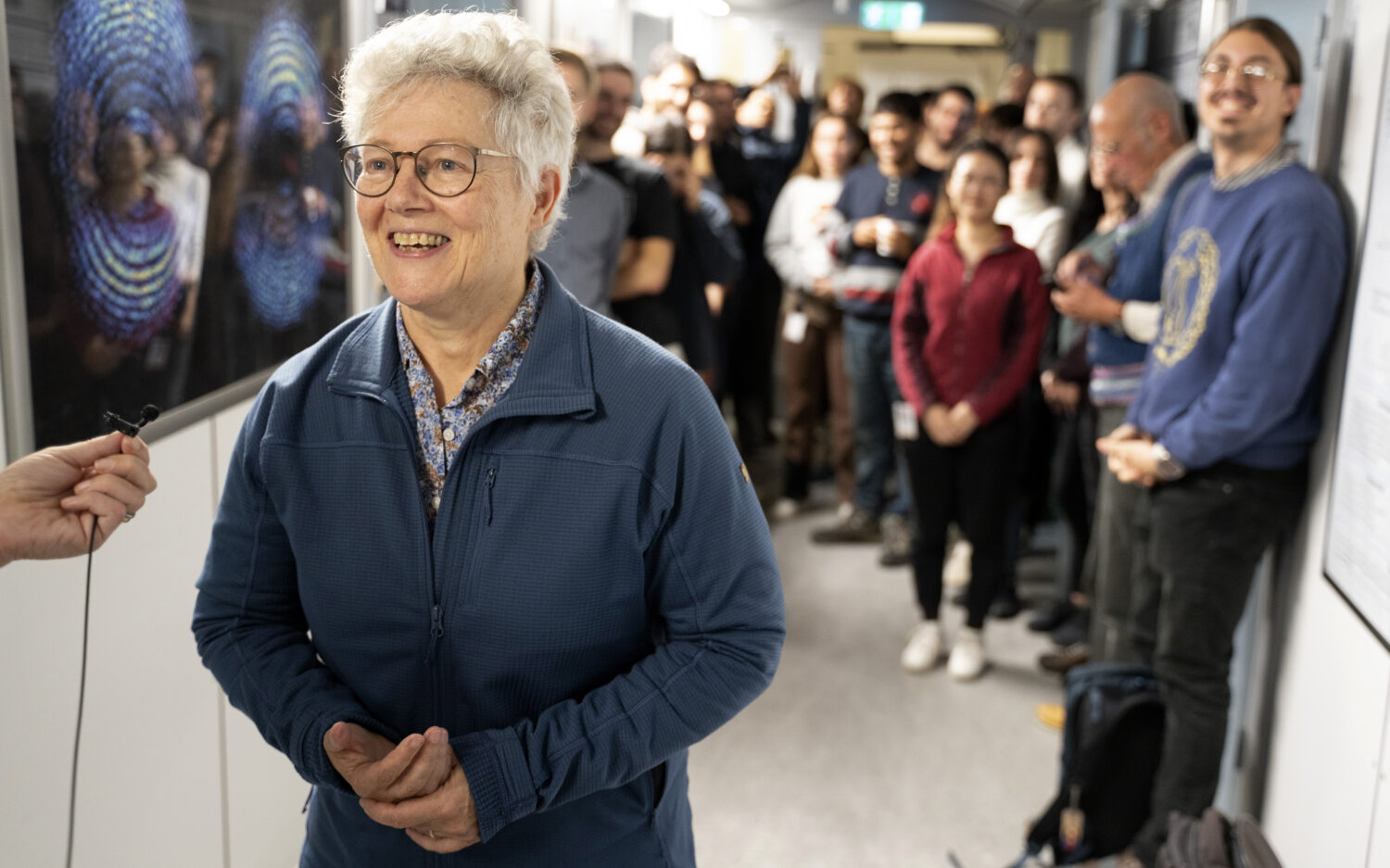
“You can see whether it’s on the one side of a molecule or on the other,” says Dr. L’Huillier. “It’s still very blurry.”
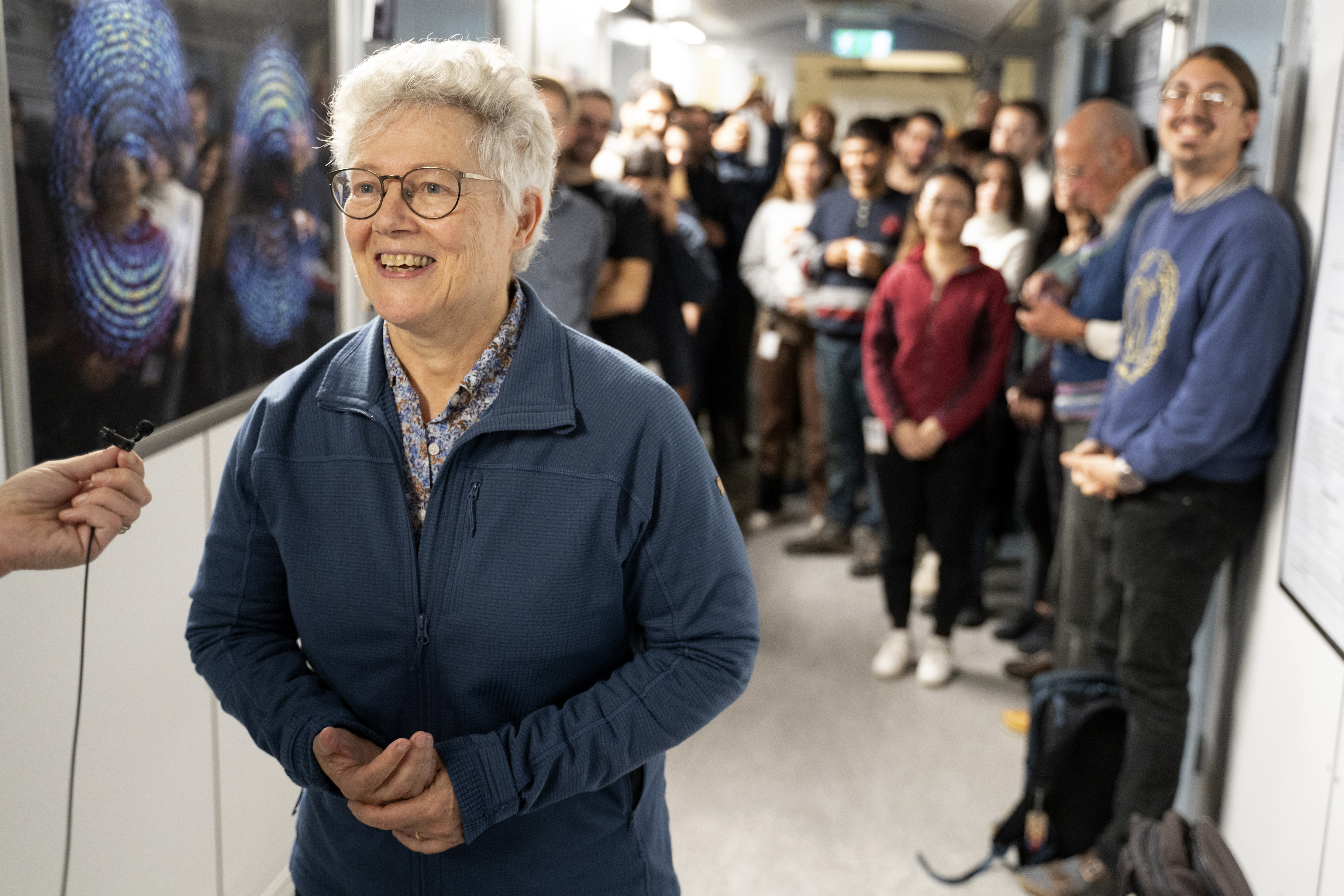
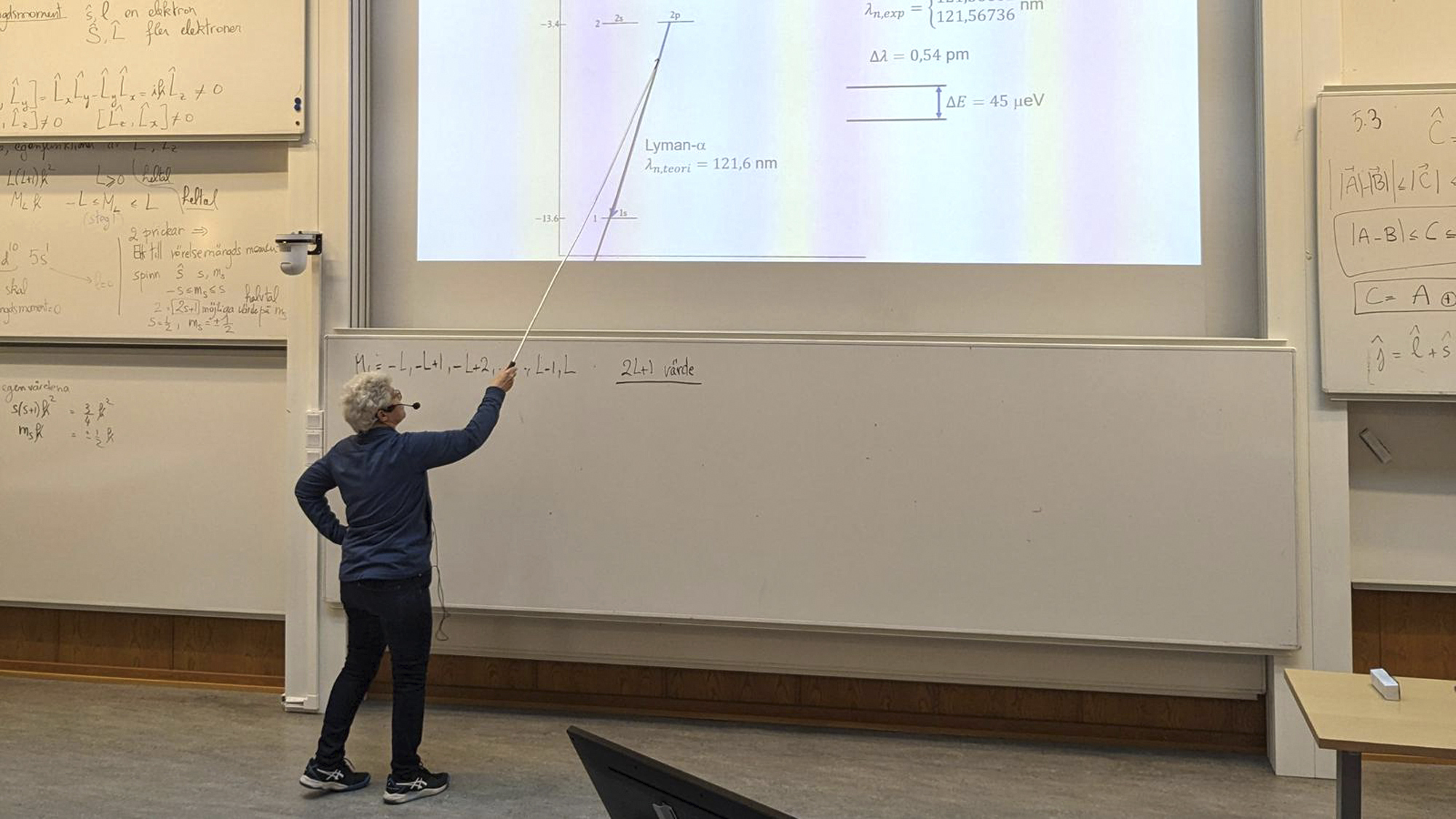
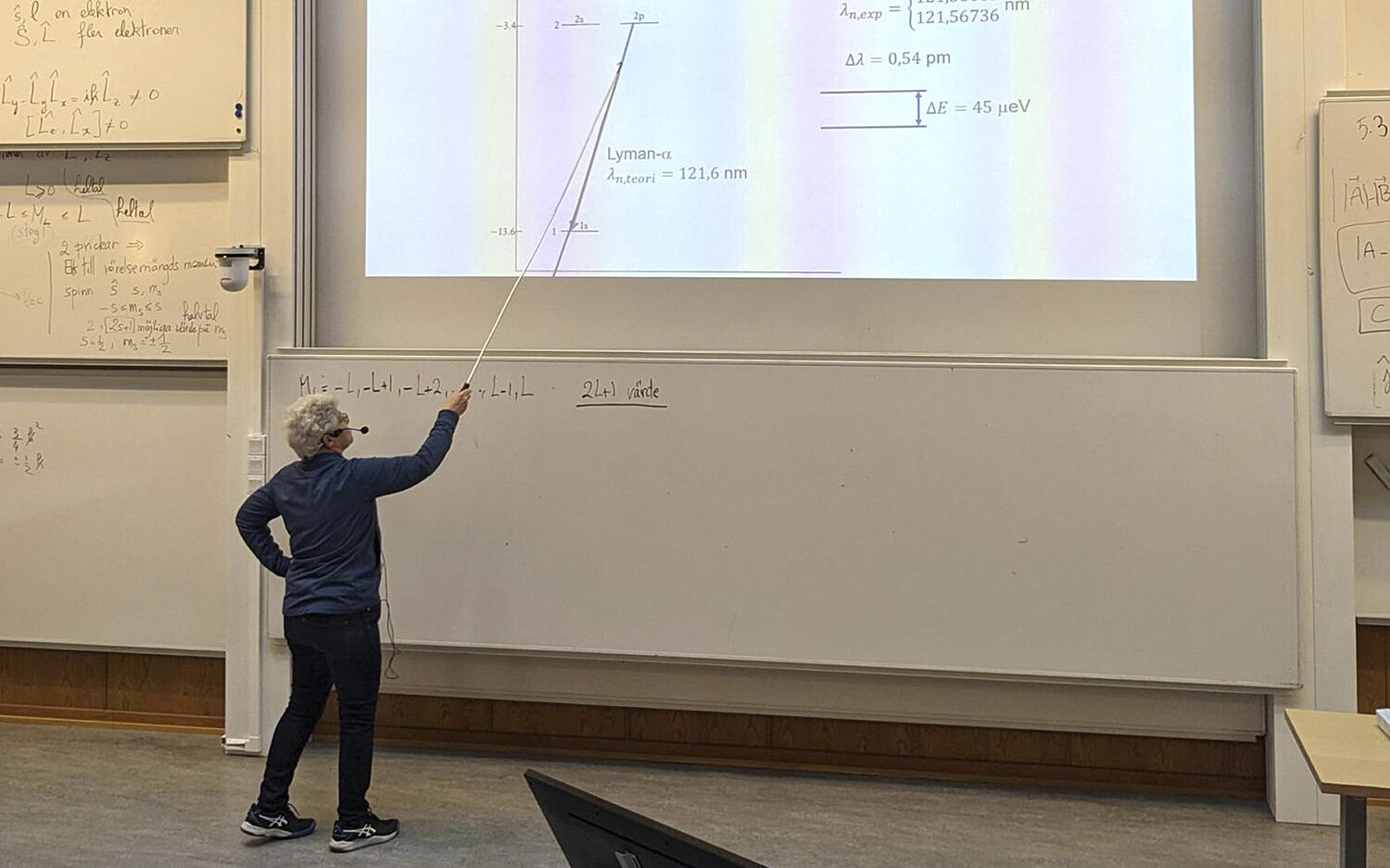
Dr. L’Huillier was teaching a college class when the Nobel Prize committee called. But her phone was on silent. During a break, she called back. The committee said she and her partners had won the Nobel Prize.
How did she celebrate? She went back and finished teaching her class.
“Dedicated teacher alert!” the Nobel organization posted online. “Not even the 2023 #NobelPrize in Physics could tear Anne L’Huillier from her students.”
God created an amazing, complex world. We’re still learning how to study His brilliant designs. Those designs help inspire our own creations, from electronics to medicines.
For by Him all things were created, in heaven and on Earth, visible and invisible, whether thrones or dominions or rulers or authorities—all things were created through Him and for Him. — Colossians 1:16