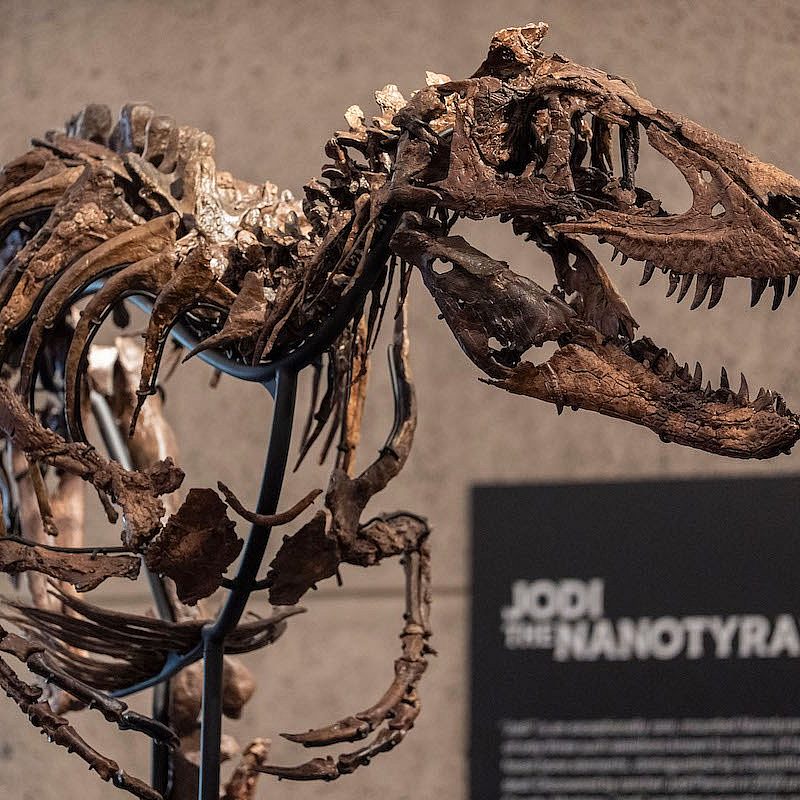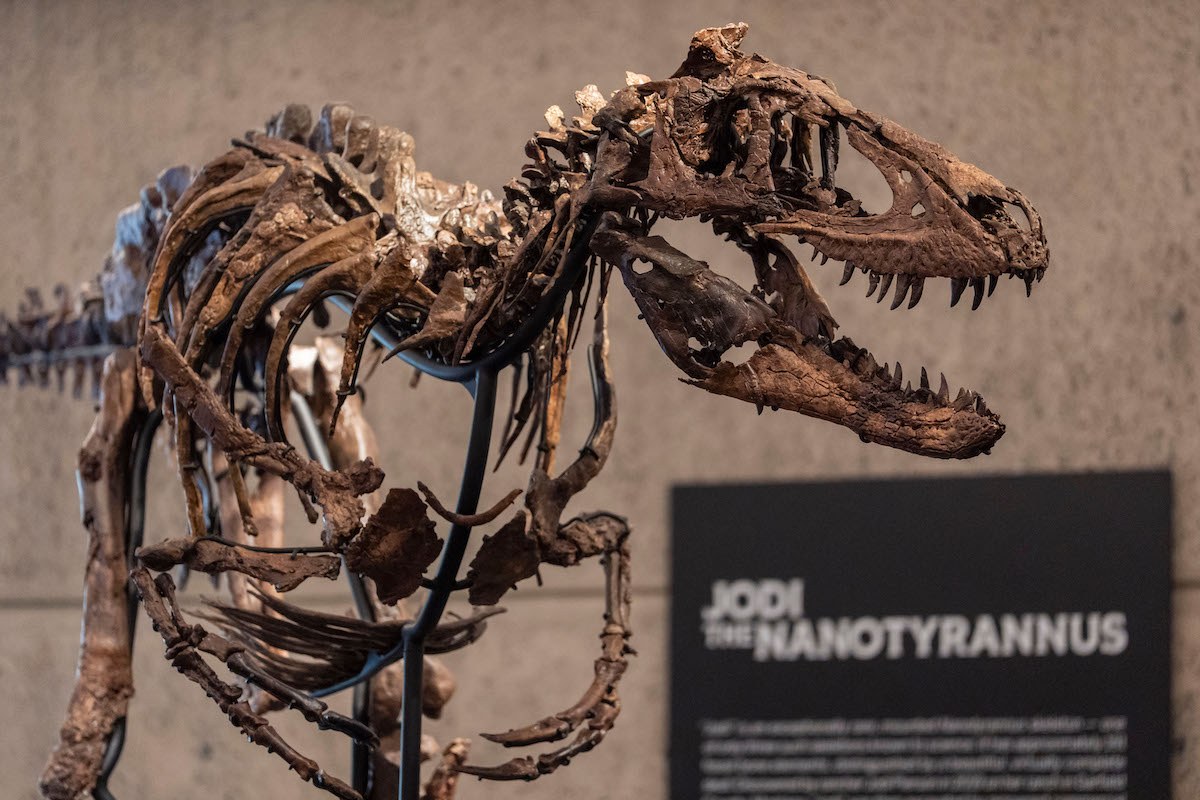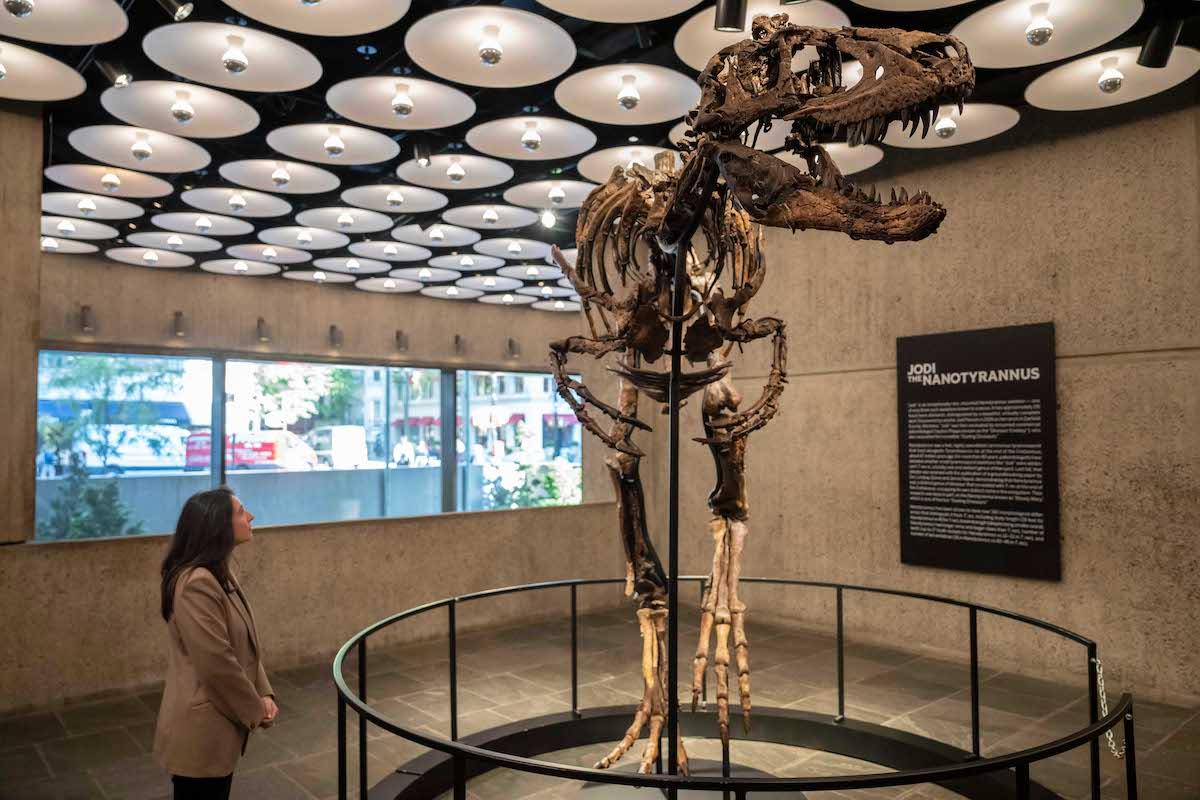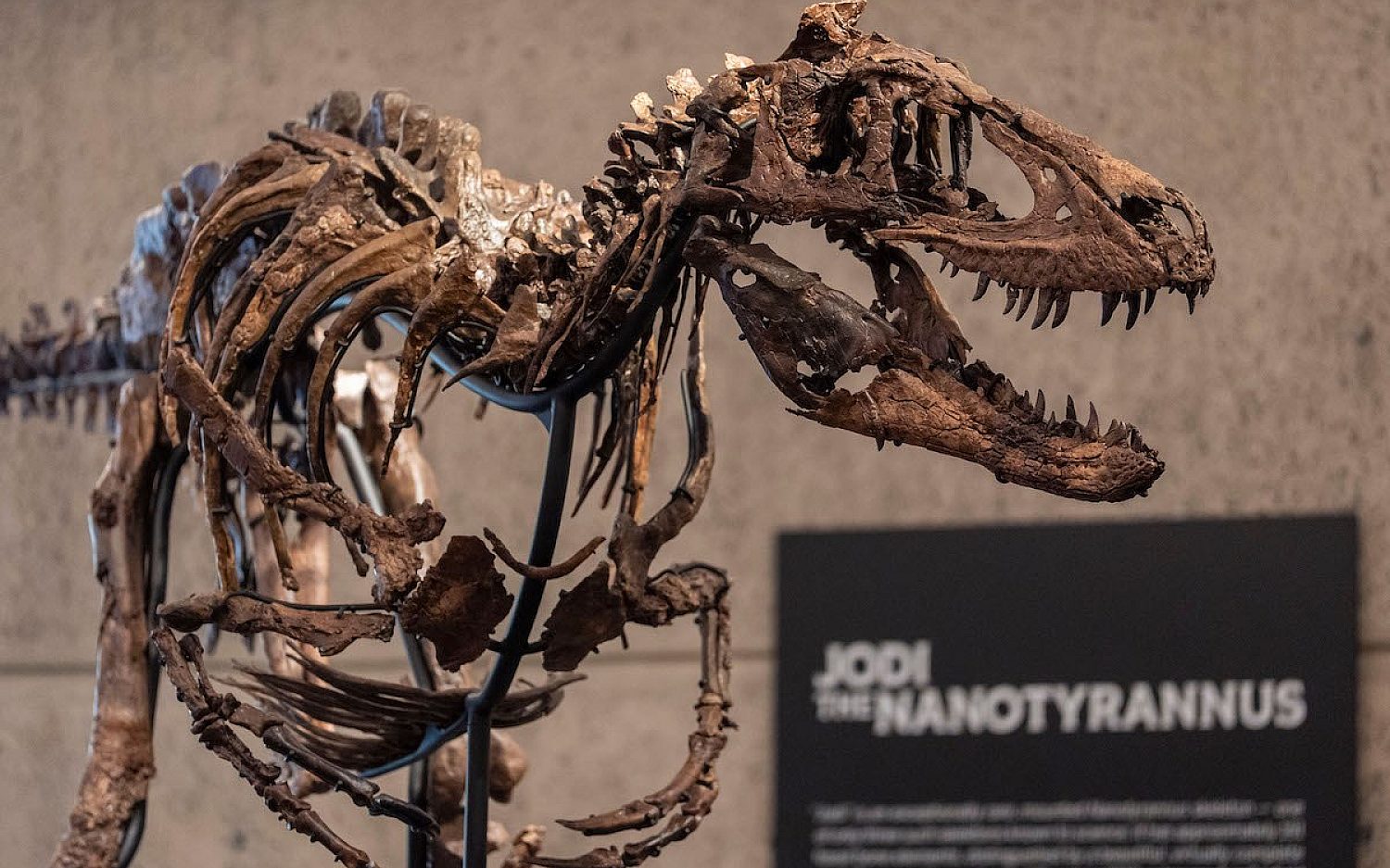
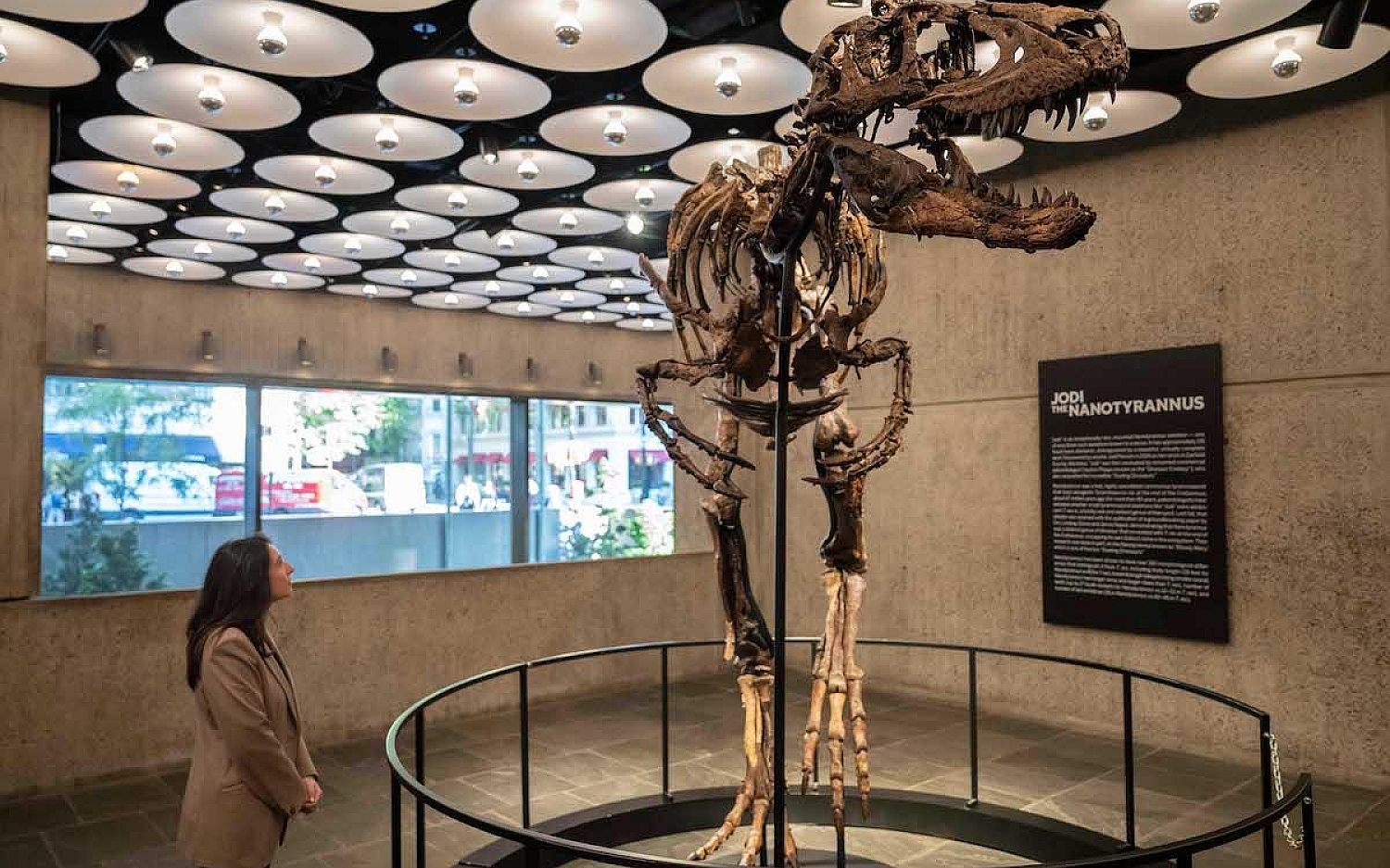
Is that a tiny T. rex? Nope—but it’s a distant cousin! This fossilized skeleton is on view in an auction house in Manhattan, New York. Soon it will go up for sale. It’s one of just three such skeletons discovered so far.
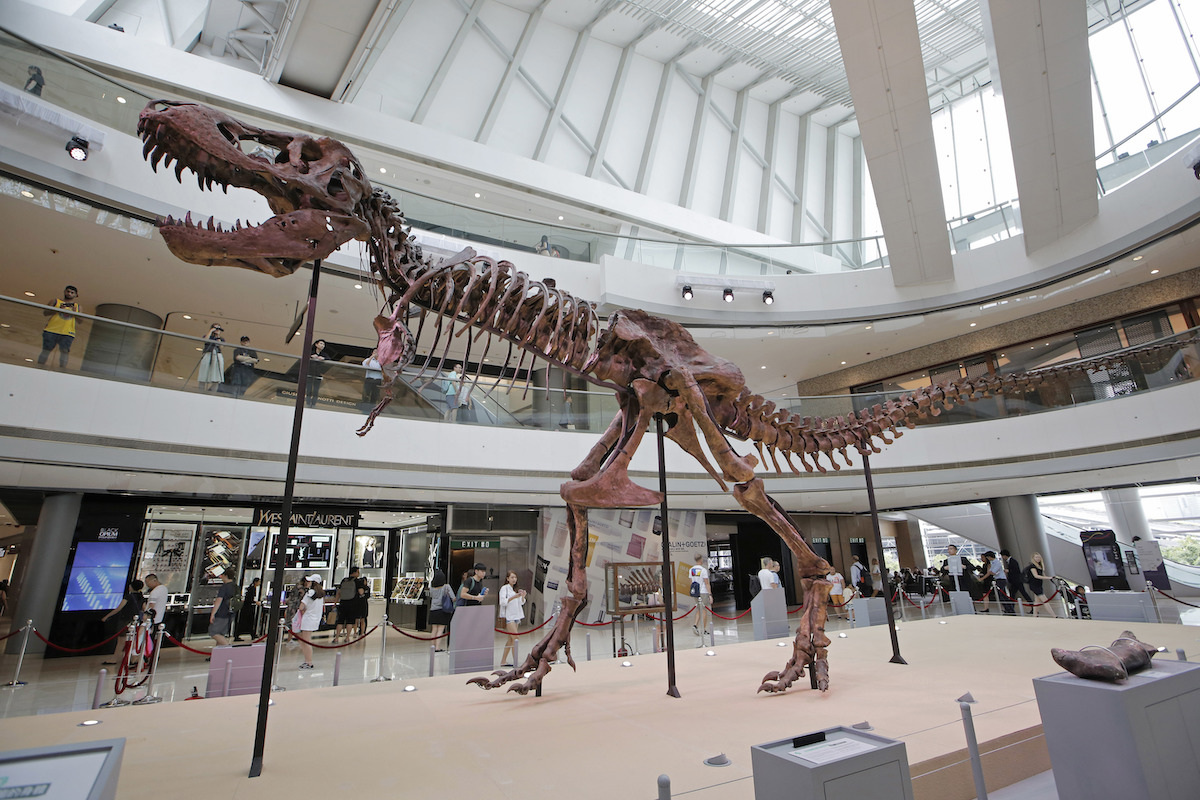
The name Tyrannosaurus rex (or “T. rex”) means “tyrant lizard king.” This smaller dino is called Nanotyrannus. That means “small tyrant.” The fossil in Manhattan stands six-and-a-half feet tall. It measures nearly 20 feet from head to tail. That may not sound so small, but a T. rex could grow over twice that size.
Scientists found the first Nanotyrannus skull in 1942. That find sparked decades of debate. At first, researchers thought it belonged to a young T. rex. Then they examined the bones. Bones have growth rings much like trees do. By counting those rings, researchers can tell a creature’s age.
What did these rings say? The Nanotyrannus wasn’t a young T. rex. It was a fully grown adult! In 2025, new research confirmed that these were two separate species.
Researchers also found other differences. The Nanotyrannus has longer arms than the T. rex. It has more teeth too. Those teeth have a slender, blade-like shape. T. rex teeth are thick and curved. Both probably preyed on other animals for food.
“It’s like a lion and a cheetah,” says Cassandra Hatton. She’s the head of science and natural history at the auction house. “They hunted different prey.” She also says it’s possible that T. rex ate Nanotyrannus.
The Nanotyrannus fossil is nicknamed “Jodi.” The name honors Jodi Pierson, the rancher who found the fossil on her land in Montana. The skeleton is about 70% complete. Auctioneers expect it to sell for between $6 million and $9 million.
Some people don’t think such fossils should go to private buyers. They would rather see these specimens in museums. Ms. Hatton argues that private buyers and dinosaur hunters help fund science. Without them, researchers might not have found the Nanotyrannus.
“These people are crucial in the preservation of science,” she says. “We don’t have enough universities and museums out there digging and doing field programs.”
Dinosaur fossils remind us how much we still don’t know about creation. God created a universe of mysteries to explore. Some of those mysteries are buried right under our feet. They all tell us something about the good God who made them.