Japan has big space plans:
1. Launch a spacecraft toward Mars.
2. Land a rover on the moon closest to Mars.
3. Bring back samples.
4. Learn how moons form.
Two moons, Phobos and Deimos, orbit Mars. Both are small and potato-shaped. No one has ever brought samples back from Phobos. Japan plans to be the first. Scientists expect the mission to take five years. No people are aboard the spacecraft.
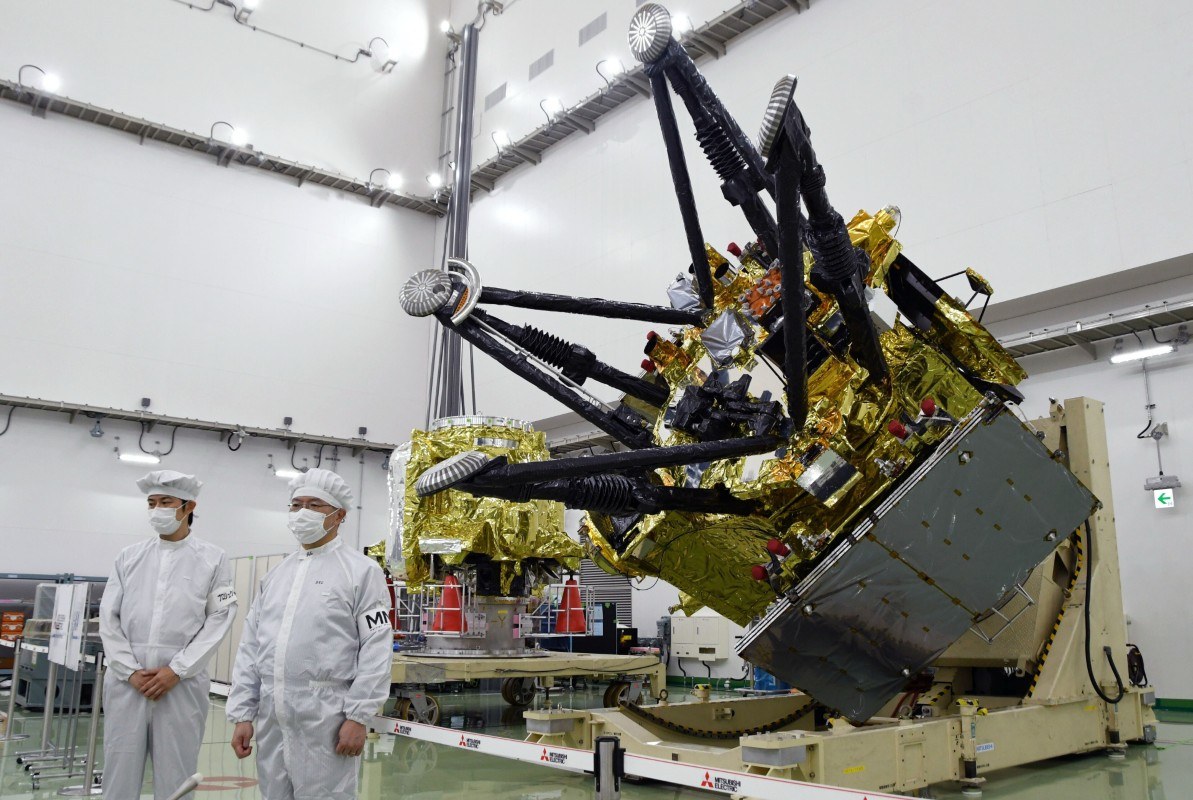
The Japan Aerospace Exploration Agency (JAXA) launched the craft last week. The mission comes just as leaders in the United States, China, and others consider sending astronauts to Mars. Could people build a base on a Martian moon? Perhaps JAXA’s expedition will help them figure that out.
Yasuhiro Kawakatsu manages the mission. “Despite their potential importance, Martian moons have never been fully investigated,” he says.
Space agencies have sent dozens of missions toward Mars since the 1960s. But its moons largely remain a mystery. Phobos and Deimos are named after characters from Greek myths. Those characters represent fear and terror. In the myths, the characters are sons of the war god Ares. (The Roman version of Ares is named Mars. Learn about Ares in Meet the “Little G’s” . . . and One Big G.)
Russian astronauts have tried to land on Phobos before. Those tries failed.
Scientists have two key questions: What are the moons made of? How did they form?
Some scientists think large space objects crashed into Mars, and the moons are debris left behind. Others say the moons could be asteroids that came from somewhere else.
“We can almost certainly come to a conclusion by analyzing [Phobos] soil samples,” says investigator Kiyoshi Kuramoto.
How big is Phobos? Not very. It measures between 10 and 20 miles across. It is not perfectly round, so that distance varies depending on where the measure is taken. (For comparison, consider that Earth’s Moon is about 2,159 miles!) Phobos circles Mars three times in one 24-hour Earth day.
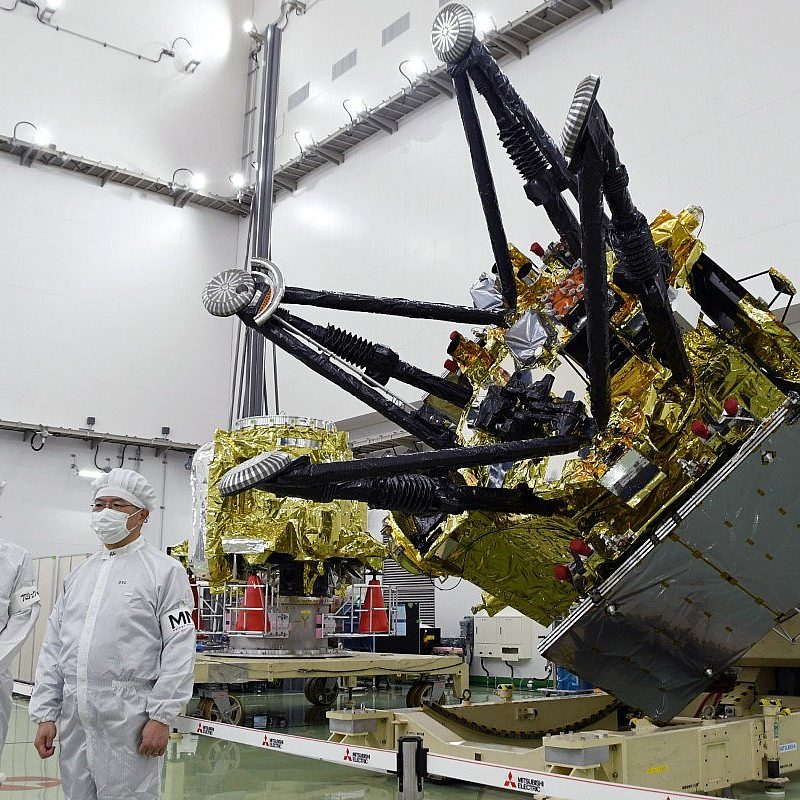
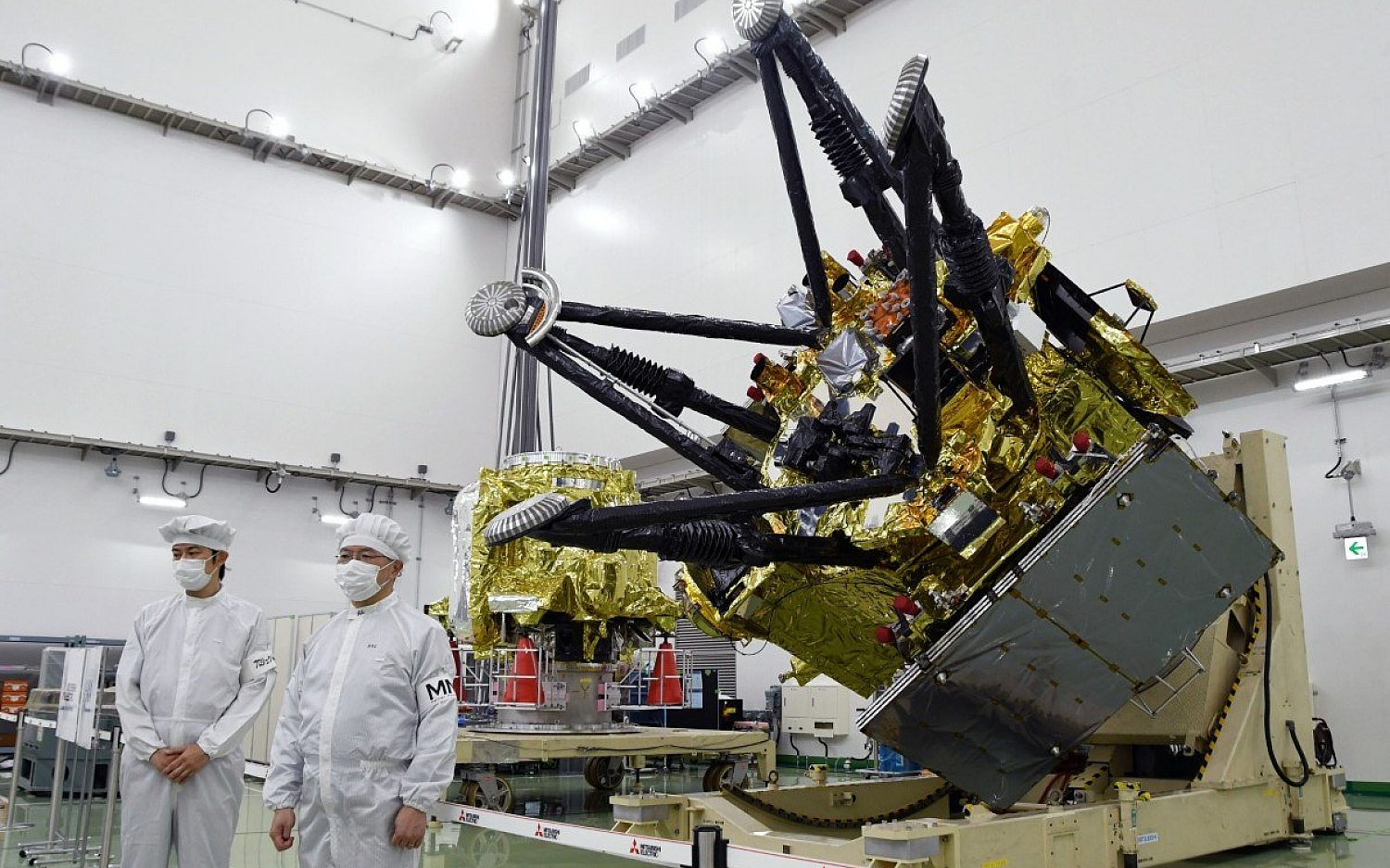
The spacecraft that JAXA is using for this mission weighs five tons. (That’s about how much a small elephant weighs.) The journey to Mars is 34 million miles. The spacecraft will arrive in the Mars region in August 2027. Then it will spend three years flying around Phobos before heading home in 2031.
The heavens declare the glory of God. — Psalm 19:1